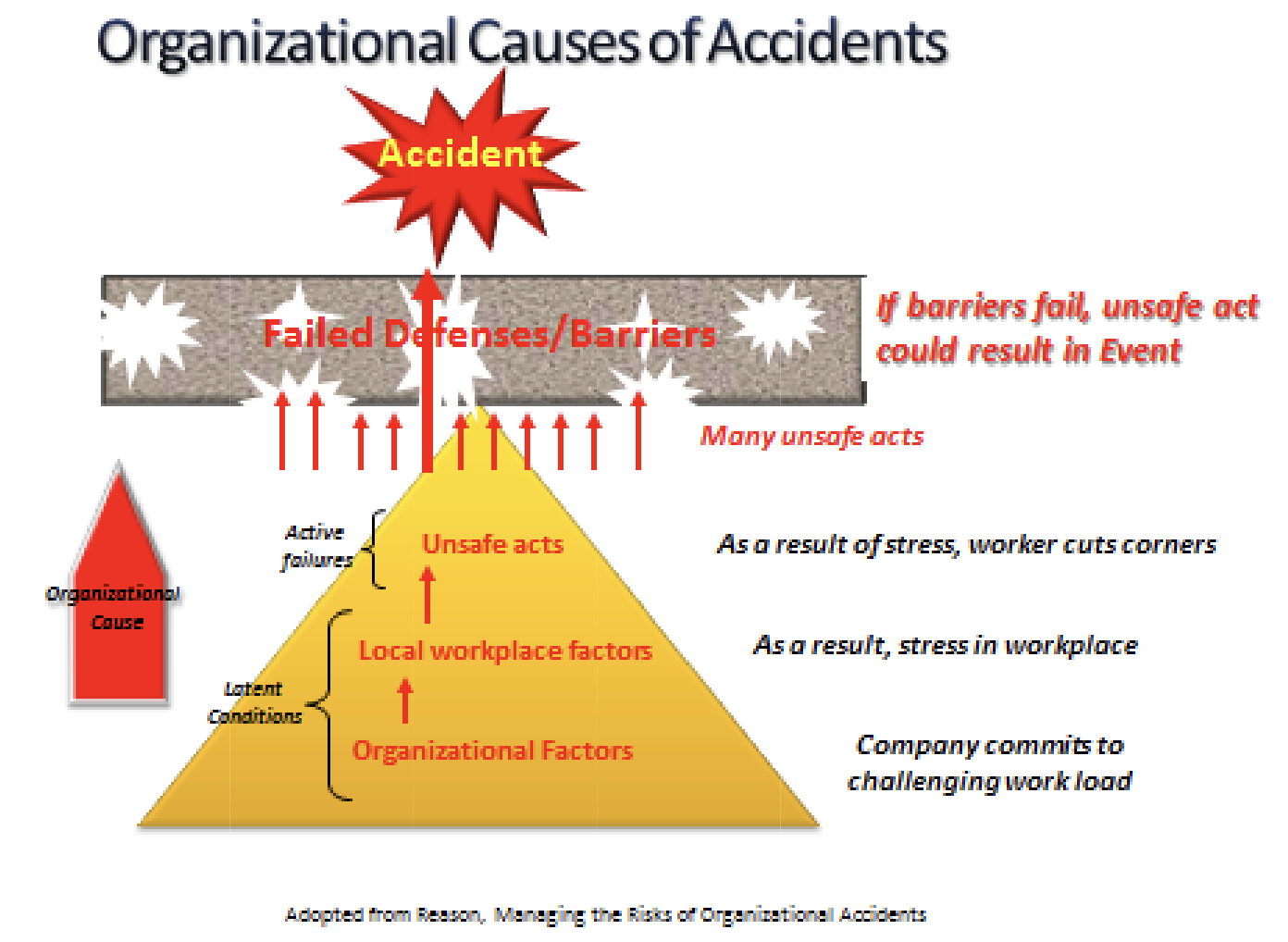
I propose this simplified Root Cause Analysis worksheet to clients seeking structure for their 5-Why approach. it is a beginner’s tool, but it does an excellent job of asking a series of high-level questions to help identify direct causes, root cause(s), and contributing factors and how each identified opportunity gets a corrective action to lessen the probability of a recurrence.
PURPOSE:
A Root Cause Analysis assists in developing a quality improvement plan for specific service delivery areas.
WHAT IS A ROOT CAUSE?
Root causes:
- are underlying
- can reasonably be identified
- are those management has control to address
- are those for which practical recommendations for preventing recurrences can be implemented
Root causes are underlying causes.
- The goal should be to identify specific underlying causes.
- The more specific the team can be about why an event occurred, the easier it will be to arrive at recommendations to prevent a recurrence.
Root causes are those that can reasonably be identified.
- Occurrence investigations must be cost-beneficial.
- It is not practical to keep valuable staff members occupied indefinitely, searching for the root causes of occurrences.
- Structured Root Cause Analysis (RCA) helps the team maximize the time invested in the investigation.
Root causes are those over which management has control.
- The team should avoid using general cause classifications such as:
- operator error,
- equipment failure, or
- external factors
Such causes are not specific enough to allow management to make effective changes.
- Management needs to know exactly why a failure occurred before action can be taken to prevent a recurrence.
- We must also identify a root cause that management can influence.
- For example, identifying “severe weather” as the root cause is inappropriate; Severe weather is not controlled by management
Root causes are those for which effective recommendations can be generated.
- Recommendations should directly address the root causes identified during the investigation.
- If the team arrives at vague recommendations such as, “Improve adherence to written policies and procedures,” then they probably have not found a basic and specific enough cause and need to expend more effort in the analysis process.
INSTRUCTIONS:
The following template is designed to assist in determining the underlying cause(s) of an operational failure. Asking “WHY” something happened, or did not happen, is the best place to start.
The most obvious cause is often the “direct cause.” To determine contributing factors, ask “WHY” the direct cause occurred.
For example, the boat sank because it had a hole in the bottom. In this example, the hole in the boat is the DIRECT CAUSE.
In a root cause analysis, asking WHY is the next step.
In this example, the boat had a hole because the repairperson did not know the boat had a hole that needed to be fixed. This would be a CONTRIBUTING FACTOR.
Asking WHY the repairperson did not know the boat had a hole to be fixed, we learn the root cause of the problem. The boat repair company does not have a system to track required repairs, and the need to repair the hole was forgotten.
Fill in the blank sections below for each category. In some cases, an individual category may not be involved. If that occurs, leave the section blank and move to the next set of questions. When complete, review your work to identify the event’s root cause(s). The root cause(s) will become the basis for your Corrective Action Plan (CAP).
Contributing Factor – Departments
|
Level of Analysis |
Questions / Factors Involved |
Findings and Opportunities to Improve |
|
What happened? |
What departments were involved? |
|
|
Describe events(s) |
||
|
Why did it happen? |
What was the missing or weak step in the process? |
|
|
Why did that happen? |
What caused the missing or weak step in the process? |
|
|
Why did that happen? |
What is currently done to prevent failure at this step? |
Contributing Factor – Documentation
|
Level of Analysis |
Questions / Factors Involved |
Findings and Opportunities to Improve |
|
Why did it happen? |
Was the documentation available? Was the documentation appropriate according to the established standard? |
|
|
Why did that happen? |
Did staff reference the available documentation? Does staff training address appropriate documentation and its utilization? |
|
|
Why did that happen? |
Is the documentation lacking in necessary information? Is the documentation too cumbersome for staff to follow? |
Contributing Factor – Staffing Levels
|
Level of Analysis |
Questions / Factors Involved |
Findings and Opportunities to Improve |
|
Why did it happen? |
Was the staffing level appropriate? If no, did staffing issues contribute to the event? |
|
|
Why did that happen? |
Did actual staffing deviate from planned staff levels at the time of the event or during times leading up to the event? |
|
|
Why did that happen? |
Were there any unexpected issues or incidents that occurred at the time of the event or during key times that led up to the event? If yes, did the unexpected issue impact staffing or workload for staff? If yes, did staff believe this change in staffing or workload contributed to the event? |
Contributing Factor – Communications
|
Level of Analysis |
Questions / Factors Involved |
Findings and Opportunities to Improve |
|
Why did it happen? |
Was all necessary information available: when needed, accurate, and complete? |
|
|
Why did that happen? |
Is communication among participants adequate? |
|
|
Why did that happen? |
Are there barriers to communication? Is prevention of adverse outcomes considered a high priority? |
Contributing Factor – Equipment
|
Level of Analysis |
Questions / Factors Involved |
Findings and Opportunities to Improve |
|
Why did it happen? |
How did the equipment fail? What broke? |
|
|
Why did that happen? |
What is currently being done to prevent an equipment failure? |
|
|
Why did that happen? |
What is currently being done to protect against a bad outcome if an equipment failure does occur? |
Contributing Factor – Environmental
|
Level of Analysis |
Questions / Factors Involved |
Findings and Opportunities to Improve |
|
Why did it happen? |
What environmental factors directly affected the outcome? |
|
|
Why did that happen? |
Was the physical environment appropriate for the process to be carried out? |
|
|
Why did that happen? |
Are systems in place to identify environmental risks? Are responses to environmental risks planned and tested? |
Contributing Factor – Human Factors
|
Level of Analysis |
Questions / Factors Involved |
Findings and Opportunities to Improve |
|
Why did it happen? |
What was the human factor? |
|
|
Why did that happen? |
Was staff performance in the process addressed? What is being done to prevent future occurrences? |
|
|
Why did that happen? |
Can orientation and training be improved? |
Contributing Factor – External Causes
|
Level of Analysis |
Questions / Factors Involved |
Findings and Opportunities to Improve |
|
Why did it happen? |
Were there any uncontrollable external factors? |
|
|
Why did that happen? |
Are they truly beyond the organization’s control? |
|
|
Why did that happen? |
In what ways can your organization protect the consumer from these types of external factors? |
Contributing Factor – Uncategorized
|
Level of Analysis |
Questions/Factors Involved |
Findings and Opportunities to Improve |
|
Why did it happen? |
Were there any other factors that directly influenced the outcome? |
After the root cause analysis, the organization should develop a Comprehensive Corrective Action Plan that addresses one or more of the identified root causes.
Below, indicate the root causes that have been identified through this process:
|
Root Cause(s) |
|
• |
|
• |
|
• |
|
• |
|
• |
|
• |
|
• |
SOURCE:
Adapted from: Root Cause Analysis Summary Form. (2014, April 7). Retrieved September 15, 2015, from http://www.health.state.mn.us/patientsafety/toolkit/