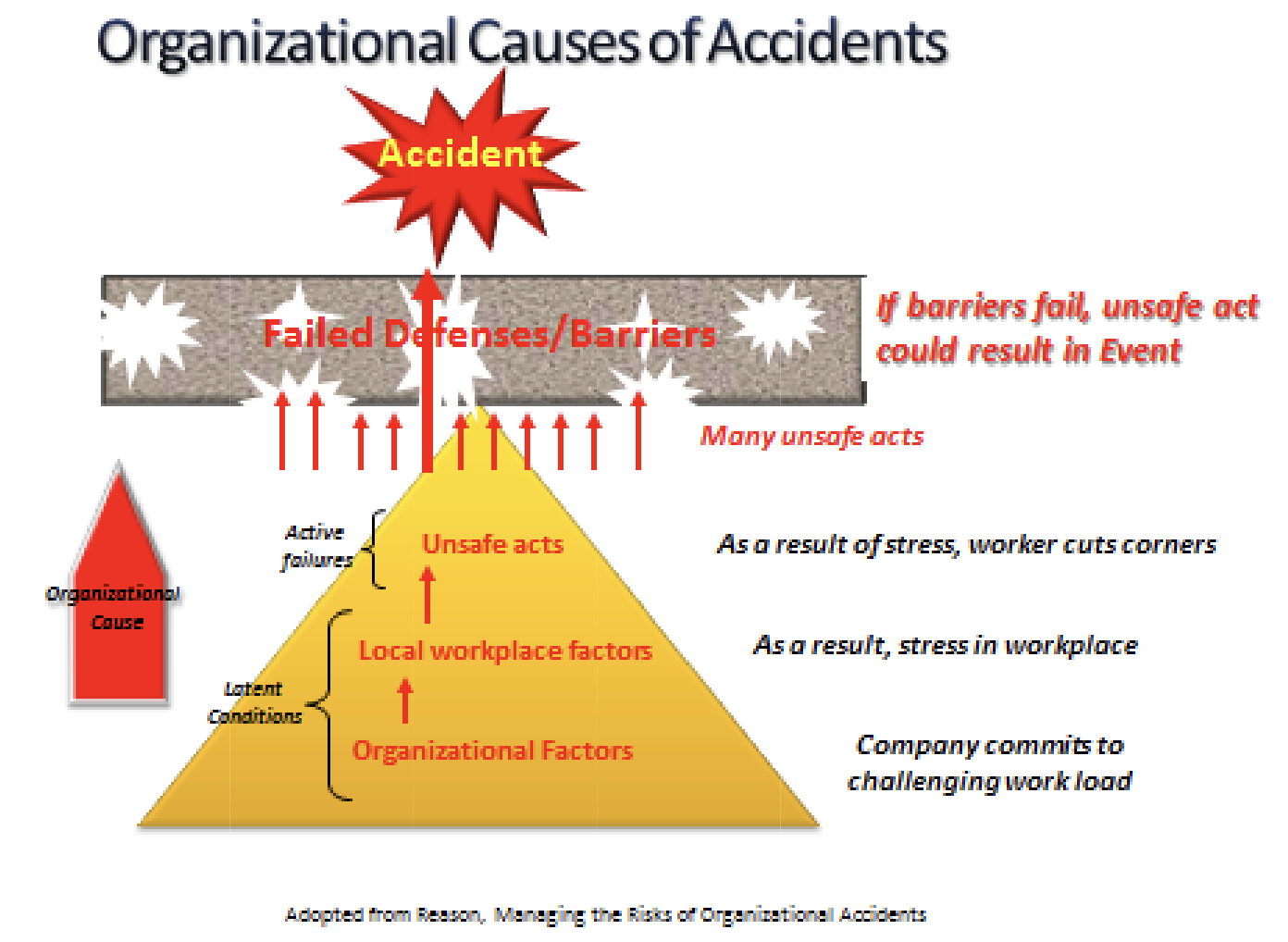
I was reading through the Boeing Safety Assessment report and was so happy to see they used James Reason’s safety culture model, which consists of five components that collectively would cultivate a positive safety culture. The five (5) components include:
- Reporting Culture,
- Just Culture,
- Flexible Culture,
- Learning Culture, and
- Informed Culture
SAFTENG members can read more on Reason’s Model HERE
Boeing adopted these same five components in its Positive Safety Culture structure. The components are also used by numerous government, academic, and industry organizations, including NASA and the FAA. The Expert Panel considered each of the five safety culture components throughout its review.
Safety Culture Principles
Dr. James Reason, a pioneering scholar of safety culture, in his seminal work on managing risks of organizational accidents provides a discussion on safety culture
which is reflected in the ICAO Safety Management Manual. Dr. Reason offered:
… a safety culture can be socially engineered by identifying and fabricating its essential components and then assembling them into a working whole. It is undoubtedly true that a bad organizational accident can achieve some dramatic conversions to the ‘safety faith’, but these are all too often shortlived. A safety culture is not something that springs up ready-made from a near-death experience; rather, it emerges gradually from the persistent and successful application of practical and down-to-earth measures. There is nothing mystical about it. Acquiring a safety culture is a process of collective learning, like any other. Nor is it a single entity. It is made up of a number of interacting elements, or ways of doing, thinking and managing that have enhanced safety health as their natural byproduct.” 6 (Reason, 1997, p. 192)
The Expert Panel reflected on ICAO’s description regarding the interdependence of safety culture and safety management:
Safety culture is arguably the single most important influence on the management of safety. If an organization has instituted all the safety management requirements but does not have a positive safety culture, it is likely to underperform. Effective safety management empowers a positive safety culture, and a positive safety culture empowers effective safety management. (ICAO Safety Management Manual, p 3-1, 3-2)7
https://www.faa.gov/newsroom/Sec103_ExpertPanelReview_Report_Final.pdf