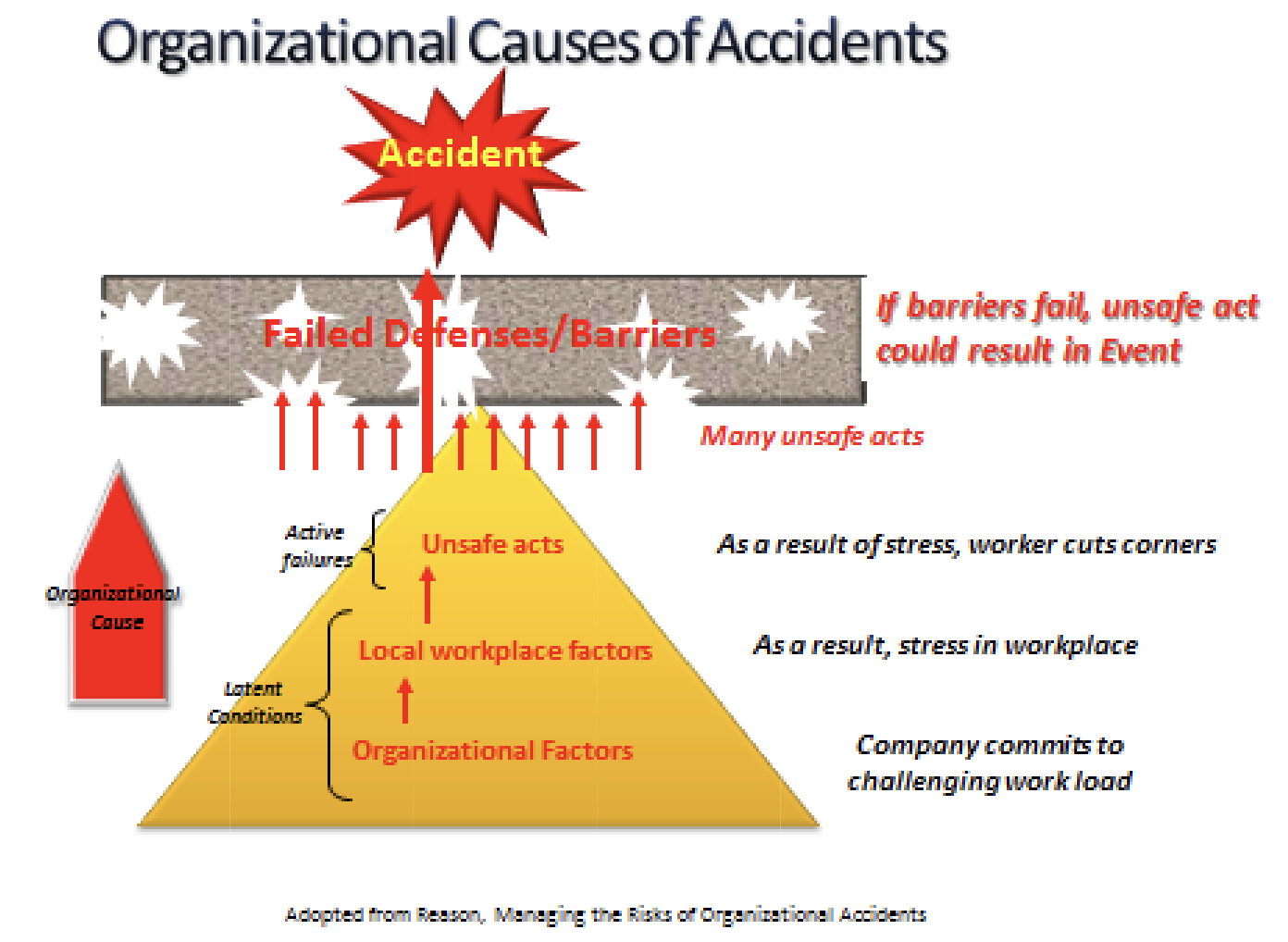
A mature Safety Management System (SMS) will contain a Hazard Identification Element that identifies hazards that adversely affect safety. These HAZARD ID processes also provide practical and objective mechanisms to assess the risk presented by those identified hazards and implement ways to eliminate or mitigate the associated risks those hazards may pose to the worker, environment, and business. The result of this SMS Element is achieving an acceptable level of safety while balancing the allocation of resources between production and protection.
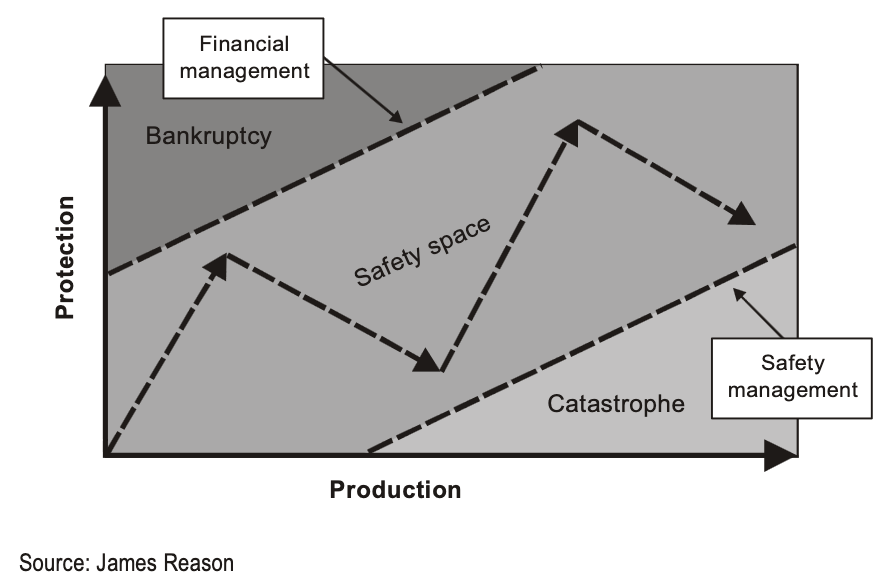
From a resource allocation perspective, the concept of a “safety space” is instrumental in describing how this balance is achieved.
What is the “Safety Space?”
In any organization engaged in the delivery of services, production, and safety risks are linked. As production increases, the risks may also increase if the necessary resources or process enhancements are unavailable. An organization must DEFINE and QUANTIFY its production and safety objectives by balancing output with acceptable levels of risks.
Also, when defining its production objectives, the organization needs to DEFINE the SAFEGUARDS to keep risks under control. For a product or service provider, the basic safety SAFEGUARDS are
- technology,
- training, and
- internal processes and procedures
The “safety space” is the zone where an organization balances desired production while maintaining required protection through ample risk controls. For example, a manufacturer may wish to support anticipated growth through investment in new technologies. These technologies may simultaneously provide the necessary efficiency improvements and improved reliability and safety performance. Such decision-making should involve an assessment of both the value added to the organization’s product or service objectives and the risks involved. The allocation of excessive resources to protection or risk controls may make the product or service unprofitable, thus jeopardizing the organization’s viability.
On the other hand, excess allocation of resources for production at the expense of protection can impact the safety performance of the product or service and can ultimately lead to an accident. Therefore, a “safety boundary” must be defined that provides early warning that an unbalanced allocation of resources exists or is developing. Therefore, the organization’s management should define the “safety space” boundaries and review them to ensure that they accurately reflect the current situation.