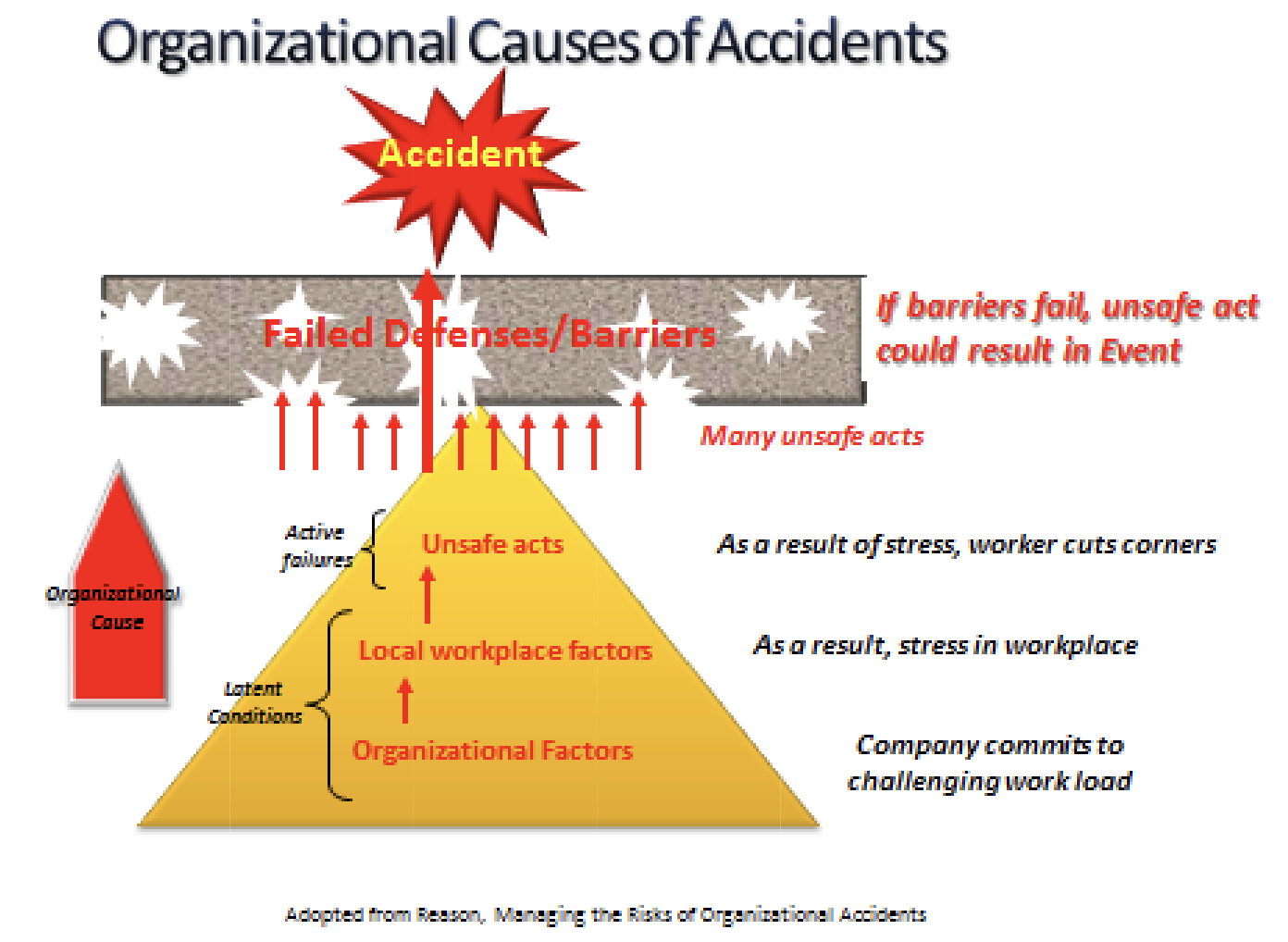
This happens when the breach of essential safety rules is not only widely known about but also tolerated and accepted by peers and management as normal and acceptable behavior given the circumstances. Various factors can contribute to the normalization of deviance:
- the strong tension that exists between financial pressures and safety requirements. Employees “manage” this tension by regularly deviating away from certain safety standards because they believe (or are told) that strictly applying the rules would harm the company’s financial performance. In this type of scenario, top management can take action to prevent this deviation on the part of various employees. It can first of all take measures to ensure that they are informed of events where production pressure has a negative impact on safety, and then correctly integrate safety into the management of priorities, and finally set up a protocol for managing exceptions or dispensations.
- Another factor that contributes to rule-breaking becoming an accepted norm is when formal safety rules and procedures are established without sufficient consultation with users. This lack of dialogue often generates inapplicable procedures. If there is no effective system in place for reporting problems and correcting the initial flaws, supervisors, and operators will likely find it “normal” to break the rules in order to continue to get the work done. This factor also exists at the management level when the SMS is implemented without any genuine consultation of those affected. For example, supervisors may feel that the additional workload involved in performing the planned management activities is substantial. Still, they either cannot discuss this with the upper echelons or the latter simply reply that they must integrate safety management in their daily management of operations.
Two types of deviance then frequently appear:
- either certain activities are simply not carried out if, for instance, there is little chance that completion of the task will be checked, or
- some are performed perfunctorily or to meet the imposed quota, in the case of monthly safety meetings, task observation, or planned inspections for example.
DEVIATIONS become the NORM and are practically guaranteed to occur when existing safety procedures are not regularly reviewed and updated, since this widens the gap between the standards and the changing reality of work practices. Some companies also tend to over-depend on internal regulations and create so many procedures that it becomes impossible for an operator to learn them all and even more difficult to master them and apply them. Occasionally, the two problems are combined, creating a disorganized normative environment.
Finally, a tense social climate in the workplace is conducive to normalized or, at the very least, tolerated deviance. Studies show that, in such an atmosphere, supervisors will tend not to insist too much on employees strictly applying safety procedures that demand a lot of time or effort to avoid aggravating them further and to maintain their cooperation in order to reach production objectives. In short, supervisors “choose the lesser of two evils.” In other words, between a tolerated deviation that can increase the probability of an accident or an almost certain drop in production, supervisors choose the first part of the equation, which seems like a lesser evil because the accident is not certain.
Source: Human and Organizational Factors of Safety