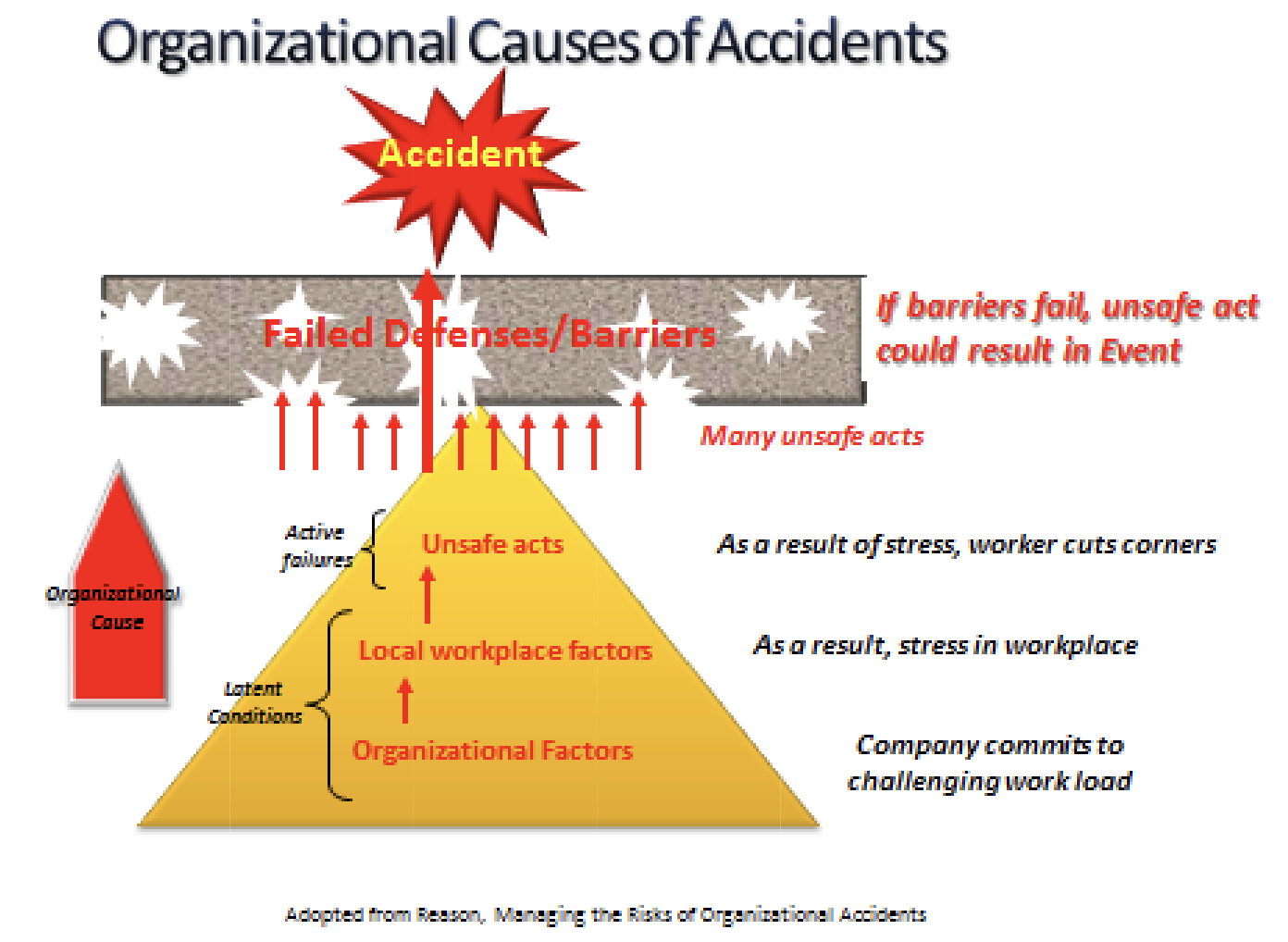
Most everyone has seen the failures within Boeing, both in its commercial aviation division and now its space flight division. I’m guessing this latest story should not be a surprise, seeing the depth of the issues in their commercial aviation division. But this is NOT about Boeing, as there are hundreds, if not tens of thousands, of organizations in this same shape… its just that their consequences have not caught up with their risky decision-making. But know this: it will catch up to them, and the people who will pay the ultimate price will be the men and women doing the dirty and dangerous work. From the workers building the space craft to those flying in it! Case in point…
NASA finally gives Boeing Starliner capsule a return date. But it will fly home without its crew
Earlier this month, NASA’s Office of Inspector General issued an ugly report highlighting significant failures (in both numbers and severity) to Boeing regarding its space flight program. Granted, this report is NOT about the problems the Starliner is experiencing rather it is in regards to the Space Launch System (SLS) Block 1B Development, called Artemis IV, that is scheduled to launch in September 2028.
As you read this report, imagine this audit being done on our Safety Management System (SMS) and how our SMS would be reflected in such an audit report.
WHY WE PERFORMED THIS AUDIT
Scheduled to launch in September 2028, Artemis IV will be the first flight of NASA’s more powerful heavy-lift rocket—the Space Launch System (SLS) Block 1B. The rocket is designed to increase the amount of cargo the SLS can deliver to the Moon. A critical component of this upgrade is The Boeing Company’s (Boeing) development of the SLS’s new upper stage, the Exploration Upper Stage (EUS). Once completed, the EUS will give the SLS a 40 percent upgrade in capability to send the Orion Multi-Purpose Crew Vehicle capsule and large cargos to the Moon, from 27 metric tons under Block 1—the SLS rocket’s first iteration—to 38 metric tons with Block 1B.
The SLS Block 1B has been under development since 2014 and has faced changing technical requirements and competing funding priorities. These factors, along with congressional directives to accelerate the rocket’s development, have led to increased costs and schedule delays. Originally intended for the Artemis II mission, Block 1B’s first flight was moved to Artemis IV, extending the development timeline and increasing costs. Boeing’s EUS contract has grown from $962 million to over $2 billion through 2025, contributing to the overall SLS Block 1B cost increase.
In this audit, we examined NASA’s management of the SLS Block 1B development, focusing on the EUS. To complete this work, we interviewed officials from NASA Headquarters, Marshall Space Flight Center, Michoud Assembly Facility (Michoud), Boeing, and the Defense Contract Management Agency (DCMA). We also reviewed NASA and contractor cost and budget documentation, contracts for each SLS element, contract obligations and disbursements, Boeing financial management reports, and Earned Value Management System (EVMS) cost estimates. Additionally, we assessed past and current schedules and quality control documents for SLS core and upper-stage production.
WHAT WE FOUND
While NASA requires its aerospace contractors to have quality assurance programs that comply with SAE International’s AS9100D standards on quality management systems, we found Boeing’s quality management system at Michoud does not adhere to these standards or NASA requirements.
NASA engages DCMA to conduct surveillance of Boeing’s core and upper stage manufacturing efforts at Michoud, and when deficiencies in quality are found, DCMA issues Corrective Action Requests (CAR) to the contractor. CARs are labeled Level I through IV, with Level I the least serious deficiency.
From September 2021 to September 2023, DCMA issued Boeing 71 Level I and II CARs, as well as a draft Level III CAR. According to DCMA officials, this is a high number of CARs for a space flight system at this stage in development and reflects a recurring and degraded state of product quality control. Boeing’s process to address deficiencies to date has been ineffective, and the company has generally been nonresponsive in taking corrective actions when the same quality control issues reoccur.
Quality control issues at Michoud are largely due to the lack of a sufficient number of trained and experienced aerospace workers at Boeing. To mitigate these challenges, Boeing provides training and work orders to its employees. Considering the significant quality control deficiencies at Michoud, we found these efforts to be inadequate. For example, during our visit to Michoud in April 2023, we observed a liquid oxygen fuel tank dome— a critical component of the SLS Core Stage 3—segregated and pending disposition on whether and how it can safely be used going forward due to welds that did not meet NASA specifications. According to NASA officials, the welding issues arose due to Boeing’s inexperienced technicians and inadequate work order planning and supervision. The lack of a trained and qualified workforce increases the risk that Boeing will continue to manufacture parts and components that do not adhere to NASA requirements and industry standards.
We project SLS Block 1B costs will reach approximately $5.7 billion before the system is scheduled to launch in 2028. This is $700 million more than NASA’s 2023 Agency Baseline Commitment, which established a cost and schedule baseline at nearly $5 billion. EUS development accounts for more than half of this cost, which we estimate will increase from an initial cost of $962 million in 2017 to nearly $2.8 billion through 2028. Boeing’s delivery of the EUS to NASA has also been delayed from February 2021 to April 2027, and when combined with other factors, suggests the September 2028 Artemis IV launch date could be delayed as well. Factors contributing to these cost increases and schedule delays include redirection of EUS funds to the core stage during Artemis I production, changing Artemis mission assignments, maintaining an extended workforce 7 years more than planned, manufacturing issues, and supply chain challenges.
NASA delayed establishing the Block 1B Agency Baseline Commitment until December 2023, after 10 years of development and much later in the project life cycle than NASA’s standard practice. Without a formal cost and schedule baseline at critical milestones, the Agency was limited in its ability to assess adherence to budgets and timelines, and Congress and other stakeholders lacked visibility into the Block 1B’s increasing costs and schedule delays. Additionally,
Boeing Defense, Space & Security’s EVMS, used by NASA for its Stages contract to measure cost and schedule progress, has been disapproved by the U.S. Department of Defense since 2020. DCMA has issued several Level II and III CARs for this EVMS, including a Level III CAR related to visibility into cost, schedule, and resource needs for several Boeing contracts, including Stages.
See the full report