As SAFTENG wraps up another successful year, I am reminded of its success. I got a thank you note from a facility manager who hired us to build an SMS/Safety Process to “bring some sense to safety.” He and his team were tired of the ups and downs and wanted consistency in their performance with continuous improvement. A member of the Corporate staff I have worked with for decades introduced us. I spent around two weeks at their large complex getting a feel for what was in place and working and what was in place “paper only,” as well as the mood of the business towards safety.
I developed a roadmap outlining which SMS elements needed to be developed, implemented, or shored up in the first and second half of this year.
It’s probably my bias, but so far the vast majority have clients have come around in deciding that Incident Management with an emphasis on causal analysis using a recognized methodology is my first element. Maybe out of the 100 plus projects, 2-3 had some other elements as #1, but rest assured, Incident Management was always in the top three
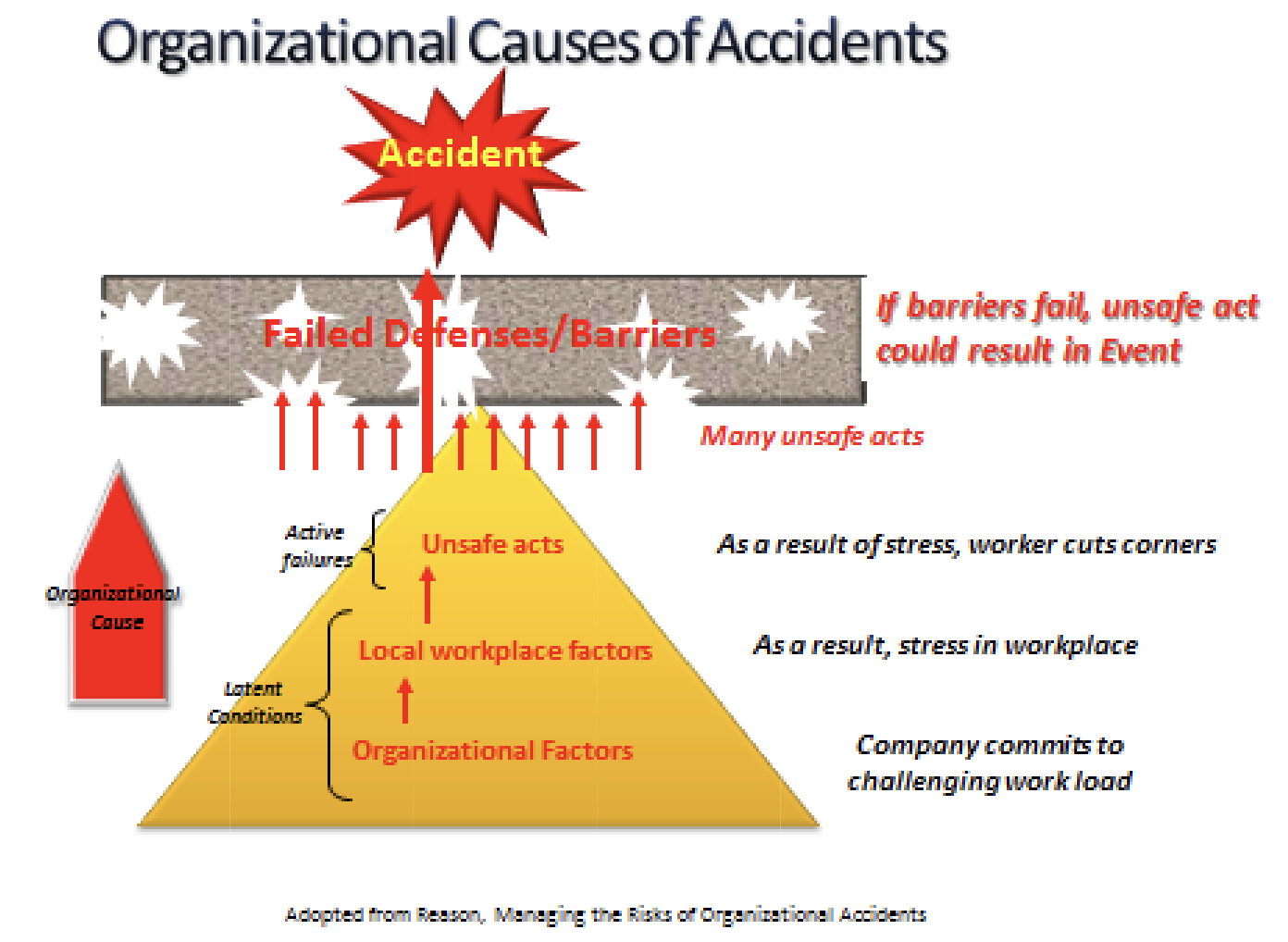
If implemented correctly, emphasizing employee participation and using science to analyze causal and contributing factors, every organization can become HUMBLE in its quest for world-class safety. Management begins to understand that accidents have both active failures and latent organizational failures, and in many situations, the latent organizational failures influence the active failures.
This element also teaches the Plan-Do-Check-Act model and any of the other 16 elements of my OSH SMS. Developing Corrective Action Plans (CAPS) to address the LEARNINGS from the causal analysis turns IM into a PREVENTIVE element rather than solely a reactive element. Implementing CAPs where the risks are allows the business to reduce risks BEFORE a repeat accident somewhere else in the organization.
Workers are quick to recognize this; although, be ready as some with push back saying “why do we have to do that, we did not have the accident”. Don’t worry, they will come around in their thinking. But more importantly, managing CAPs allows management to DEMONSTRATE their support for managing safety. They are investing $ in controls/barriers/safeguards BEFORE someone has an incident. And there is no better way to demonstrate a commitment to safety.
It took this plant manager 14 months to admit this all played out in his facility because, trust me, he had a totally different plan in mind. But he just got his culture scores back, and after only implementing three (3) elements this year, the scores in all 12 safety categories at least doubled, and some saw an increase of up to 90% improvement. However, the one element most of the written comments were about was the causal analysis tools, the change in “fairness” within safety, and the openness and participation of management in safety. (Do you see those reflected in the IM element?)
One more believer who went kicking and screaming, down, and more to come!!!