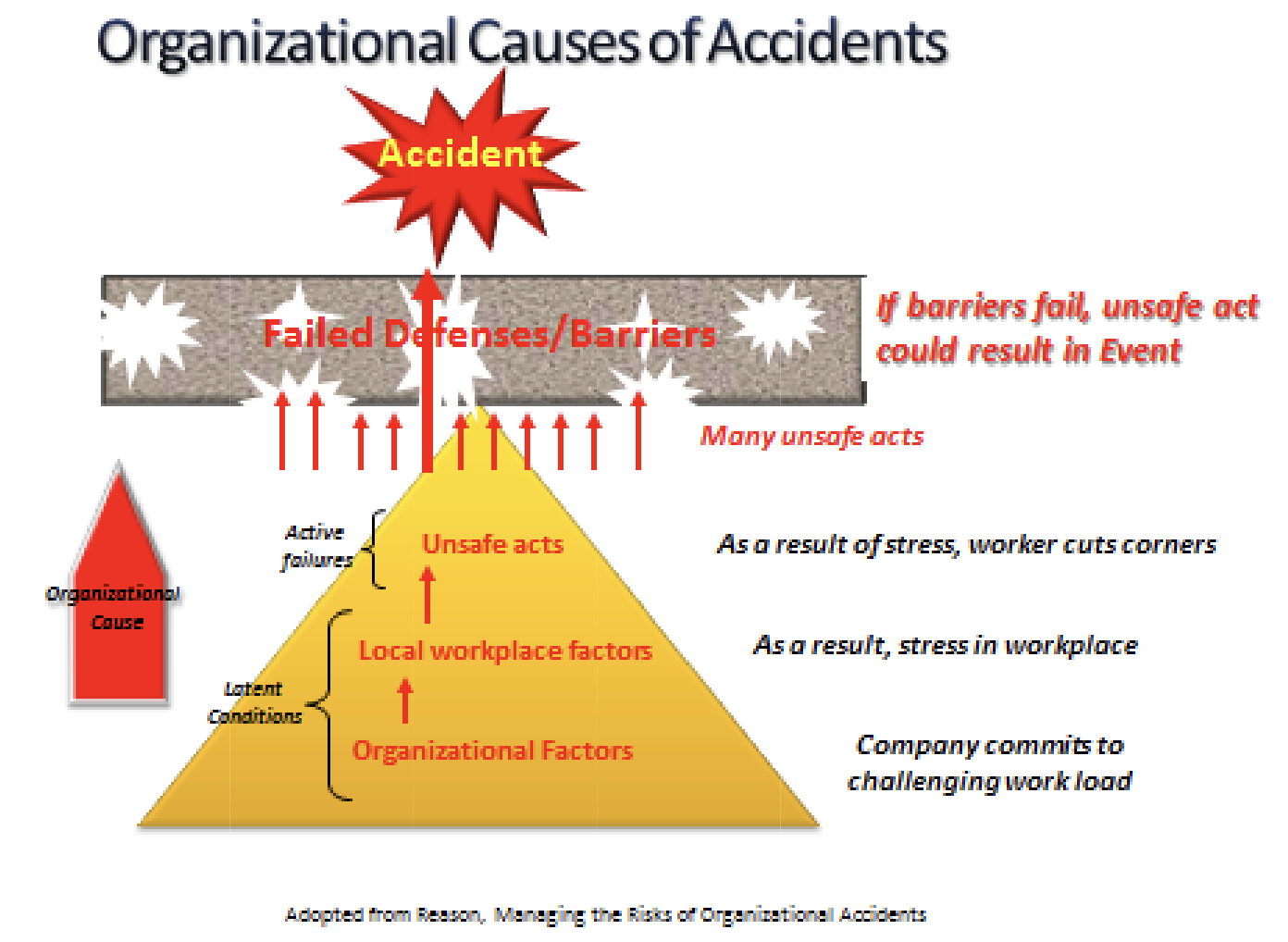
If I had a nickel for every time I have heard this phrase over the past 20 years of consulting… “industry standard/practice,” I would have retired after 5 years. What is an “industry standard”? It is far from being a Recognized and Generally Accepted Good Engineering Practice (RAGAGEP), that’s for sure. However, companies with an immature safety culture will adopt such practices to be “competitive” without understanding the risks they often pose. They are confident simply because “nothing bad has happened”… YET!
I lost a good friend because a company followed the “industry standard” and used natural gas rather than compressed air to blow lines of slag and debris. This was an accepted industry practice in building NG power plants, but it was an insane practice and a total lack of respect for the hazards of Natural Gas.
It was an accepted “industry standard/practice” until the day it claimed six workers (one was the site safety manager and a friend) and injured 50 more.
So when we hear the phrase “industry standard/practice,” we should know what follows in the discussion.
Here is a post from the Chemical Safety Board on the matter: https://www.csb.gov/pipe-cleaning-practices-that-led-to-kleen-energy-explosion-are-common-across-gas-energy-industry-survey-data-show/
Here is the latest use of the phrase: https://www.fastcompany.com/91224363/norfolk-southerns-60-second-cap-inspections-making-rail-workers-absolutely-ballistic
I am sure there are workers who would abuse this task and take much longer than needed; however, for a business to cap this inspection to no more than 1 minute is a bit much. It would take a normal person 30 seconds to simply walk around a railcar, much less lay eyes on all the components required to be inspected. The Railroad says the rule simply reflects the current industry standard/practice. So, since all the railroads agreed on the time needed, it became an acceptable practice.
In response to the Kleen Energy explosion, the National Fire Protection Association (NFPA) issued NFPA 56 – Standard for Fire and Explosion Prevention During Cleaning and Purging of Flammable Gas Piping Systems to establish safety criteria for cleaning and purging flammable gas piping systems, including natural gas lines and prohibits the use of flammable gas for pipe cleaning where the system design pressure exceeds 125 psig.
Origin and Development of NFPA 56
In February 2010, an explosion occurred at a power plant construction site as a result of an uncontrolled release of flammable gas that was being used to clean the interior of the fuel piping system. The incident investigation resulted in urgent recommendations being issued by the U.S. Chemical Safety Board (CSB) for NFPA to develop requirements for the “safe conduct of fuel gas piping cleaning operations.” In response, the NFPA Standards Council established the Technical Committee on Gas Process Safety and tasked that committee with developing a standard to address piping system cleaning and purging operations.
As a result of the CSB’s urgent recommendation, NFPA issued provisional standard NFPA 56 (PS), Standard for Fire and Explosion Prevention During Cleaning and Purging of Flammable Gas Piping Systems, which prohibits the use of flammable gas as an agent for the interior cleaning of piping systems. NFPA 56 (PS) expanded on the CSB recommendations by including cleaning and purging of all flammable gas piping systems at any inlet pressure for electric-generating plants and for industrial, commercial, and institutional applications.
In addition to the use of flammable gas for cleaning and purging, the provisional standard addressed training requirements for personnel as well as notification of hazards for personnel not directly involved in cleaning or purging procedures. The standard required the development of written procedures for cleaning and purging activities and that all such written procedures undergo a safety validation performed by a competent person. The definition of competent person was extracted directly from federal Occupational Safety and Health Administration (OSHA) regulations. NFPA 56 (PS) also adopted terminology commonly used by the petrochemical industry for those procedures: purging into service for the process of replacing air in a piping system with inert or flammable gas and purging out of service for the process of replacing flammable gas in the piping system with inert gas or air.
In accordance with ANSI requirements for provisional standards, NFPA 56 (PS) was immediately submitted for revision in accordance with the NFPA Regulations Governing Committee Projects. As a result, NFPA 56 was no longer a provisional standard and was no longer designated with the suffix “PS.”
In the 2014 edition, new requirements were added to address the use of pressure relief valves and their associated piping in purging and cleaning processes. NFPA 55, Compressed Gases and Cryogenic Fluids Code, was exempted from the scope of NFPA 56 in recognition of new requirements added to NFPA 55 to address cleaning and purging of flammable gas piping systems within the NFPA 55 scope.
Also, the term source valve was defined and added to the scope because it is the term used in the compressed/industrial gas industry to demarcate the point of delivery to the piping system. The 2014 edition also included additional annex text to further clarify existing and new requirements.
In the 2017 edition of NFPA 56, the requirements for written procedures for cleaning and purging activities were modified to include additional topics. The procedures were required to address nonconductive components in temporary piping assemblies to account for the static charge that might be induced by those components. Additionally, these modified written procedures addressed the protection and rescue of personnel, including the selection of fire-resistant clothing based on a hazard analysis in accordance with NFPA 2113, Standard on Selection, Care, Use, and Maintenance of Flame-Resistant Garments for Protection of Industrial Personnel Against Short-Duration Thermal Exposures from Fire. New requirements were also added to the training requirements in Chapter 5 to ensure that knowledge transfer was evident in the training program and to make sure the appropriate information was maintained in the training records.
In the 2020 edition, the technical committee further specified where the standard is not applicable, such as in relation to gas-consuming equipment; gathering lines from well pads to gas processing facilities, as these systems are addressed in other publications like the AGA Purging Manual; and well padding systems, as the complexity and range of issues make NFPA 56 inadequate for this type of application. Well pad piping systems can contain significant amounts of flammable and combustible liquids that are not addressed in this standard.
In addition, cleaning and purging activities were revised in Chapter 4 of the 2020 edition and associated guidance information was added in Annex A to address gaps within requirements that were identified in the previous edition.
Guidance information was added to Annex A to provide guidelines for the development of an emergency response plan (ERP), assist the users of the standard to develop a comprehensive training program, and verify that personnel can perform their duties prior to the start of the cleaning or purging activity.
Extracts from other NFPA documents were also updated to the latest revisions of the source documents. Finally, information in Annex B that was extracted from the AGA Purging Manual was revised to be consistent with the latest edition of the publication.
The 2023 edition of this standard further expands on the training steps that are to be included in a training plan and how training should be provided to match the language and vocabulary level of the participants. Additionally, criteria on when piping is to be purged out of service, as well as when it is to be cleaned has been added. A new annex on the consideration of human factors when purging has also been added to help users identify key human factors to consider when purging operations are being conducted.