One of the most prominent mistakes organizations make when implementing their Behavior-Based Safety Process (BBSP) is that they still operate under 1990s-era assumptions regarding how they view and manage incident reporting and investigation and the behaviors of personnel involved in those undesired events.
An improperly implemented and managed BBSP can create numerous biases, with the primary bias being that “unsafe behaviors cause all accidents.”
A leadership team with this bias, as reflected in their investigations and causal analysis, is not ready for a BBSP. However, even organizations that are mature enough in their safety thinking when launching the BBSP can revert to this mindset. It is just too easy to blame the worker, and the bias can be too strong to overcome.
So when we implement a BBSP, we need to be world-class in BOTH:
1) REPORTING of ALL incidents (including nearmisses/nearhits/PSIFs), and
2) Utilizing a RECOGNIZED causal analysis methodology when attempting to LEARN from those events
Not doing so will lead to “blaming the worker” without exhausting the “organizational failures” that influence the errors, mistakes, and violations that lead to undesirable events.
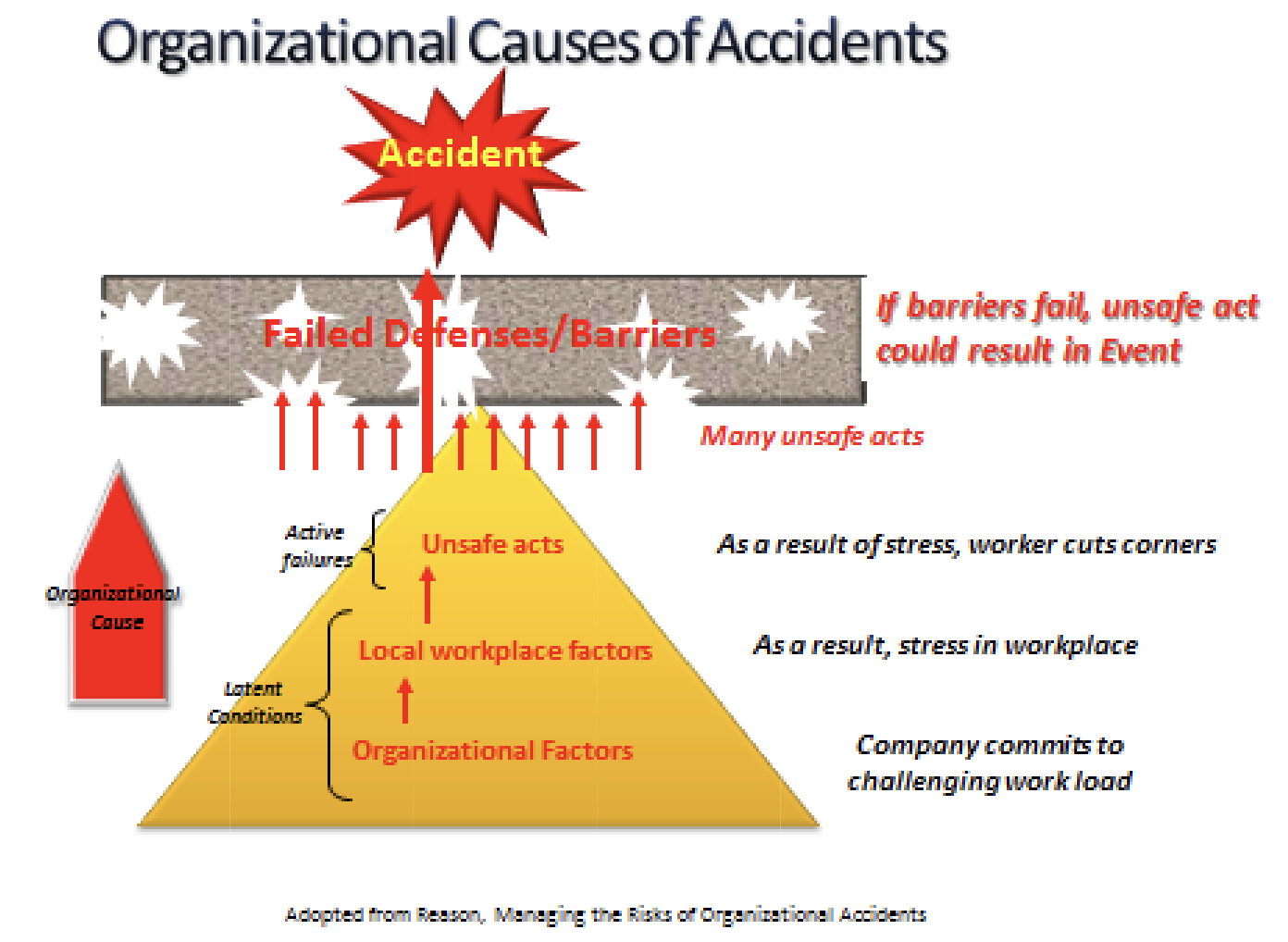
It matters not what the videotape shows us! We have to go down BOTH paths, in our investigation and causal analysis:
1) Active Failures, and
2) [Latent] Organizational Failures that either set up the scenario or influenced the decision-making that led up to the event
I will be so bold as to say that the majority of undesirable events involve people, but the causes of these events will rarely rest on the shoulders of the worker(s) involved. We just have to have the curiosity to understand why workers chose to do what they did that led to or contributed to the event. And when we go down this path, we will identify those influences that every worker is under BEFORE those influences lead to another poor decision, exposing another worker to a similar outcome.
An organization that understands this dual approach to BBSP and Incident Management will be far more successful in implementing and managing its BBSP.