Over my 30+ year career in safety and health, I have seen and participated in many “flavor of the month” initiatives. Almost all of these were out desperately trying to achieve an OSHA rate. I know; there’s a lot to unpack with that statement. Probably the most significant movement of my career was the Behavior Based Safety movement in the 1990s and 2000s. I saw it fail, and I saw it work with unbelievable success. It all came down to WHEN it was implemented, HOW it was implemented, and HOW it was measured and managed. We could say this about any OSH initiative. But like all safety movements, BBS got hijacked; too many management teams viewed “fixing the worker’s behavior(s)” as far less expensive than fixing the working environment, and from that point, it is all downhill, and it is a really steep hill; one may even say it is a cliff!
Today we are faced with no less than three (3) new initiatives, of which I subscribe to all three at some level. SIF, HOP, and Psychological Safety all have a place, and a significant place, in our OSH efforts. But none of them is a “silver bullet.” In fact, I will state they ONLY improve safety when they are part of a FORMAL Safety Management System that has Hazard Identification, Hazard Analysis, Risk Assessment, and Risk Mitigation at its core. This SMS approach is foundational to ALL safety and health improvement efforts. Everything we do has to build on the fundamentals of our profession for the past 70 years.
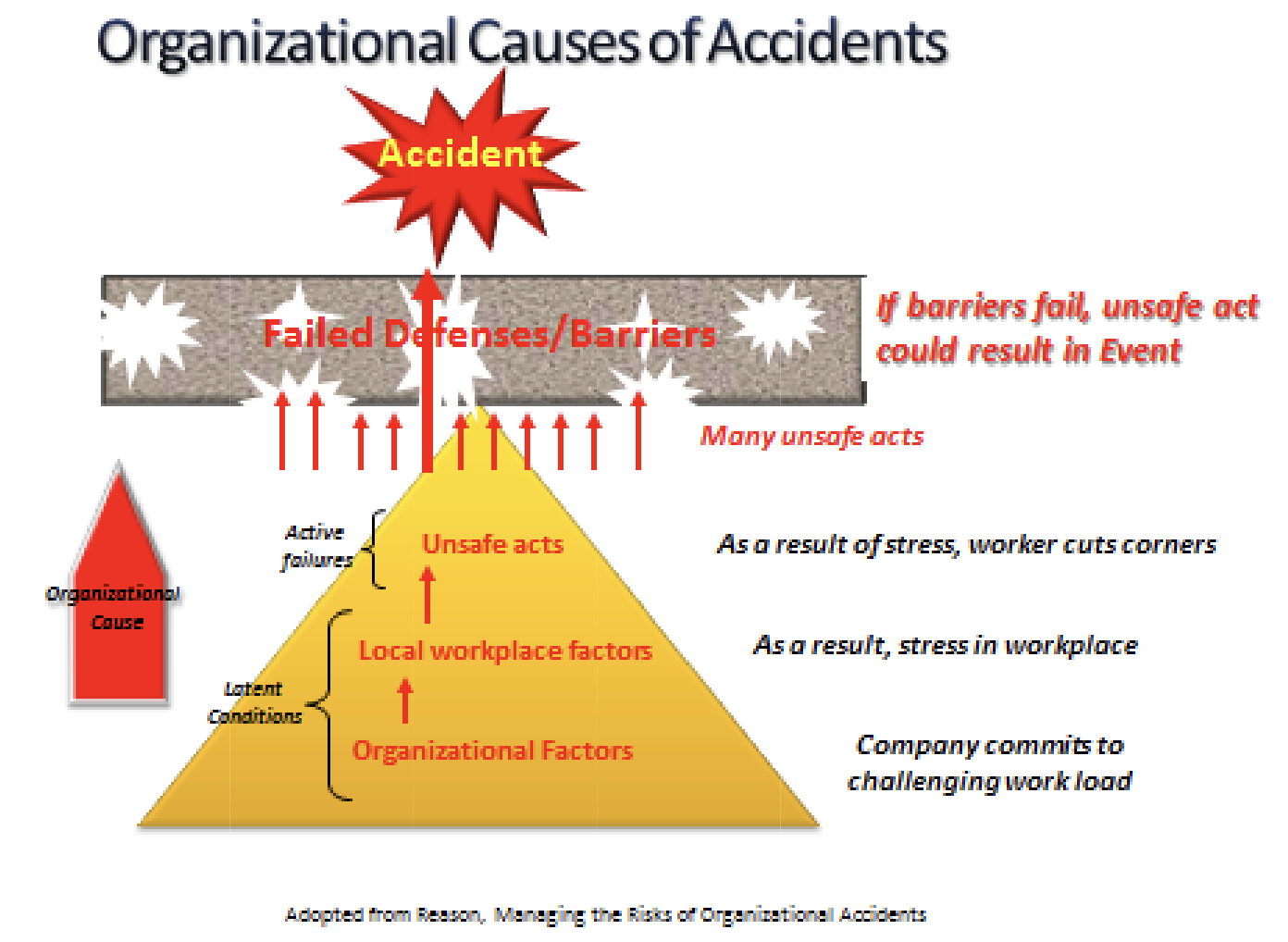
These fundamentals will get us some great results; however, they have become lost in all the noise we have blaring at us on social media and consultants trying to sell us the next best thing – whether we are ready for it or not. It is very much like BBS; my first attempt was an abject and costly failure. Basically, the facility was not ready for BBS, and the number of resources it took to implement it took the focus off the traditional hazards that could have/should have been addressed with the Hierarchy of Controls. Rather, we saw the shift to blaming workers for exposing themselves to uncontrolled hazards. And we thought we were being “world-class”; after all, look at how much money was spent on this BBS. It took me about five years to realize BBS was a trap for most businesses. After several years of consulting, it became painfully clear that BBS had been hijacked and doing more harm than good. I mean, after doing a dozen or so fatality investigations and hearing the discussions amongst management about behaviors when it was clear there were more latent failures than active failures leading to tragic consequences.
It takes years of really good safety management to prepare for BBS, HOP, SIF, etc. And these tools MUST NEVER be viewed as a silver bullet. Rather, they enhance our approach to managing safety and health and are quite good at playing that role when implemented, managed, and measured properly. But we NEVER stray from our fundamentals and have a continuous improvement effort to build on our fundamentals.