
“Name, blame, shame, retrain” is an often-used phrase for older ineffective paradigms of safety management and accident analysis. Dr. Rosabeth Moss Kanter of Harvard Business School phased the situation this way:
“Accountability is a favorite word to invoke when the lack of it has become so apparent.”
Kanter, 2009
The concepts of accountability, culpability and just culture are inextricably entwined. Accountability has been defined in various ways but in general with this characterization:
“The expectation that an individual or an organization is answerable for results; to explain actions, or; the degree to which individuals accept responsibility for the consequences of their actions, including the rewards or sanctions.”
As Dr. Kanter explains,
“The tools of accountability — data, details, metrics, measurement, analyses, charts, tests, assessments, performance evaluations — are neutral. What matters is their interpretation, the manner of their use, and the culture that surrounds them. In declining organizations, use of these tools signals that people are watched too closely, not trusted, about to be punished. In successful organizations, they are vital tools that high achievers use to understand and improve performance regularly and rapidly.”
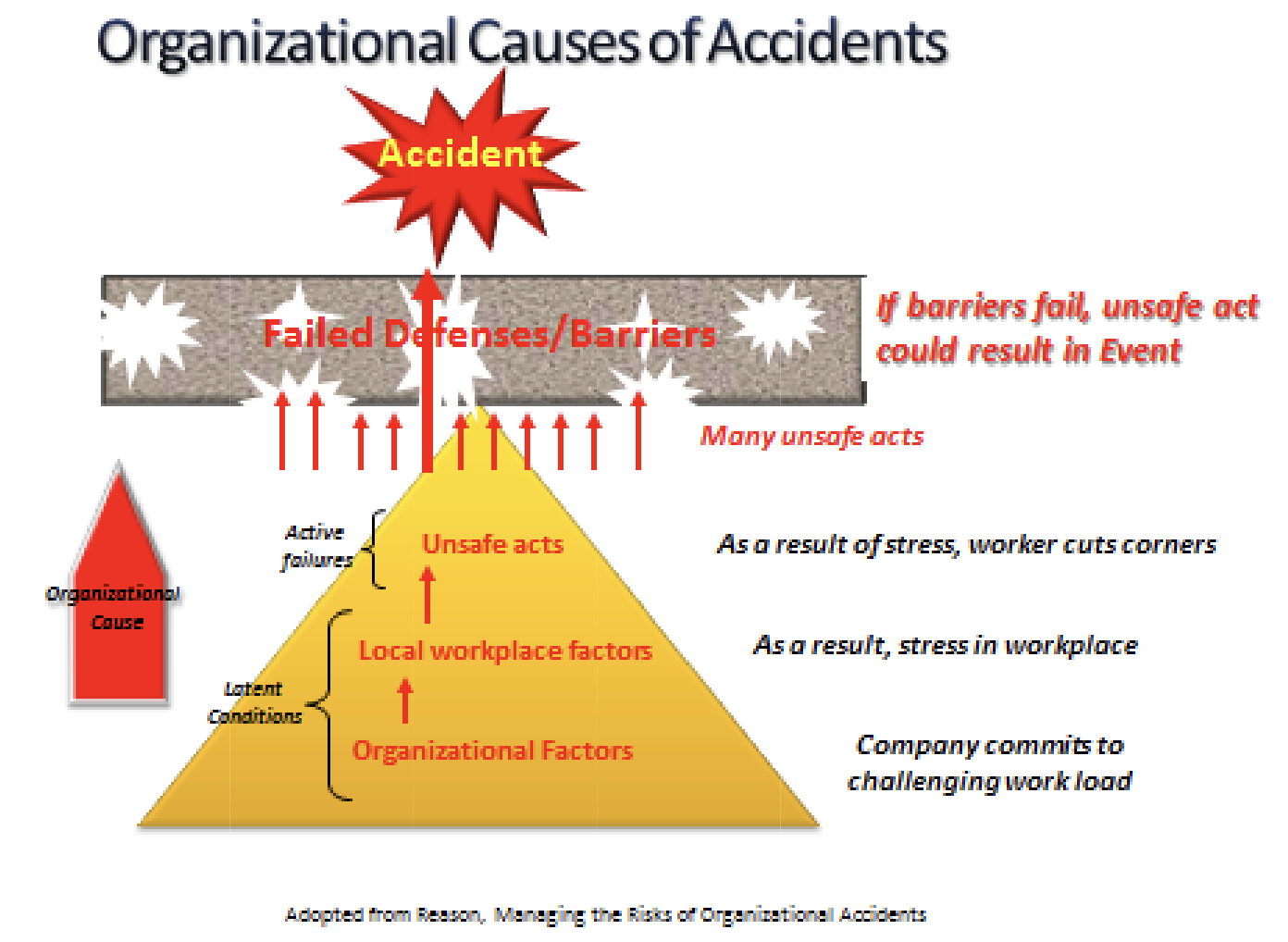
Culpability is about considering if the actions of an individual are blameworthy. The concept of culpability in safety is based largely on the work of Dr. James Reason as a function of creating a Just Culture. The purpose is to pursue a humane culture in which learning as individuals and collectively is valued and human fallibility is recognized as simply part of the human condition.
Being human, however, is to be distinguished from being a malefactor. He explains:
“The term “no-blame culture” flourished in the 1990’s and still endures today. Compared to the largely punitive cultures it sought to replace, it was a step in the right direction. It acknowledged that a large proportion of unsafe acts were ‘honest errors’ (the kinds of slips, lapses, and mistakes that even the best people can make) and were not truly blameworthy, nor was there much in the way of remedial or preventative benefit to be had by punishing their perpetrators. But the ‘no-blame’ concept had two serious weaknesses.
First, it ignored – or at least failed to confront – those individuals who willfully (and often repeatedly) engaged in dangerous behaviors that most observers would recognize as likely to increase the risk of a bad outcome.
Second, it did not properly distinguish between culpable and non-culpable unsafe acts.
“…a safety culture depends critically on first negotiating where the line should be drawn between unacceptable behavior and blameless unsafe acts. There will always be a grey area between these two extremes where the issue has to be decided on a case by case basis.”
“… the large majority of unsafe acts can be reported without fear of sanction. Once this crucial trust has been established, the organization begins to have a reporting culture that provides the system with an accessible memory, which, in turn, is the essential underpinning of a LEARNING culture. There will, of course, be setbacks along the way. But engineering a just culture is the all-important early step; so much else depends upon it.” [GAIN Working Group E, 2004]21
Along the road to a, “Just Culture,” organizations may benefit from explicit “amnesty” programs designed to persuade people to report their personal mistakes. In complex events, individual actions are never the sole cause. Thus the determination of individual culpability and personnel actions that might be warranted should be explicitly separated from the accident investigation. Failure to make such separation may result in reticence or even refusal of individuals involved to cooperate in the investigation, may skew recollections and testimony, prevent investigators from obtaining important information, and unfairly taint the reputations and credibility of well-intended individuals to whom no blame should be attached.

