
An organization’s approach to Management and Accountability says a lot about its safety maturity

Taking from the “Five Themes for Excellence in Safety Management Systems (SMS)”, we can look at the means a facility holds its front-line supervisors and managers accountable for safety through this lens of excellence and measure the maturity of the safety culture. To recap the progression, here are the five levels:

  1. Ad-Hoc
  2. Managed
  3. Standardized
  4. Predictable
  5. Excellence

Using the organization’s SMS and how it holds its front-line supervisors and managers accountable for safety, we can see where they lie on the path to SMS Excellence.
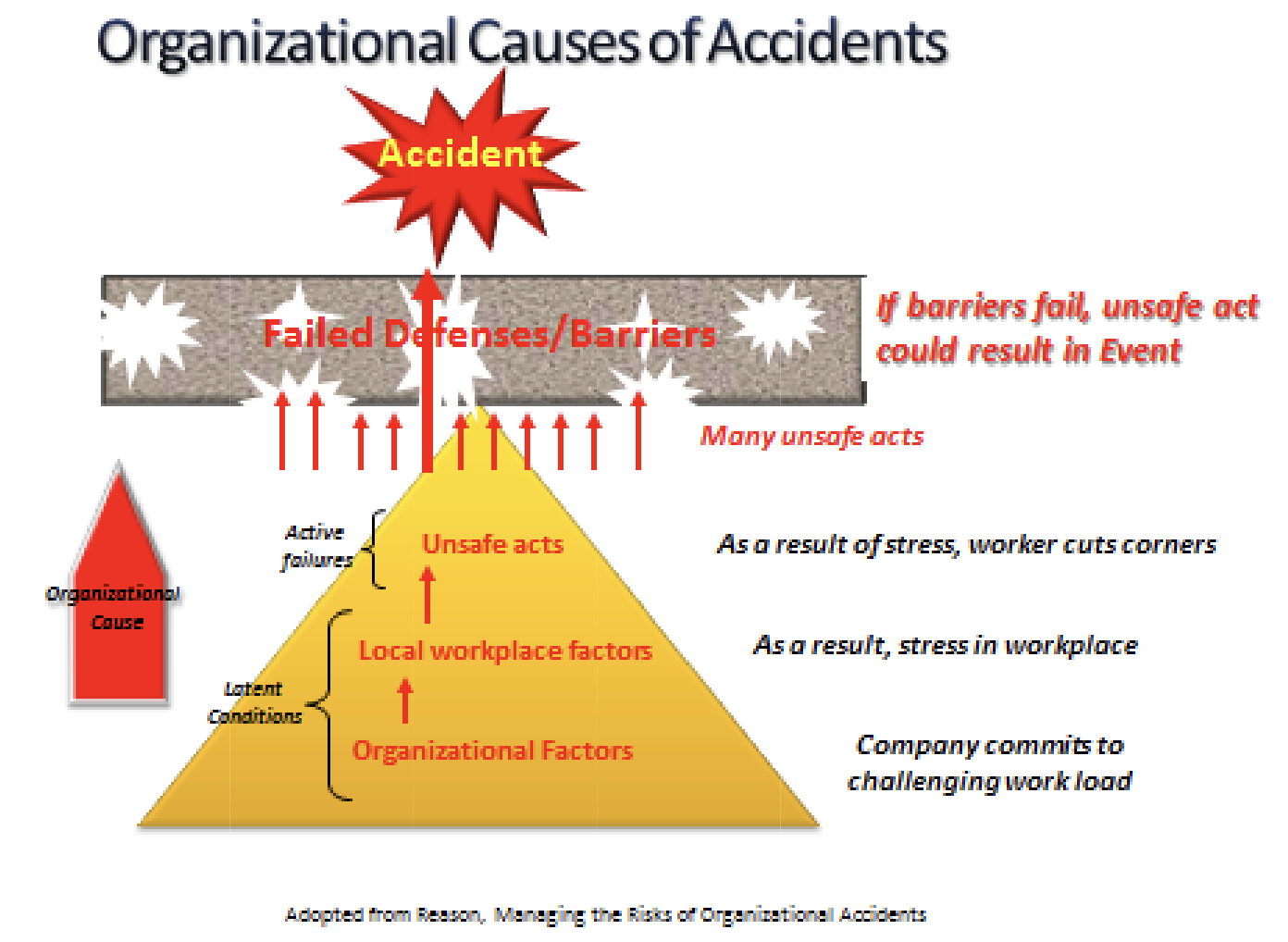
AD-HOC – There is a culture of non-acceptance and a lack of understanding of responsibilities.

  • Managers and supervisors rarely, if ever, hold their employees to account for their H&S duties.
  • There is an inconsistency between accountability for H&S and accountability for other business activities.
  • Individuals are unclear on their roles and responsibilities relating to the control of H&S risks.
  • There is a lack of procedures and processes to ensure accountability for H&S. (e.g. in job descriptions).
  • Supervision and supervisory roles are not clearly defined or consistently applied.
  • Collaboration arrangements are undefined and there is no proactive inclusion of employees involved (a failure of organizational structure).


MANAGED – Individuals know their responsibilities, but there is no consistent evidence of ownership across the organization.

  • Some managers and supervisors hold their employees accountable, but there is no consistency of application.
  • Some processes for controlling responsibilities exist, through procedures or performance reviews, but not for all significant risks.
  • Individuals are unclear on some roles and responsibilities relating to control of H&S risks.
  • There are some procedures and processes in place, but not for all significant risks.
  • There is some definition of collaborative arrangements but with minimal impact on collaboration.


STANDARDIZED – There is recognition and acceptance between individuals in the organization over roles and responsibilities and mutual involvement to achieve business objectives.

  • Teams and individuals responsible for controlling significant risks, know and understand their responsibilities and apply them in the correct manner.
  • There are processes in place to allow managers to manage appraisal systems to reward and correct behaviors and outcomes but also to make sure there are no unintended consequences of these appraisals.
  • Individuals are clear on their roles and responsibilities and effectively deploy and actively engage to improve H&S risk controls.
  • There are effective procedures and processes in place for all significant risks.
  • Collaboration is effective and individuals are given and accept additional responsibilities.
  • Supervision and supervisory roles are adequate.
  • Supervisory arrangements are proportionate and adaptable to control risks associated with those new to a job, learning new processes, carrying out infrequent high-risk work, and remote /lone working.


PREDICTABLE – Individuals recognize the risks and are proactive in informing others and forming groups that support a culture of risk minimization.

  • Individuals can adapt and manage change in accountability to influence improvements in standards and risk management.
  • The processes provide individuals with the confidence to challenge organizational norms and proactively and independently seek out improvements to the risk management systems.
  • Managers and supervisors fully understand how taking accountability lends itself to risk reduction methodology.
  • Individuals proactively take ownership to influence improvements to H&S risk control.


EXCELLENCE – The organization understands the wider-industry culture and takes active participation to improve H&S risk control.

  • The organization actively shares best practices whilst learning and implementing improvements from wider industry groups.
  • The processes allow the organization to actively participate in sharing good management practice from other industry groups.
  • The organization proactively takes ownership to influence improvements toH&S risk control.••Good supervision and effective supervisory roles are embedded within the organization’s corporate structure and operational delivery.
  • The organization uses the mechanisms in place to instigate change and have the confidence to use them.
  • The organization seeks out wider opportunities across the sector’s key stakeholders and beyond, to learn from and share best practice with other industries.


Source: RM3, 2019 – The Risk Management Maturity Model (UK’s HSE)

Scroll to Top