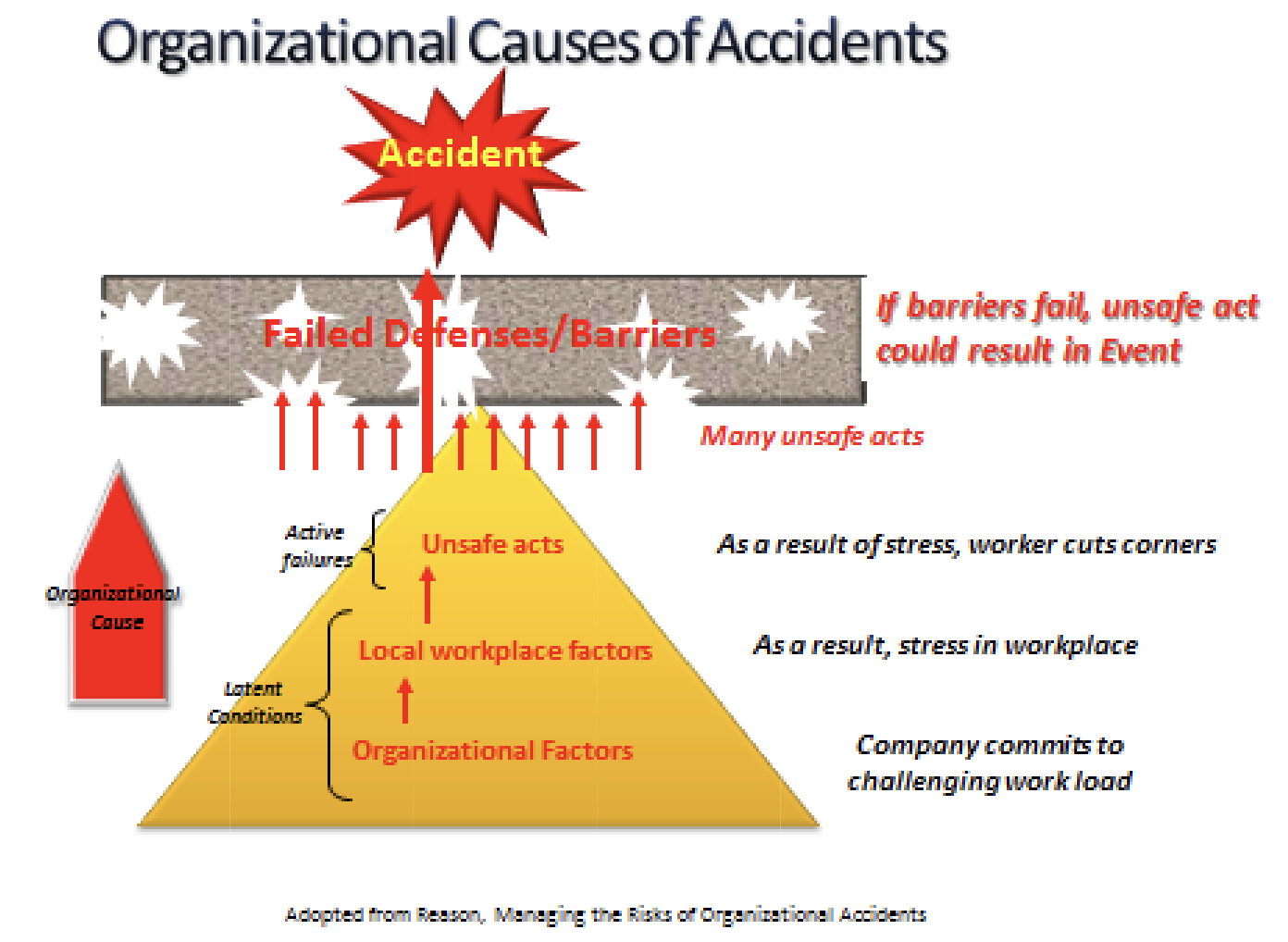
The systems approach provides a framework for the analysis of errors and efforts to improve safety. Many specific techniques can be used to analyze errors, including retrospective methods such as root cause analysis and prospective methods such as failure modes effect analysis.
Failure modes effect analysis (FMEA) attempts to prospectively identify error-prone situations, or failure modes, within specific work tasks/processes. FMEA begins with identifying all the steps that must occur for a given task/process to occur. Once this process mapping is complete, the FMEA then continues by identifying how each step can go wrong, the probability that each error can be detected, and the consequences or impact of the error not being detected.
The estimates of the likelihood of a particular task/process failure, the chance of detecting such failure, and its impact are combined numerically to produce a criticality index. This criticality index provides a rough quantitative estimate of the magnitude of hazard posed by each step in a high-risk tasks/process. Assigning a criticality index to each step allows prioritization of targets for improvement.
Developing Solutions for Active and Latent Errors
The differentiation between slips and mistakes is crucial in attempting to prevent active errors, as the solutions to these two types of errors are very different. Reducing the risk of slips requires attention to the designs of protocols, devices, and work environments—
- using checklists so key steps will not be omitted,
- implementing forcing functions to minimize workarounds,
- removing unnecessary variation in the design of key devices,
- eliminating distractions from areas where work requires intense concentration, and implementing other redesign techniques.
On the other hand, reducing the likelihood of mistakes typically requires more training or supervision, perhaps accompanied by a change in position if the same worker makes a mistake habitually or disciplinary action if it is due to disruptive or unprofessional behavior. Although slips are vastly more common than mistakes, organizations typically respond to all errors as if they were mistakes, resorting to remedial education and/or added layers of supervision. Such an approach may impact the behavior of an individual who committed an error but does nothing to prevent other frontline workers from making the same error, leaving other workers at risk of continued harm unless broader, more systemic solutions are implemented.
Addressing latent errors requires a concerted approach to revising how safety management systems work, how protocols are designed, and how individuals interact with the management system. Specific solutions thus vary widely depending on the type of latent error, the severity of the error, and the availability of resources (financial, time, and personnel) available to address the problem. An appropriate systems approach to improving safety requires paying attention to human factors engineering, including the design of protocols, schedules, and other factors that are routinely addressed in other high-risk industries but are only now being analyzed in medicine. Creating a culture of safety in which reporting of active errors is encouraged, analysis of errors to identify latent causes is standard, and frontline workers are not punished for committing slips is also essential for finding and fixing systematic flaws in health care systems.