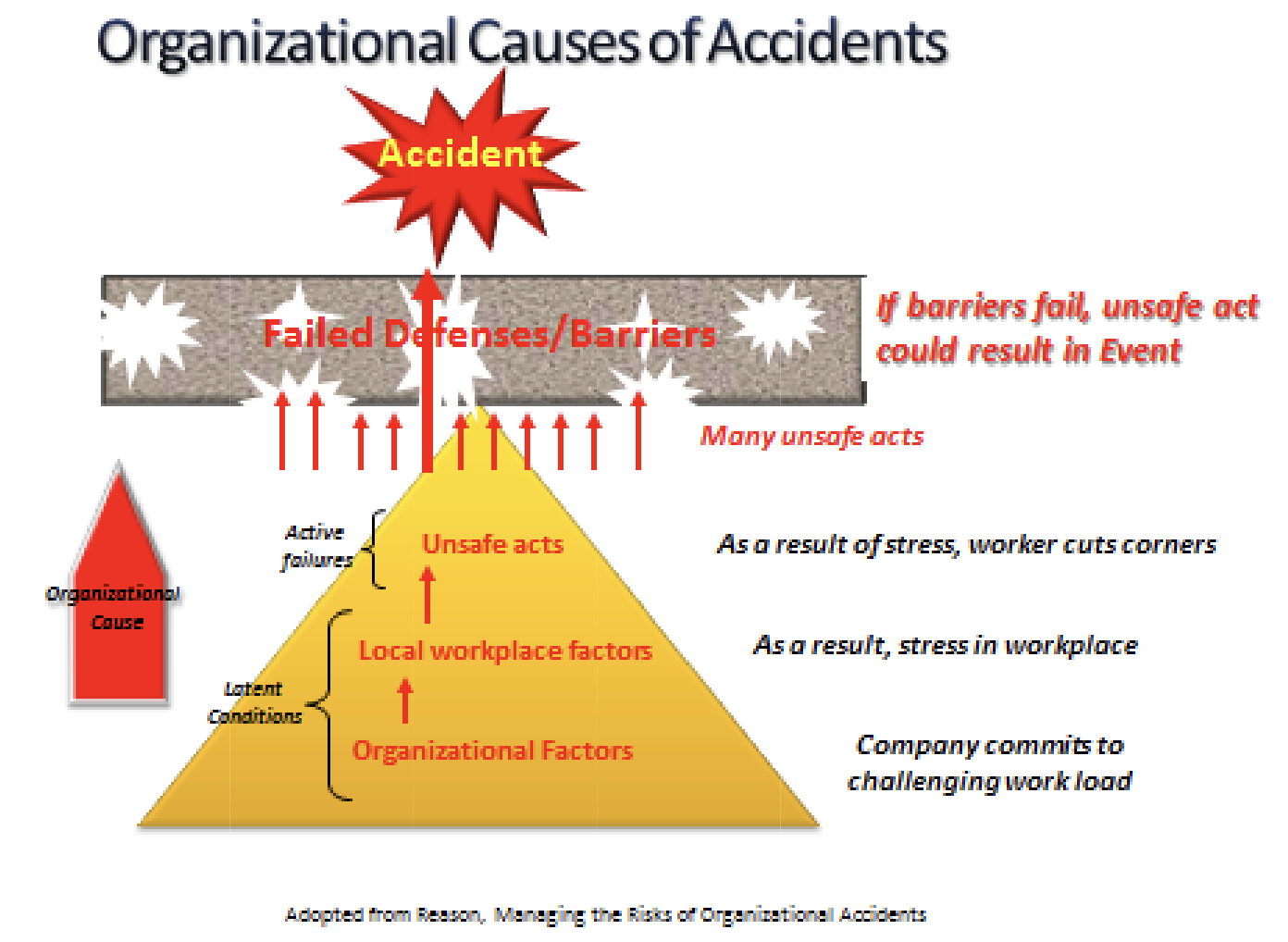
Recently we worked with an organization that was struggling to control its risks around the use of ATVs and UTVs. After several serious accidents involving these machines, we were asked to review their “Barriers,” “Controls,” and “Safeguards” in place to control the risks associated with these machines. We found a program and training on the said program that failed to DEFINE and QUANTIFY safety expectations. For example, the program stated that these machines could only be operated in “designated areas,” (a trendy phrase used in poorly written programs), yet the term had not been defined nor quantified. Thus these machines were being used in all locations of the properties regardless of risks. The failure to DEFINE and QUANTIFY what a “designated area” is was foundational to the safe operation of these machines and was clearly an organizational failure; however, in each event, management wanted to find fault in the decision-making of the operator of the machine(s).
But if the program states “only in designated areas” and the training program uses the exact phrase, yet no areas have been assessed and designated, where is the failure in these events? Active failure (operator’s decision) or Latent (organizational management system) failure?
So establishing a DEFINITION of a “designated area” and basing that definition on QUANTIFIABLE data provides us a structure to work from. Using the manufacturer’s limitations of their machines is the perfect starting point in establishing physical and measurable criteria for what a “designated area” needs to meet. We then created a three (3) step plan for the business to assess, define/quantify, and communicate.
Step 1 – We created Hazard Assessment Checklist for managers to perform these hazard assessments on areas they wished to use these machines. Those areas that “passed” would become a “designated area.” These assessments were documented, AND THEN a sampling of them were AUDITED by 2nd party auditors for accuracy within 2-3 months. This was to VALIDATE the assessments were done properly.
Step 2 – IDENTIFY the “designated areas” so operators can manage their risks. We leave it up to the business in how they wish to communicate these designated areas, as everyone has their preferred methods. But it is a CRITICAL piece to this risk control that operators have a clear and unambiguous means to know they are operating their machine(s) in a “designated area.” So when management discovers that some machines are operating outside of these designated areas, they can intervene before an accident occurs. This is normally done with signage, but some businesses have chosen to use mapping. We like to combine the two means.
Step 3 – Training/Communicating the designated areas to authorized personnel AND ensuring this is incorporated in the operator training courses for new operators. This training is brief and straightforward but CRITICAL to a solid implementation of this CHANGE in the workplace.
Some tips that we suggest in this approach:
1) Have these machine operators participate in the Hazard Assessments with management. Management needs to know where operators are taking these machines and what areas need assessment. it is also good for operators to see the hazard assessment method in use so they can ask questions and understand the process.
2) Although this is a very needed approach to using these machines, this is a CHANGE, and it shows the necessity of having a Change Management process to help manage the changes this process will bring about. Also, the original hazard assessment may need to be updated based on changes to the area or business practices that make the original hazard assessment no longer valid. A Change Management process could help catch this and call for an updated hazard assessment.