I have grown up in safety and emergency response and found that the tools used in both aspects can cross over to the other. For example, I use the National Incident Management System (NIMS) Incident Command on accident investigations to bring structure to the team. In that IC we have a “span of control” of no more than seven (7) people reporting to any one person. This lets people properly manage their team members in a high-stress working environment. And it works. So when we visit a facility/business and see front-line supervision-to-employee ratios of 30:1, we can almost predict what we will find in terms of culture. And this has a dire impact on safety performance and the culture of safety. Looking back to some of the more extreme cases we have encountered, we also remember the “over-the-top” effort by management with their safety banners, safety parties, etc., to overcome their cultural problems.
Let’s be transparent (and honest): RELATIONSHIPS are a huge part of safety. I have been talking about TRUST and CREDIBILITY in the safety effort as a crucial part of turning around both safety performance numbers and the culture around safety. Both of these are highly dependent on RELATIONSHIPS. Now, I am not talking about supervisors becoming everyone’s best friend – it is a tough job, but being fair, honest, and approachable are traits a supervisor MUST have. However, even a great supervisor with these traits can not properly manage 20-30 people AND allow them to build relationships with their team.
In a recent project, we interviewed 12 department supervisors, each with over 20 years of experience as a supervisor at the facility. A very stable and dedicated group of professionals. The company had invested in the folks; several had gone on to get degrees in business (paid for by the company), and all had undergone some excellent “supervisor” training throughout their careers. But when asked to name their employees, they could only name 25-30%, and you can probably guess which 25-30% they could name: the great ones and the problem ones. This was also, across the board, the most significant frustration they had.
The high turnover of the line workers drove part of this frustration. A turnover rate of around 15-20% has been the norm since “Lean Manufacturing,” when the staffing ratios went off the cliff. Senior employees retired, and a new mass of employees was hired. Still, with the vast supervisor-to-employee ratio, the supervisors felt they did not have adequate time to spend with these employees to make them feel at home and build their skills where they were comfortable doing their jobs. Everything was cut, including the “new employee orientation” and their “probationary period,” which the vast majority of the supervisors felt was a double whammy, causing a lot of turnover and cultural issues. 100% of them said at some point in their interview, “This used to be a great place to work,” and “We never dealt with this before.”
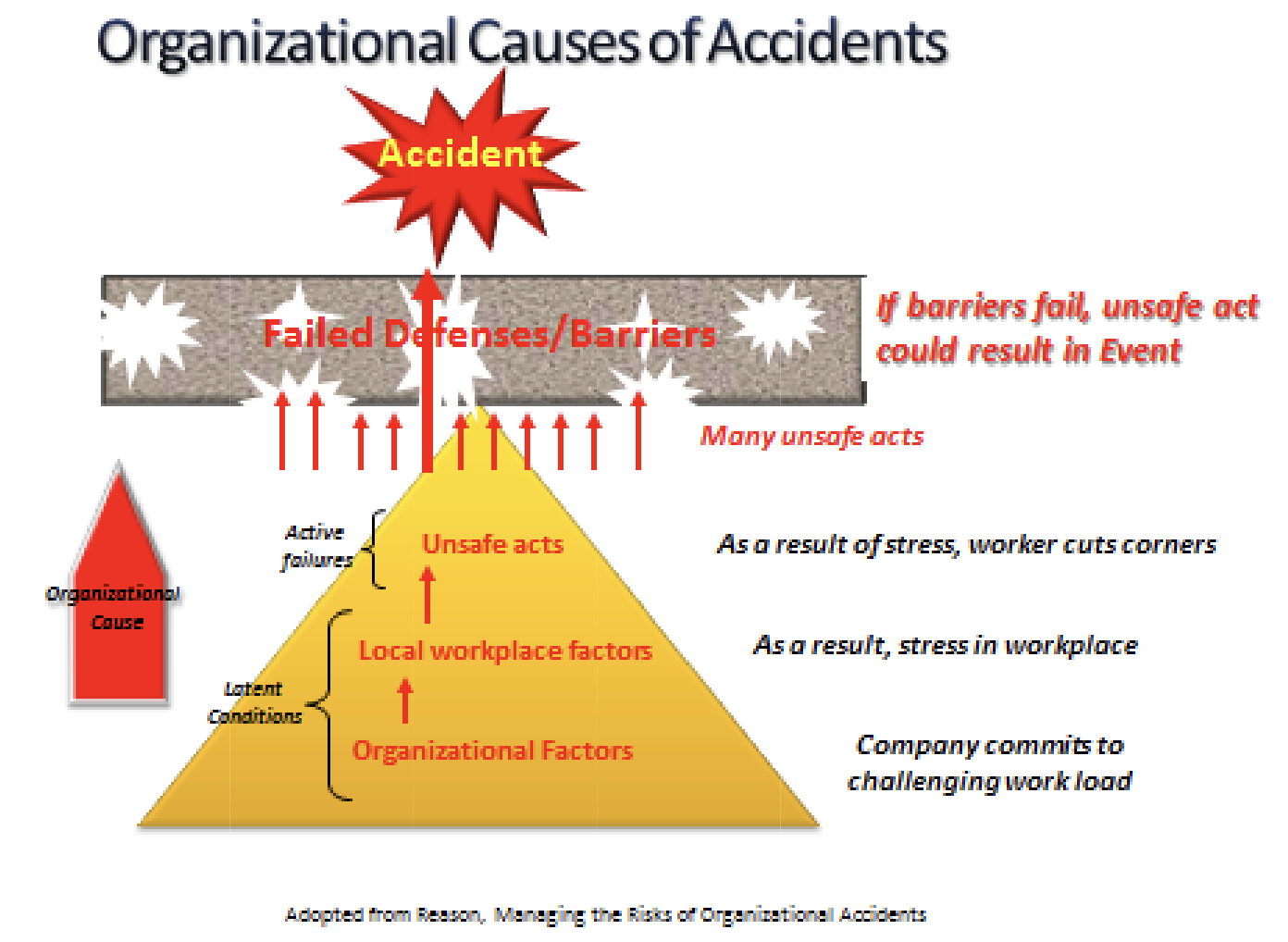
On top of this, management was quick to hold line workers accountable for “errors, mistakes, and violations,” even against the supervisor’s recommendations to not issue discipline but rather improve training and supervision. Unsafe acts had become the norm (e.g., routine violations) because employees turned to other employees who had learned the unsafe act(s) and passed them down. Management and supervisors were unaware of what this was called, but they were living it! Once employees learn that someone was terminated or suspended for doing something they were “trained to do” (albeit unofficially trained), this creates a wedge between line workers and their supervisor/manager.
But this all boils down to the lack of supervision/leadership. In the new organization, duties that used to be spread across a layer of personnel were now pushed down to the frontline supervisor. The company eliminated an entire management layer and spread the duties that the layer once did to others, with the brunt of them going down to the supervisor. This meant the supervisor was now saddled with more tasks/duties/responsibilities that took them out of the field and put them behind a desk. The company then forced “quarterly reviews” as some “business consultants” said this would provide “face-time” and improve the turn-over rate. Many of the Supervisors we interviewed said the first time they had seen an employee in months was during these quarterly reviews, which was embarrassing for them. It was uncomfortable for everyone as everyone knew it was forced, and in some instances, the supervisor had to ask the employee what their name was (some of whom had been working at the plant for months). But when you have 30 employees, and you are forced to spend 3-4 hours a day in meetings and your office doing time sheets, production scheduling, and trouble-shooting production and quality issues, not to mention responding to all the managers who have questions and need info, your left with little time to BUILD THOSE RELATIONSHIPS!