
Fostering the principles for a strong safety culture is one of the most challenging tasks facing a management team. Successful leadership achieving a strong safety culture will most likely move an organization to the next level of human performance.
A leader is any individual who takes personal responsibility for his or her performance as well as the facility’s performance and
attempts to influence the improvement of the organization that supports that performance.
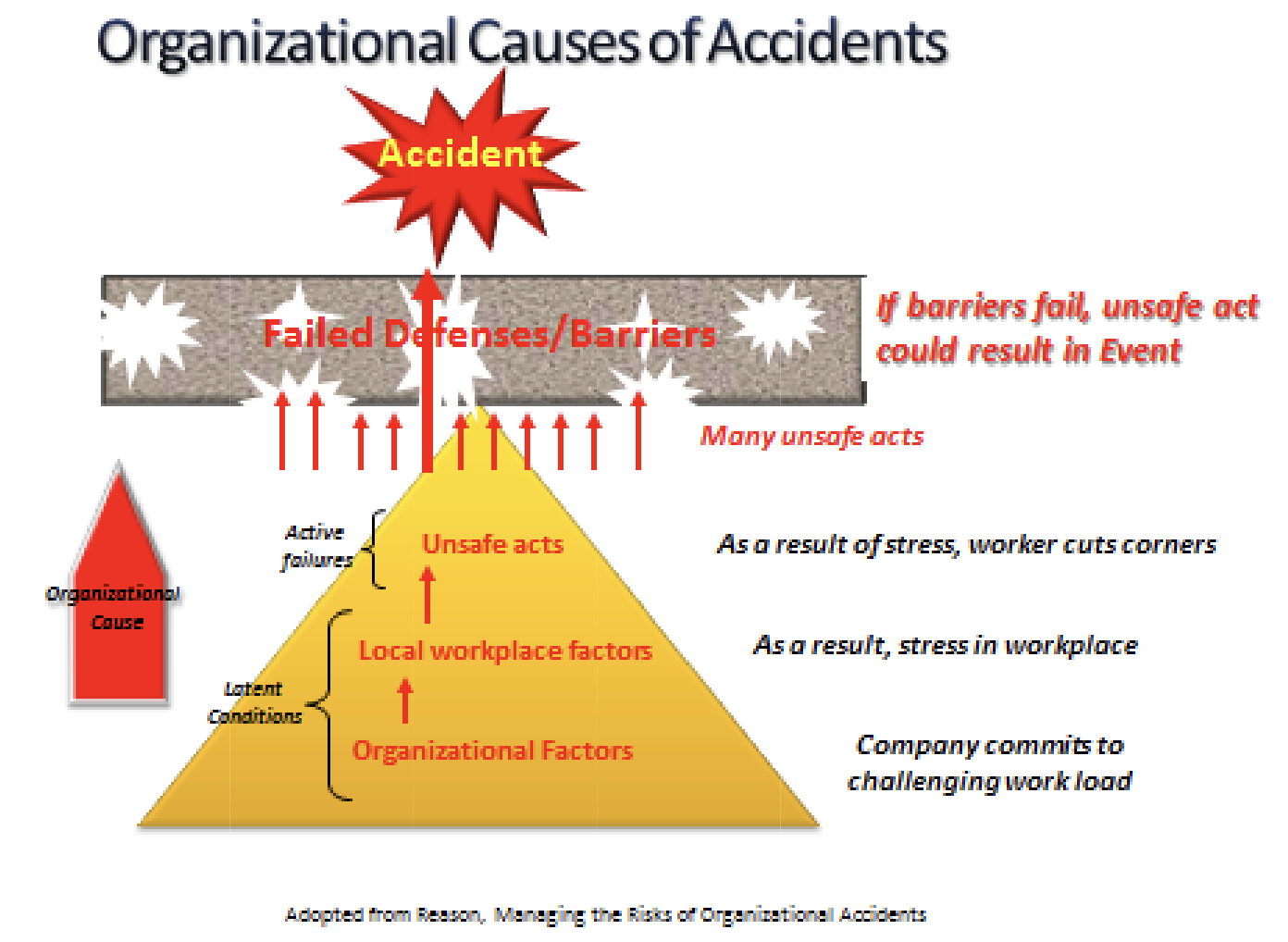
Human error and its consequences can occur anywhere and at anytime. Fortunately, most errors are trivial, having no consequence on the worker or business. But errors may challenge safety and create dire consequences to the organization, its people, and the environment. Therefore, management must understand how the organization influences people’s behavior through shared values and a safety culture to get things done.
Workers, supervisors and managers must BELIEVE they can prevent human error and its consequences. People cling to assumptions, values, and beliefs that strongly influence their choices when they encounter unanticipated situations or when procedure direction is vague or absent. Influencing and managing these factors to encourage people to internalize the above principles is the central theme of leadership in human performance improvement. Focusing on the people’s shared assumptions, values, beliefs, and practices—the culture—is, perhaps, the most effective way to maximize the organization’s resistance to events. A strong culture promotes the long-term success of the organization. But culture is hard and slow to change. Focusing on performance, reducing errors, and improving work processes is achievable in the short run.
Leader’s Role
The organization is the engine that drives the performance system. This is achieved by directing and influencing human performance and insulating the job site and the performers with layers of controls, barriers, controls, and safeguards. In the past, human performance consisted primarily of workers simply paying attention and doing the job right the first time. However, it is clear from years of accident research that a significant event presents unmistakable evidence of an organizational failure, not simply individual failure. Multiple controls typically fail, contributing to the event’s severity. Because it takes teamwork to suffer a significant event, managers, staff, supervisors, and workers must work together to be free of events. Balancing the competition for resources between production and prevention/safety presents a constant challenge to management. Therefore, the leader’s role is to align organizational processes and values to optimize both production and safety at the job site.
Production and Prevention: Competing Purposes
Production and prevention (error and event) practices always compete in the minds of workers. Leaders must work hard to keep the facility, environment, and personnel safe. Well-informed leadership at all levels of the organization will ensure that the vision, values, and beliefs (prevention-centered attributes) do not conflict with the mission, goals, and processes (production-centered attributes). Consistency and alignment promote both production and prevention behaviors, generating the desired long-term results.
Production behaviors are those actions or activities aimed toward meeting specific schedules to achieve mission objectives by performing tasks within deadlines and budget considerations. The outcomes of production are self-evident—completing jobs on schedule, operating and maintaining equipment, generating products, minimizing expenses, and satisfying the customer.
Error-prevention behaviors, such as self-checking, peer-checking, reviews and approvals, and procedure use, avoid errors and events. Prevention behaviors require that people think and be “mindful” while executing prevention tactics. Production activities must slow down long enough to allow people to think while executing prevention tactics to prevent errors. In contrast to the noisy evidence of production behavior outcomes, the outcomes of prevention activities are quiet non-events. There is no shouting, clapping hands, exchanging “high fives,” or staff parties. Following a near miss in the facility, people will express concern and participate in discussions of the circumstances. Otherwise, workers do not generally comment or show emotion following a period of safe operations. For this reason, it is relatively easy for workers to regard prevention activities as optional when they conflict with the accomplishment of production objectives.
Production behaviors naturally take precedence over prevention behaviors unless strong safety culture is nurtured by strong leadership. Both production and prevention behaviors are necessary for long-term success. But sometimes managers err when they assume people will be or are safe. Safety and prevention behaviors do not just happen. They are VALUE-driven, and people may not choose the conservative approach because of the stronger production focus of their immediate supervision or workgroup. Therefore, leadership is a defense. A robust safety culture requires aggressive leadership that emphasizes the principles and attributes of a strong safety culture. Leadership is not optional!
Source: OSHA/NIOSH/DOE

