
Hazard ID can begin as a compliance audit exercise

Many folks think they are far and away from having a formal Hazard Identification process in place.  But in reality, if they are auditing their “compliance” with OSHA/Safety standards, they are in phase 1 of a Hazard ID exercise.  As I like to say, we must DEFINE and QUANTIFY our safety expectations to MEASURE and VALIDATE their effectiveness. 

OSHA standards do this by defining and quantifying safety for us, although their expectations are far below the standard of excellence it takes to achieve greatness in safety.  Identifying a gap in our safety controls (i.e., safety compliance programs, training) equates to a HAZARD identified in the workplace.  That HAZARD needs to be analyzed using some recognized methodology; when that HAZARD is a deficiency in a safe work practice (i.e., formal control plan), we need to understand why that SWP was DEVIATED from to put a management system fix in place.  We then develop a Corrective Action Plan (CAP) to address the DEVIATION/HAZARD.

So, a great starting point in Hazard ID is to audit “compliance” with our safe work practices.  This is simply an easy starting point for formalizing a safety management system using the most fundamental elements… HAZARD ID and AUDITING.  A couple of years of real dedication by management and the workforce to eradicate deviations from safe work practices will go a long way to improving BOTH performance and culture. 

But be VERY aware that these Hazard Analyzes are NOT a “blame game”! 
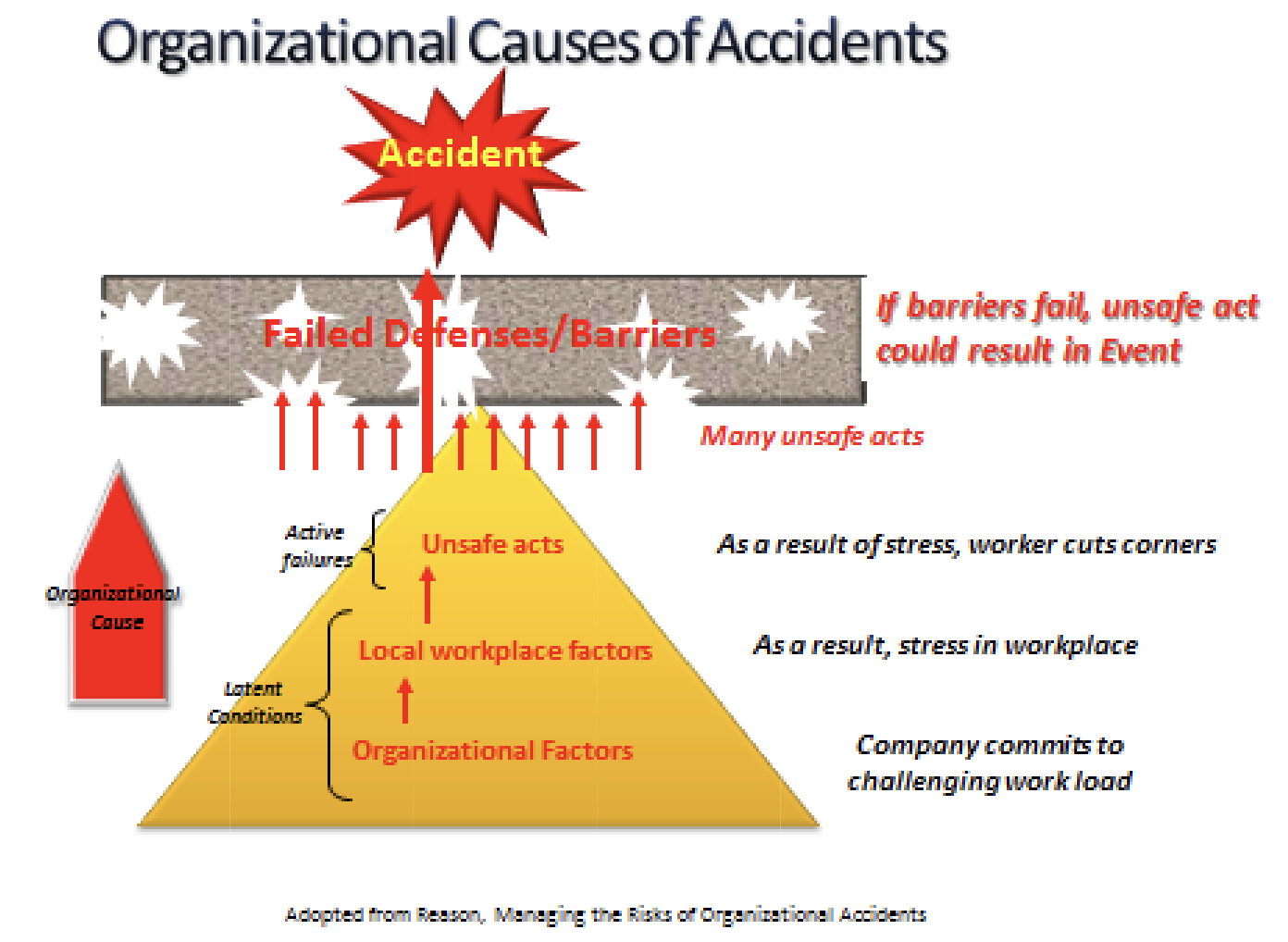
Having the attitude that “people just need to follow the SWP” is NOT going to get us where we need to be in either performance or culture.  Early into this effort, we will most likely identify some strong trends – this is a GOOD THING, as this is exactly why we AUDIT! Management will most likely go straight to “discipline” rather than trying to understand why so many fail to meet the expectations set by the SWP.  Just be ready for this reaction, as it is the normal reaction in an immature SMS.  This is where we become safety leaders, as it is often up to us to EDUCATE and MOTIVATE the management team on LATENT ORGANIZATIONAL FAILURES that set up the ACTIVE FAILURES that are being identified in these AUDITS/HAZARD ID exercises.  In other words… this is rarely about fixing the worker(s) but more about fixing the SMS, of which the SWP is just a small sliver.

If we are in search of a new safety metric, establish goals against how many of these “compliance” audits will be done per a given time period (e.g., weekly, monthly, etc.), but more importantly, establish goals on the “scores” of these audits.  For example, the facility respects LOTO as a critical safe work practice, and the expectations are HIGH for complying with the SWP, so maybe we set a goal of 90% for LOTO audits (i.e., OSHA Periodic Inspections – 1910.147(c(6)).

PLEASE REMBER how critical it is that we validate these audit scores!  These audits MUST be done by “trained auditors” to “calibrate” their expectations.  These auditors can be, BUT ARE NEVER SOLELY safety team members.  I always liked the managers and supervisors to be the auditors, along with the safety.  But we put these audit results in two (2) different buckets:  Operations/Maintenance Team audits and Safety Team audits.  If we have done our “auditor calibration” to reduce variation in the audit process, then the results in these two different data buckets should be very similar.  But be ready for a significant gap in the early days of this exercise.  Do NOT assume that the Ops and Maintenance personnel are “cooking the books” in order to meet the performance goal of the # of Audits performed and the score of each audit.  Yes, there will be some “pencil whippers” in the audit group. Still, if we manage this exercise properly, they will paint the scarlet letter on their own chest, so rarely do we have to call them out, as their manager will recognize this and do what they are responsible for, thus NOT making the safety pro into a “safety cop” or “baby sitter.”  Eventually, as the SMS matures, we will begin to measure and set goals to narrow these gaps between Ops/Maintenance audit scores and the safety team audit scores – this is TRUE CONTINUOUS IMPROVEMENT within the SMS, improving the safety process that drives the behaviors and attitudes we see on display each day.

Scroll to Top