
What is the difference between “root cause” and “direct cause”? (Please note that I am only using the single tense of these terms in the question; I am not implying these causes can only be singular.)
Hint: some are obvious, and this is a trick question. ![]()
Here are the official definitions that may help:
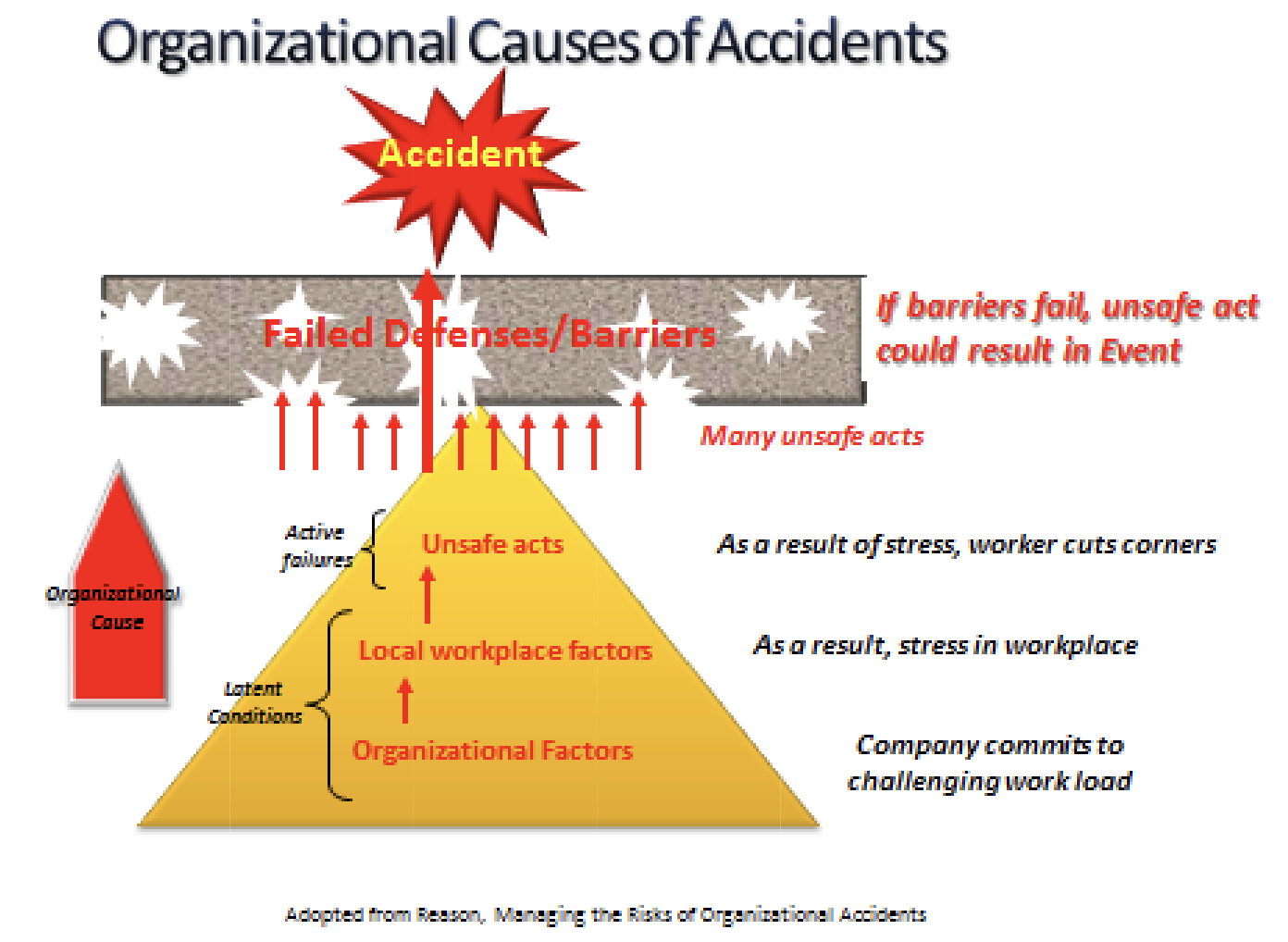
A CAUSAL FACTOR is an event or condition in the accident sequence that contributes to the unwanted result. There are three (3) types of causal factors:
- DIRECT CAUSE(S), which is the immediate event(s) or condition(s) that caused the accident;
- ROOT CAUSES(S), which is the causal factor that, if corrected, would prevent the recurrence of the accident; and
- CONTRIBUTING CAUSAL FACTORS, which are the causal factors that, collectively with the other causes, increase the likelihood of an accident, but which did not cause the accident.
DIRECT CAUSE of an accident is the immediate event(s) or condition(s) that caused the accident.
ROOT CAUSES are the causal factors that, if corrected, would prevent the recurrence of the same or similar accidents. Root causes may be derived from or encompass several contributing causes. They are higher‐order, fundamental causal factors that address classes of deficiencies, rather than single problems or faults. Correcting root causes would not only prevent the same accident from recurring, but would also solve line management, oversight, and management system deficiencies that could cause or contribute to other accidents. In many cases, root causes are failures to properly implement the principles and core functions of safety management system (SMS).
CONTRIBUTING CAUSES are events or conditions that, collectively with other causes, increased the likelihood of an accident but did not cause the accident individually. Contributing causes may be Latent Organizational Failures or a series of ACTIVE FAILURES that were not sufficient to cause the accident, but were necessary for it to occur. Contributing causes are the events and conditions that “set the stage” for the event and increase the probability of future events or accidents if allowed to persist or re-occur.
Here is an excellent example of how these three causal factors play out:
ACCIDENT DESCRIPTION
The accident occurred at approximately [Time] on [Date] at the [Facility], when a construction worker, employed by [Subcontractor], fell from a temporary platform. The platform had been installed to catch falling tools and parts, but it was also used as a work platform for personnel activities when 100 percent fall protection was used. The worker was transported by helicopter to the medical center, where he died at [Time] from severe head and neck injuries.
DIRECT AND ROOT CAUSES
The DIRECT CAUSE of the accident was the fall from an unprotected platform.
The CONTRIBUTING CAUSES of the accident were: (1) the absence of signs and barricades in the vicinity of the platform, (2) visibility problems created by poor illumination in the area of the platform, and (3) lack of implementation of job safety analysis, work controls, and the medical surveillance program.
The ROOT CAUSES of the accident were:
- failure by [Subcontractor] to implement requirements and procedures that would have mitigated the hazards, and
- failure by [Subcontractor] to effectively implement components of the Department’s safety management system policy mandating line management responsibility and accountability for safety performance.
(Source: DOE‐HDBK‐1208‐2012)

