Manipulating safety metrics, even leading indicators, is a management behavioral problem

Over my career, the most profound advancement in safety management was the recognition and shift away from lagging indicators (i.e., injury rates) to leading indicators within our safety management system (SMS).  But as this approach to safety metrics became more widespread, we have seen even leading indicators become a “number game” that gets manipulated as much as the old “OSHA Recordables” games.  So what does one do?  Get rid of all safety metrics because all of them can be manipulated?  Try that concept with the other business metrics.  Publish the next annual report with no business metrics claiming they can all be manipulated; thus, we just eliminated them.  I wonder how that would go over with the shareholders and regulators.  It is pure madness NOT to measure something simply because we fear that measurement can/will be manipulated.  It is the role of management, senior management, to have a DATA VALIDATION system in place.  Some may call this the Quality Control (QC) of our SMS.

The problem is not the metrics – the problem is the lack of an SMS that VALIDATES the metrics with a Quality Control approach to safety metrics.

We can either trust the bank to tell us what our balance is each month, or we can balance our checkbook to validate what the bank is telling us – the decision is all yours to make!

Without some means to continuously validate the data from the SMS, this numbers game with leading indicators may be more dangerous than playing the OSHA recordable game.

AUDITING, or what we call Gage repeatability and reproducibility (Gage R&R) in Six Sigma, is a CRITICAL PIECE to any SMS. Some may know it as “Trust but verify what the process is telling you”. 

And what do many organizations do with their “auditing”?  They minimize it!  And there lies the problem.  World-Class organizations have learned one simple truth the hard way… better for us to find it:

1) before someone else does and

2) before the consequence arrives

This means they embrace the auditing element.  In fact, the audit team(s) contains some of the best and brightest the company has to offer.  They have a schedule and it is NOT OSHA’s schedule for required audits.  They have far surpassed viewing audits as a regulatory necessity and now see auditing as the means to validate the data from the SMS.  They TRUST the audit data and when it conflicts with the process data, they perform a CAUSAL ANALYSIS to understand the failures that led to this data gap.  And most importantly, they FIX the SMS so that the data obtained from it, has a higher degree of reliability.  As they recognize that we can’t afford to identify a failed metric just once per audit cycle. 

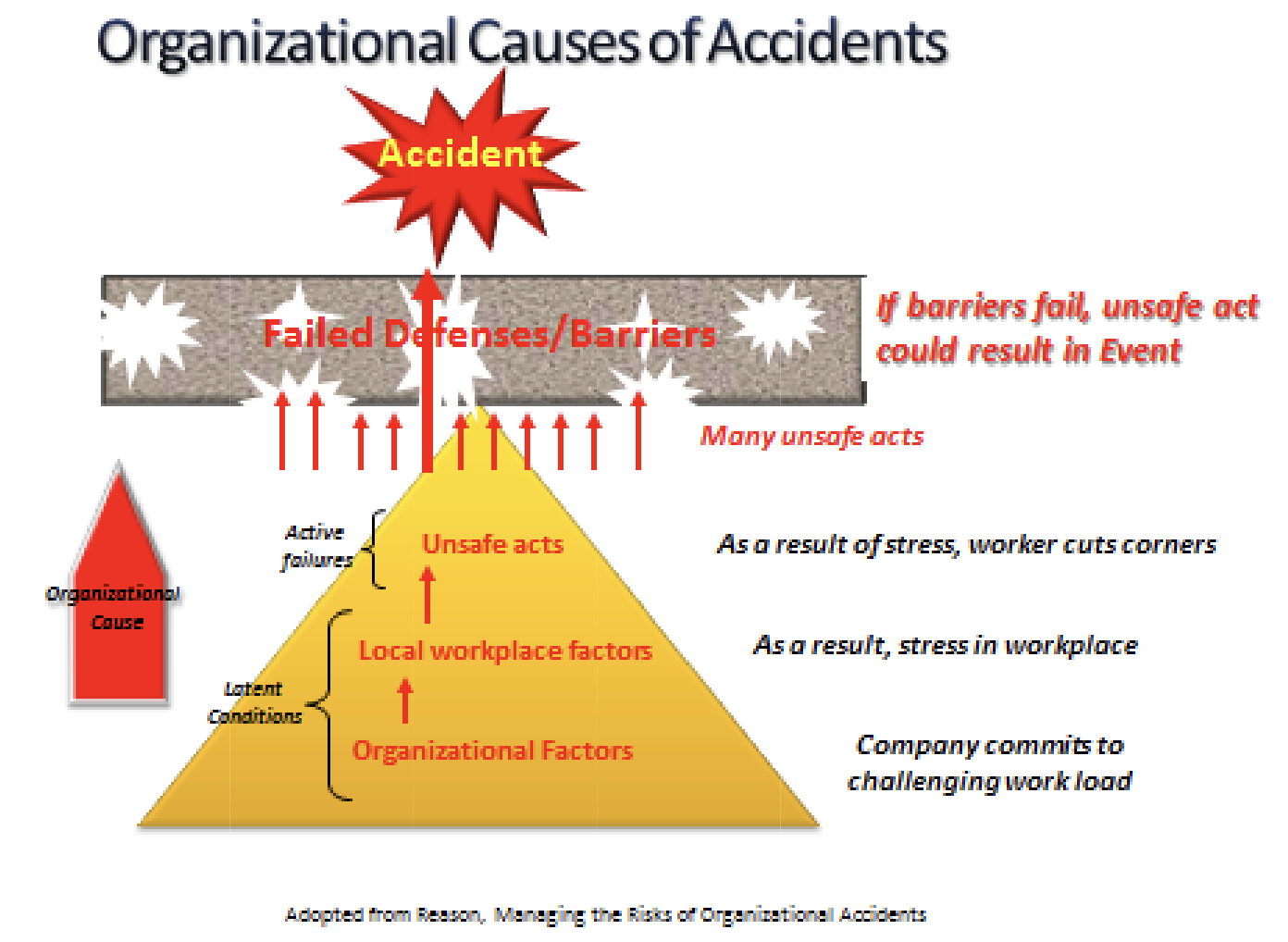
So the problem is NOT the metrics!  Just like all of the other SMS tools we use to control risks, they can be manipulated.  But this is a MANAGEMENT BEHAVIORAL problem and not the tool’s problem.  For decades we have focused on the worker’s behaviors and their relationship to accidents.  Maybe it is time we begin to consider MANAGEMENT’s BEHAVIORS and their role in accident causation.


Scroll to Top