











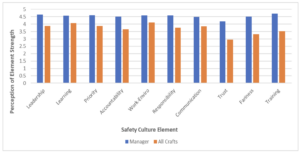
In 2017, FRA published a report on safety culture sponsored by the U.S. Department of Transportation’s (DOT) Safety Council. The report states that when safety culture is strong, there are less frequent and less severe accidents. DOT defines safety culture as the shared values, actions, and behaviors that demonstrate a commitment to safety over competing goals and demands and cited the following ten...
Read More

The critical issue is that a proposed change’s direct and indirect effects on the control of hazards should be identified and assessed.
Due to the greater potential consequences of an accident, major accident hazard sites should aim for greater reliability in their planning and decision-making.
Avoid too many simultaneous changes, which may result in inadequate attention to some or all—phase...
Read More
The FMCSA has begun Phase III of a project to refine the non-destructive metallurgical testing method and protocol for detecting cracks in nurse tanks and to determine possible relationships to causal factors not previously considered in detail.
Background:
…
HomeRead More »
Read More
Culture can best be understood as “the way we do things around here.” An organization’s culture will influence human behavior and performance at work.
Poor safety culture has contributed to many major incidents and personal injuries. Success typically comes from:
good leadership,
good worker involvement, and
good communications.
Creating a positive safety culture in an organization...
Read More
I have seen some crazy videos this year of just unreal worker behaviors. The ones that shock me to my core are what I would call “horseplay.” These are the times workers need to be terminated. I may go as far as issuing discipline to those watching/taping and even up the ladder to supervisors and managers responsible for the workers and/or where the behaviors occur. But I will spare the supervisor...
Read More
On February 23, 2023, at 11:45 a.m., an employee working for a city water department was repairing a leaking 12-inch PVC waterline main valve. The valve was located in a utility vault approximately 5 feet deep. The employee turned off the water to the west of the valve by opening multiple fire hydrants. He and a coworker closed the valve, stopping the water from flowing. The employee did NOT turn the...
Read More
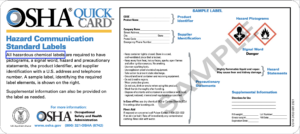
Sometimes, this government wears me out. A friend and I had this discussion last week about Chemical Container Labeling. The standard is VERY CLEAR (for those who take the time to read it).
It comes down to the following:
1910.1200(f)(1) Labels on shipped containers
vs
1910.1200(f)(6) Workplace labeling
So the first sentence in OSHA’s newest Quick Card is flat-out WRONG. Here are my previous...
Read More
OSHA’s current age-correction table, Appendix F, discontinues at age 60. More people are working into their sixties instead of retiring, and there is no adequate way to assess presbycusis (age-related hearing loss) in these workers using the current OSHA table. OSHA’s age-correction tables were based on a small sample size and research from the 1970’s. You advocate for the use of...
Read More
OSHA clarifies HAZWOPER training requirements for on-scene Incident Commanders and other positions in the Incident Command System (ICS) and whether previous non-HAZWOPER training can be credited toward the training required by HAZWOPER for Incident Commanders. Here are the four (4) questions OSHA discusses:
Is it OSHA’s intent that Incident Commanders be 24-hour HAZWOPER trained, irrespective...
Read More
A client recently underwent an RMP inspection by the US EPA. One of the issues the inspector took issue with was that the facility did not “certify” their 3-year audit. This stems from the following: (emphasis by me)
EPA RMP
§ 68.79 Compliance audits(a) The owner or operator shall CERTIFY that they have evaluated compliance with the provisions of this subpart, at least every...
Read More
It is 2024, 32 years after OSHA passed its Process Safety Management of Hazardous Chemicals standard. I am fortunate to have clients who have progressed in their PSM maturity, and we spend a lot of time these days working to get other processes into the PSMS. We start with processes that are not covered because their maximum intended inventory is managed to keep them BELOW the standard’s TQ....
Read More
This ONLY applies to Michigan workplaces, but it was such a weird way to enforce the PRCS standard that I thought it was worth sharing. Keep in mind that more than 50% of PRCS deaths are “would-be rescuers.”
Rescue Operations
MIOSHA has no authority to direct rescue operations. This is the responsibility of the employer and/or of local political subdivisions or State agencies. MIOSHA...
Read More