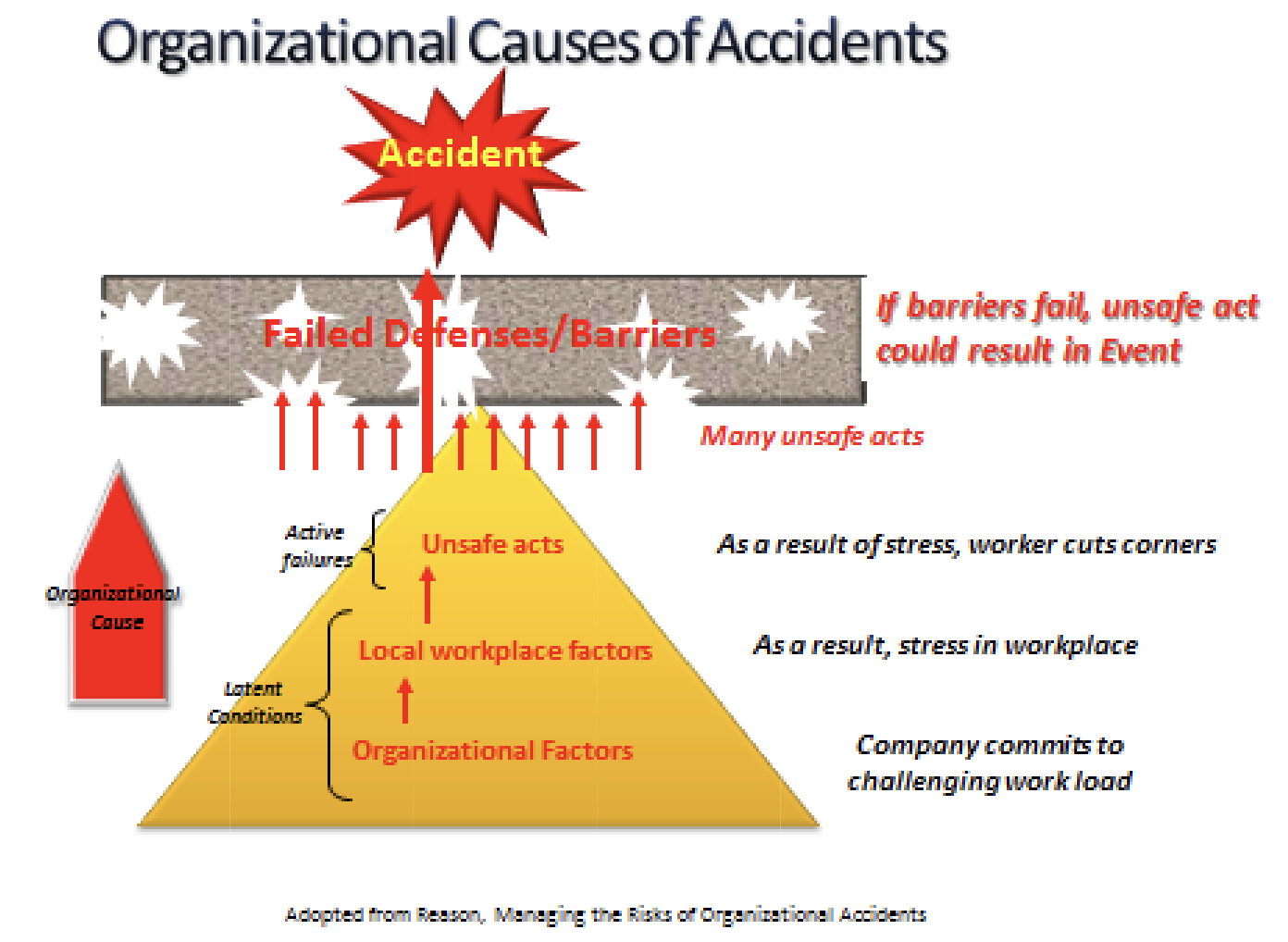
I have seen some crazy videos this year of just unreal worker behaviors. The ones that shock me to my core are what I would call “horseplay.” These are the times workers need to be terminated. I may go as far as issuing discipline to those watching/taping and even up the ladder to supervisors and managers responsible for the workers and/or where the behaviors occur. But I will spare the supervisor the same way I spare operators/maintenance for their behaviors/decision-making when we find LATENT ORGANIZATIONAL failures that led to the event.
One such video shows two workers wearing cardboard boxes, like mid-evil armor, driving PITs and jousting with broom handles.
And novices ask why we still have “no horseplay” comments in our safety/employee handbooks. Many will proclaim… “Treat them like adults, and they will behave like adults.” Unfortunately, that is not reality.
As the late great Claude Bloom taught me…
“Discipline will never change a culture; however, you will never change a culture without it.”
There is a time and place where it is needed. Still, that time is AFTER we have performed an unbiased causal analysis and verified the failures were not driven by LATENT ORGANIZATIONAL failures. Remember, even good employees can fall into the “shortcuts” under the right circumstances (hot day, cold day, understaffed day, etc). Their behaviors could reflect frustration and taking shortcuts after seeing coworkers (maybe even a supervisor) taking those shortcuts and getting the payback they want from those at-risk behaviors. If/When they receive the undesired consequence, RARELY will this shortcut/unsafe act be the first time they have done it.
This is why auditing, inspections, observations, and management safety contacts are critical to safety performance and culture. We must identify these deviations early so we can learn from them before we experience the undesired consequence(e.g., injury or property loss).
Suppose management is not engaged in the audit, inspection, observation, and safety contact elements of the SMS. In that case, I find it a bit hypocritical to hold the operator accountable for “routine” or “situational” violations (Reasons HF Model). Only when we arrived at the “exceptional” violation were we faced with considering discipline for the event; and dare I dare, regardless of the consequence(s) or lack of negative consequences! I have said this before (I think it came from Dale Fannin)
We do not disincline for the results of the act; we discipline for the act that led to the consequences. (Even when the consequence was a desired consequence)
If we only respond to events with an undesired consequence, we will NEVER change behaviors, culture, or decision-making.