












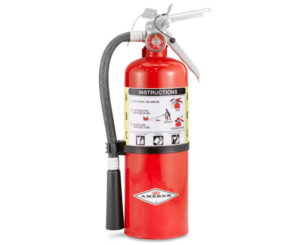
One of the most recognizable safety devices in the world is a Fire Extinguisher, yet so many know so little about these devices.
Let me be upfront with everyone; this article is for those safety pros working with a management team that WANTS to OWN the Safety Process/SMS. The actions I will offer in this article can be taken at any business. Still, without management’s desire to OWN the Safety...
Read More
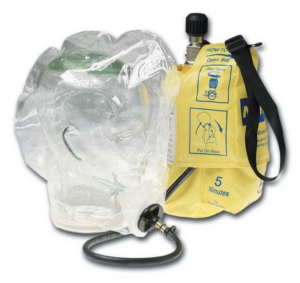
FRA is amending its regulations related to occupational noise exposure in three (3) ways.
Special NOTE: although I agree with this new requirement, it will be virtually impossible for the railroads to comply by March 2024. There are NOT enough EEBAs in inventory to supply the Class 1s. Then there is the written program and training that has to be put in place, and one month is impossible...
Read More
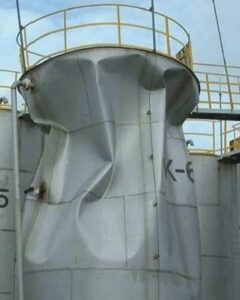
I see far more damage to atmospheric storage tanks from vacuums than I do from over-pressure events. In almost every case, the tank had undergone a “change” that created the conditions for a vacuum to occur. And once we have a pressure differential with a lower pressure inside the tank than the atmospheric outside the tank, the atmosphere will simply collapse the tank.
The...
Read More
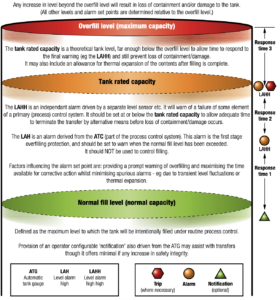
This image from a UK HSE publication may be the best image I have seen on “process safety” and Basic Process Controls Systems (BPCS). It shows how we PREVENT “overfill” events, also known as a Loss of Primary Containment (LOPC) event in atmospheric storage tanks/vessels.
The entire publication is a MUST-read for those who store flammable liquids in bulk ATM tanks. Never mind...
Read More

A common question we get regarding flammable liquids is:
Do we have to ground and bond non-conductive containers smaller than 5 gallons?
The proper question should be…
what do we need to do to SAFELY transfer flammable liquids into non-conductive containers that are 5 gallons and smaller?
The British Columbian Worker’s Compensation Board standard says it best and offers us...
Read More

The battle continues, this time outside process safety! I get these arguments routinely when people inquire if they can use their HHC/EHS as the media for pressure and leak testing. I can only assume that PHMSA is getting pushback by requiring water or other similar viscosity liquid to be used as the test medium.
When hydrostatic pressure tests for cargo tanks are required in part 180,...
Read More
A worker, 41, sustained a serious head injury and died during a piping pressure test.
A pipe had been pressurized for testing, and during the pressure release process, a plate from the pipe system broke free and hit the worker in the head.
The MI-OSHA case file is still open.
Read More
Four employees were testing an 8″ chiller pipe with pressure when a piping joint failed and an employee was struck in the shoulder and head by a valve cap. The employee was transported by ambulance to a Hospital.
…
HomeRead More »
Read More
On August 28, 2023, at 7:30 a.m., a worker was welding in a confined space on a ship under construction. The victim was found unresponsive inside of the confined space.
Per the medical examiner’s report, the employee was killed as a result of suffocation in an oxygen-deficient environment.
NOTE: this is likely due to a shielding gas such as Argon being used in this welding.
Source: https://w...
Read More
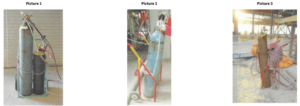
Your letter discusses concerns with the safety of compressed gas cylinders on some types of portable carts configured for “in use” or “connected for use.” Specifically, you mention that cylinders, which are top heavy and therefore can be unstable (unbalanced), are commonly found poorly secured to the cart and leave the cylinders susceptible to toppling over when used, moved, or stored. In your letter,...
Read More
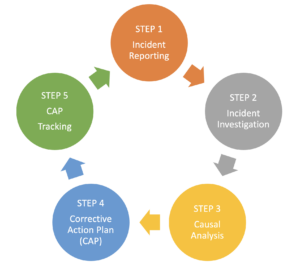
After 30+ years of OSHA’s PSM standard (1910.119), we still come across far too many businesses that just do not understand the difference between the “INVESTIGATION” and the “CASUAL ANALYSIS.”
I use this image from my training course(s) to help them differentiate between the two INDIVIDUAL and SEPARATE steps in the Incident Investigation element (1910.119(m)).
I...
Read More
1910.165(b)(3) The employee alarm shall be distinctive and recognizable as a signal to evacuate the work area or to perform actions designated under the emergency action plan.
After an employee becomes aware of an emergency situation, the next step involves actions to be performed by that employee. Generally, the actions include evacuation or emergency response to mitigate an emergency...
Read More