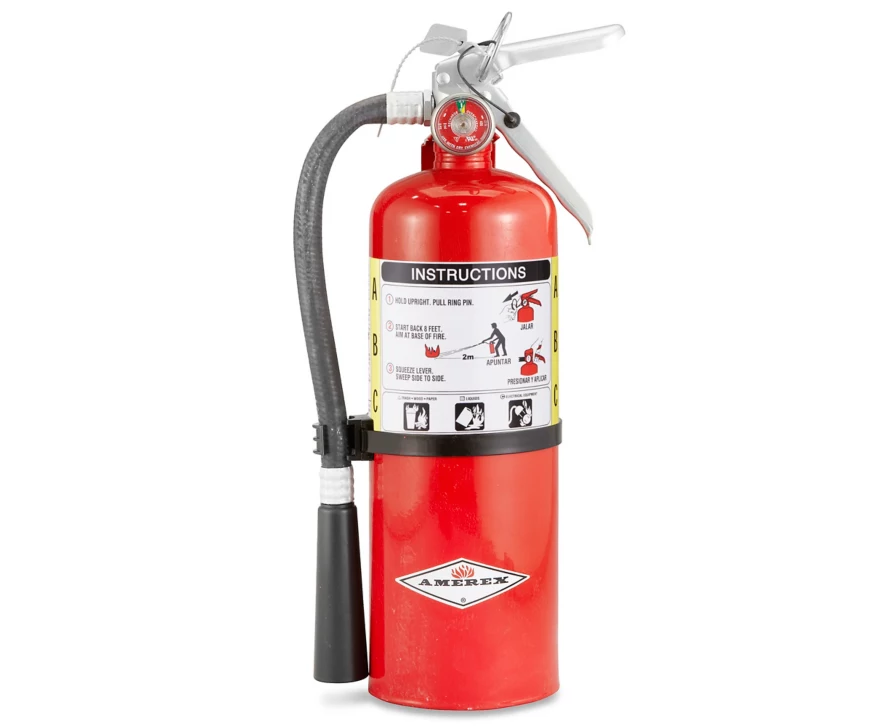
 One of the most recognizable safety devices in the world is a Fire Extinguisher, yet so many know so little about these devices.
Let me be upfront with everyone; this article is for those safety pros working with a management team that WANTS to OWN the Safety Process/SMS. The actions I will offer in this article can be taken at any business. Still, without management’s desire to OWN the Safety Process/SMS, these actions may be a tad premature, but certainly not a waste of time.
The idea that “management” OWNS safety is one that many safety professionals aspire to. It is the pinnacle of our success as safety professionals… working ourselves out of a job. It rarely happens, but when it does, it will change your perspective of our fundamental role in a Safety Management System (SMS).
There is a simple test we can use to find out if “management” is ready to OWN SAFETY…
Ask these six (6) basic questions regarding Fire Extinguishers:
1) Where are they required?
2) What Type is needed?
3) What Size/Rating is needed?
4) What is the inspection frequency?
5) What is the maintenance frequency?
6) What is the Hydro Testing frequency?
I will bet that most management teams taking the quiz as a team – not even individually, will be unable to score 100% on this basic test regarding the most recognizable safety device within THEIR business. I can tell you from experience that most can answer #4 and #5 simply because the business PAYS to have these services provided by a 3rd party; yet many have no idea what they are paying for or even if their $ is being spent wisely.
If your management team is at an advanced stage of “management ownership,” you can throw in these questions:
7) How many fire extinguishers do we have?
8) How much $ do we spend each month on managing these devices?
9) What is our failure rate on Monthly, Annual, and 5/12 year Hydros?
So, let’s get down to how we use these safety-critical and most recognized safety devices to build that bridge to “management owning safety.”
First, let me say this. I see a lot of nonsense about “safety clutter” and how “safety shuffles too much paperwork” instead of “doing safety differently,” etc. I agree that a lot of what a safety pro does daily has little value in protecting those we have the privilege to protect. But this is a sign of a genuinely IMMATURE approach to managing safety, mired in the “compliance phase” (e.g., the infancy stage). I am proposing a meaningful and valuable written management system document that will be part of the SMS as a whole. Yes, it is another written program, but how do we expect management to own THEIR Fire Extinguishers without it? It should be viewed as the first step in their education and transformation to owning THEIR Fire Extinguishers.
Did you notice my emphasis on the word “THEIR”? This is step 1: management recognizes that these fire extinguishers are in place for THEIR TEAM MEMBERS to use – NOT for the safety team to respond and use, but for the employees working in the Unit/Department. Hence, THEY need to OWN the management of these devices.
For them to OWN these devices, WE (the safety pro) must provide them the KNOWLEDGE of how to MANAGE these safety-critical devices properly. So we can train management on this information, but how much will they retain? A written “Fire Protection” program that includes our fire extinguishers is KEY to allowing them to take complete control of THEIR extinguishers.
Remember those six (6) quiz questions we asked in our quiz? Our written program needs to answer those six (6) questions, and the answers need to be SPECIFIC to each department/unit where fire extinguishers are present, including the administrative buildings.
There is sound logic behind where each extinguisher is
- LOCATED,
- its SIZE, and
- its TYPE
To own these safety devices, the owner MUST be able to identify all three (3). And let’s be honest, how many “Fire Extinguisher” Training courses teach this level of knowledge? Not many! And for good reason; traditionally, our Fire Extinguisher training has been intended for the USER – not the manager of the fire extinguisher program. But now we are building this bridge to new ownership of these devices, and hence, we will need a new training program and written program. This training will also need to become part of the “management safety training program” for new managers and some frequency of refresher training for existing managers. Recognize that it will take years for them to fully grasp what we have been doing for all these years!
The next piece of information we need to convey to our new OWNERS of THEIR fire extinguishers is the maintenance of these devices. This includes
- the MONTHLY inspections,
- ANNUAL maintenance, and
- Hydros every 5/12 years
This means we need to discuss TIME and BUDGETS for these services. I have always frowned on contracting out my MONTHLY inspections. I have found that having the department/unit personnel perform these inspections helps push down OWNERSHIP to those who are charged with using these devices when the time comes. What other group should know WHERE each extinguisher is located, and what other group is vested in ensuring they are PRESENT, CHARGED, UNOBSTRUCTED, and properly working? I used these monthly inspections, annual maintenance, and hydro frequencies in my LEADING INDICATOR metrics. The safety team was just an “auditor” to validate that these inspections/maintenance needs were met. (More on this in a later article)
Does our program need to be another “book of a program”? Unfortunately for some, YES, this written document will be lengthy, as we are trying to convey ALL the necessary information and data to management so they can fully adopt the OWNERSHIP of THEIR fire extinguishers (e.g., a small but necessary step to drive ownership of safety). Depending on the size of the facility and the fire hazards present, just the listing of each department/unit fire extinguishers could be 20-30 pages. Yes, you understand me correctly… the program will list EVERY SINGLE fire extinguisher on the property (including those on mobile devices like welding carts and forklifts/aerial lifts, etc.), and this list will include the TYPE, SIZE, and specific location. Look at it this way: the ONLY way we can know we have been successful in these inspections is first to know HOW MANY devices must be inspected (and maintained)!
Another critical task this program must convey, and granted we will have to play a role in this task for most of this ownership transition, is how is it decided WHAT TYPE, SIZE, and LOCATION a fire extinguisher is needed/required. (SAFTENG members can download my flow chart in the Document Library to assist with this effort) However, management needs to be aware of this need as any changes to their operations (fire risks increase/decrease, the layout of the operations, etc.) will dictate the need for a Fire Risk Assessment (FRA). Something as simple as placing a Flammable Liquids Storage Cabinet in an area will REQUIRE a FRA to determine the TYPE and SIZE of extinguisher needed for this “change”. (See 1910.106(d)(7)(i)). Of course, in a functioning SMS with a Management of Change (MOC) tool, we will use the MOC process to work through these Risk Assessments and respond to the needs they identify. A very mature management team will be able to perform these FRAs and MOCs with the safety team/pro taking a back seat (i.e., being a “backseat driver”). We will be involved in large expansion projects with fire protection needs as this will usually involve more than just fire extinguishers; however, the day-to-day management of fire extinguishers should be managed by those who OWN the fire extinguishers.
One of the tricks I used as a safety engineer/manager/director at a facility was to put ALL my Fire Extinguishers into my Central Maintenance Management System (CMMS). This will reduce the size of the written program, as my listing of TYPE, SIZE, and LOCATION of all the Extinguishers resided in the CMMS. This also allows me to provide the WRITTEN procedure(s) for the MONTHLY inspections within the CMMS that will appear with the TYPE, SIZE, and LOCATION of all the Extinguishers within each department/unit. Then, we set the frequency of that Work Order at 30 days. We write another Work Order that will come out ANNUALLY for how we perform the ANNUAL maintenance. Remember that most jurisdictions within the USA will REQUIRE these ANNUAL maintenance functions be performed by a “CERTIFIED PERSON.” This is almost always a 3rd party providing these annual services. For example, in Ohio, we have to meet Fire Code 906.2.1. These ANNUAL maintenance functions will most likely need to be BUDGETED by the OWNERS of the extinguishers, AND the providers of this critical service will need to be vetted via our Contractor Safety Element of the SMS. Another critical point to make is that it will be the role of the ANNUAL maintenance to identify extinguishers that are due for their 5 or 12-year Hydro testing.
I think I have rambled on long enough, and I hope this has laid out the essential groundwork for how we can use our fire extinguishers to build the bridge for “management’s ownership” of safety. We can build our written program from the requirements in 1910.157 Portable Fire Extinguishers, but my favorite standard to use is NFPA 10, Standard for Portable Fire Extinguishers. After all, if we go to all this effort to shift the ownership of safety, shouldn’t we use world-class standards to build our bridge?