












One of the biggest mistakes we see in BBS processes is the fundamental misunderstanding of a BBS process’s role in an SMS. Each observation is NOT about looking for unsafe behaviors; rather, it should be more about reinforcing the SAFE behaviors. Suppose an organization has a high rate of observed deviant behaviors from prescribed Safe Work Practices. In that case, it is NOT ready for BBS, yet...
Read More
Maybe it’s my age, but I have grown tired of organizations that proclaim their dedication to safety. Yet, they have no desire to put in place a formal and measurable SAFETY PROCESS/SMS that INVOLVES the men and women we work to protect. It is not rocket science, and it is the most basic and PROVEN model to reduce risks to the men and women doing the dirty and dangerous work…
…
HomeRead More...
Read More
It is a common thing to hear regarding safety in workplaces today… “Own it”. The concept is solid; management wants broad ownership of safety. Safety is NOT safety’s job, after all. But like many safety movements, this one usually fails in significant ways because it takes years of educating and motivating a workplace to accept owning safety broadly. This is...
Read More
Many organizations struggle to identify “safety metrics” besides their lagging indicators. But the PRCS article I posted Friday night contains at least a dozen metrics around our PRCS safety management efforts. There are a lot of “SIF salespersons” out there selling their “SIF approach.” On the other end of the SMS spectrum are the facilities deep...
Read More
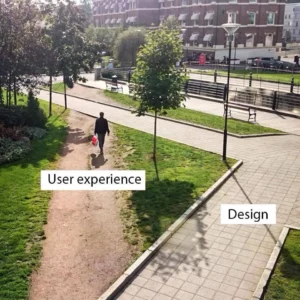
I hate this meme!
This is an employee taking a shortcut and reflects the culture.
But in almost every depiction of this photo, the intent is that the employee(s) know best, and we need to suit their wishes.
Such garbage.
If we have the employees involved in writing the SOP(s) and we train them well in those SOPs and this is the result – their decision-making is the problem, NOT the engineering/design.
Of...
Read More
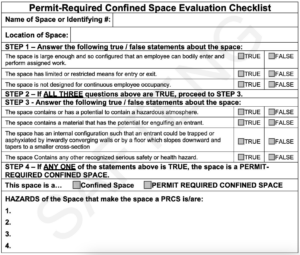
I have written over 180 articles on the topic of Permit-Required Confined Spaces. We can agree there is a lot to write and talk about on this topic. In our travels, we do a lot of work with clients around their PRCS management; most of the time, this work is more “technical.” In this article, I want to explain how we should manage our PRCS Entry programs as a mini “safety management...
Read More
Scenario: The client invites the manufacturer of a piece of equipment that we evaluated and determined the space to be a PRCS.
The client used the popular argument of “no one else treats these as a PRCS.” And the manufacturer rep explains how this latest model is made specifically for entry.
So, therefore, in their eyes, their equipment is not a PRCS.
This equipment is a small...
Read More
Last month, I wrote Before we can achieve a ZES, we must first define and quantify what precisely a form of “hazardous energy” is, and this week, I posted the MSHA accident investigation report where water in an abandoned chilled water system 1600′ underground was opened and the water, pressurized by the head pressure alone, was enough to knock a miner out of the aerial lift causing...
Read More
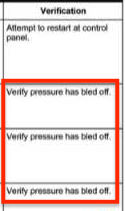
I can remember our first attempt at writing SOPs for our PSM covered process(s):
Deviation is “High Pressure” in V-1
Steps to Correct “High Pressure”:
1) Lower Pressure
Sound familiar? We chuckle now, but in the early 1990’s we thought this was the intent. We still find this kind of PSM/RMP SOP in 2023; however, most businesses have matured beyond this silliness.
But...
Read More
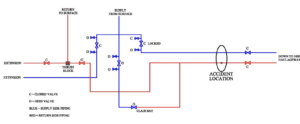
From MSHA accident file…
The two (10) ten-inch metal pipes being removed were part of a closed-loop chiller system that had been abandoned. One pipe supplied chilled water underground (supply and shown as blue in the drawing), and the other returned water to the surface (return and shown as red in the drawing).
The chiller...
Read More
This is one of the best summaries of what we can expect to see in the 2024 IFC regarding Lithium Ion Batteries. CLICK HERE (Source: Fire Inspectors Association of Indiana )
Read More
This is why I question society’s ability to manage Oxygen deficient atmospheres in warehouses as a means of fire protection.
At 10:00 a.m. on February 7, 2023, an employee was found unresponsive in the Control Atmospheric (CA) room. The typical oxygen level when the room is active is between 1.2% to 1.6%. The room has a main door and a smaller man-door; the man-door was open and the employee...
Read More