











For all of the AI lovers, remember this:
AI can NOT walk a mile in anyone’s shoes
AI does NOT have empathy
AI can NOT coach a worker in need of a safety moment
AI does NOT answer the phone 24/7 when it is needed
So if a safety pro is afraid of AI replacing them… they may be doing it wrong!
Read More
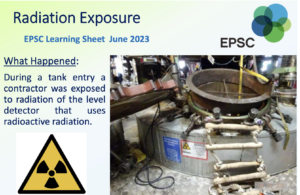
When preparing a Permit-Required Confined Space (PRCS) for entry, either by reclassification or by permit, it is incumbent upon the Entry Supervisor to ensure that ALL forms of hazardous energy has been identified and properly isolated. In this event, the vessel had a level indicator that used a radiation source of energy that was not identified, leading the entrant(s) to receive a radiation...
Read More
Often, we use our SMS software/app to document safety deficiencies/hazards identified in the workplace. Still, we can also use these apps to validate the safety controls intended to be in place around certain hazards/risks. This week, I am working with a client located in a part of the country where they will be seeing temps 30+ degrees above normal for this time of year. This is especially...
Read More
The following are highlights from the 2022 findings:
…
HomeRead More »
Read More
Safety MUST become a value rather than a priority. The great Steve Jobs explains that product selling (i.e., we are selling safety!) is about defining the organization’s values. He makes an excellent point that safety pros should keep in mind when trying to influence management commitment and culture around the safety effort.When he is talking about selling and promoting an Apple product, just...
Read More
When your process safety consultant tells you that “torque” does not matter…
after you called him/her to ask about it
after you read about torque in the owner’s manual of the component you are getting ready to install…
it is time to FIND A REAL PROCESS SAFETY ENGINEER.
Torque values are the pinnacle of DEFINING and MEASURING the capability of our PRIMARY CONTAINMENT...
Read More
These are just two little words that cause so much debate… “at least.” Although this is a prevalent phrase found in many Recognized and Generally Accepted Good Engineering Practices (RAGAGEP), I have found it to be one of serious debate, and it should NOT be. First, lets see how dictionaries officially define the phrase:
at least
1. not less than; at the minimum.
“clean...
Read More
Many folks think they are far and away from having a formal Hazard Identification process in place. But in reality, if they are auditing their “compliance” with OSHA/Safety standards, they are in phase 1 of a Hazard ID exercise. As I like to say, we must DEFINE and QUANTIFY our safety expectations to MEASURE and VALIDATE their effectiveness.
OSHA standards do this by defining...
Read More
COMPREHENSIVE HAZARD IDENTIFICATION is key to effective risk management.
The RISK arising from a HAZARD that has not been identified cannot be managed.
Read More
“…if you do not manage human error, human error will manage the organization, always at great cost and often at great danger.”
James Reason – Video Series, Managing Human Error
Read More
The appreciation that a person makes of the situation depends mainly on the following four elements:
the nature of the information available
personal experience, which results in personalized mental models, and a library of configurations that the brain recognizes.
the purpose of his current work: if the operator is focused on the resolution of an incident, he will be acutely aware of all the information...
Read More
Managers shall demonstrate leadership for safety and commitment to safety. The senior management of the organization shall demonstrate leadership for safety by:
…
HomeRead More »
Read More