









Over my 30+ year career in safety and health, I have seen and participated in many “flavor of the month” initiatives. Almost all of these were out desperately trying to achieve an OSHA rate. I know; there’s a lot to unpack with that statement. Probably the most significant movement of my career was the Behavior Based Safety movement in the 1990s and 2000s. ...
Read More
I am always amazed to hear people complain about the degree of our auditing. Most clients hire us for detailed auditing, but some see the PSM/RMP 3-year audits as a “check-the-box” exercise and do not appreciate our auditing skills and experience (LOL). Comments/Questions like… “Would OSHA really cite for that?” are commonplace. Let me be clear; our job...
Read More
This topic can be hotly contested by some; why is beyond me. Some businesses get lazy in their approach to process safety and convince themselves that flanged piping is cheaper (and easier) than joining the pipes using welding methods. As we have discussed, welding our PRIMARY CONTAINMENT system, such as the piping, comes with many requirements to ensure we have the proper management system...
Read More
I can not think of a single business that operated and maintained a PSM/RMP-covered process that did not utilize LOCTITE®. It is a beautiful product; however, it may be the most overused and abused product within the covered process. When used PROPERLY and per Henkel’s instructions, the product works well. But like most really good products, it eventually leads to misuse in...
Read More
This Instruction STD from MI-OSHA is too good not to share with those who deal with 1910.106(e) and their flammable liquids safety efforts. It does a nice job comparing the 1910.106 (which is based on the 1968 edition of NFPA 30) with the current NFPA 30 standard.
…
HomeRead More »
Read More
You know businesses are cutting costs when I get this question. But it is a good question as we have come across “reclaimed piping” being used in a lesser-degree hazard (e.g., flammable gas to flammable liquid) process. I personally never experienced this practice in my time in industry, but it has become more popular as businesses look for more ways to reduce costs. So...
Read More
If you have followed me for years, you know I love to use the International Fire Code over outdated OSHA standards. For me, it is ALL about safety and not compliance; luckily, I have many clients who take the same approach, and we have made some serious improvements to a hazardous process. Here is a lock at what the IFC states about Bulk Transfer and Process Transfer Operations (5706.5).
I...
Read More
Employers are required by 29 CFR* § 1910.147(c)(6) to conduct a periodic inspection of written hazardous energy control (lockout/tagout) procedures. The inspection must be performed at least once annually [per 12-month interval, as stated in 1910.147(c)(6)(i)] because of the significant risks associated with inadequate energy control procedures or the failure to properly implement them [OSHA...
Read More
One of the most heated debates in the process safety arena is… Do I have to have an emergency response team? EPA has worked to answer this question by designating facilities as “responding” and “Non-responding” facilities. Here is a nice flow chart to help…
…
HomeRead More »
Read More
Respondent is the owner and operator of the facility that produces, processes, stores, or handles more than 10,000 pounds of ethylene and more than 15,000 pounds of vinyl acetate monomer (Acetic acid ethenyl ester). The EPA inspected the Facility from January 16, 2020 to January 17, 2020, to determine the Respondent’s compliance with 40 C.F .R. Part 68. Ethylene and vinyl acetate monomer are...
Read More
In the past 4-5 months, I have received numerous phone calls and e-mails from friends/clients regarding their desire to hold an OSHA 10-hour course for their employees. Most of this is driven by the idea that they believed, as they were told by some less than scrupulous consultants, that OSHA would accept their 10-hr card as meeting the required annual safety training for employees. One...
Read More
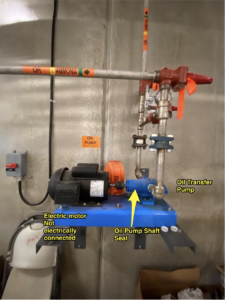
This ammonia refrigeration process is equipped with an oil transfer pump that transfers fresh refrigeration oil from a barrel to fill up the compressor oil separators to the operating oil level. However, the oil pump has been idle for a prolonged period, with the electrical power connection incomplete.
Conversely, the associated piping system seems completed. One end of the oil distribution...
Read More