







One way to reduce the risk of an ammonia leak is by monitoring for leakage through the analysis of the secondary coolant (often brine) for signs of ammonia. The secondary coolant in an indirect Ammonia system must be tested no less than twice a year. Information Paper IP-BPV-2021-08-01 outlines the requirements for a secondary coolant analysis that your TSASK inspector will enforce during...
Read More
One of the most dangerous tasks that occur within the battery limits of a covered process is “opening the process.” This is commonly called a “Line Break” but also applies to vessels. We won’t find a definition of “Line Breaking” in the PSM Standard; instead, we turn to OSHA’s Permit-Required Confined Space Standards (1910.146 and 1926.1201-.1213). ...
Read More
One of the biggest hurdles for an organization entering OSHA’s and EPA’s process safety standards is that some old OSHA standards are just NOT adequate based on the new level of risks. This is most noticeable are with flammable liquid processes. Take, for example, 1910.106, OSHA’s Flammable liquids standard. It is “OK” for businesses that use flammable...
Read More
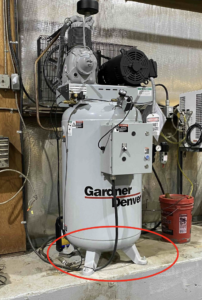
A licensed contractor installed two newly manufactured vertical machine-mounted air receivers for instrument air processes at a wood treatment facility in November 2020.
During a scheduled maintenance service after eight months of operation, cracks were located on the top head of each vessel, specifically at the head-to-bracket weld fillet welds. The cracking was in similar areas on both vessel...
Read More
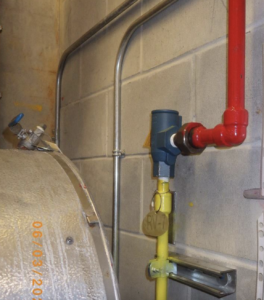
This ammonia refrigeration system for the ice rink had been shut down, and the full ammonia charge (800 pounds) was being stored in the chiller, attached surge vessel, and the oil pot. Three (3) days before the incident, a contractor was doing maintenance on the brine system to install a pH sensor in the brine pump discharge piping upstream of the pump’s discharge isolator (Image 4). When...
Read More
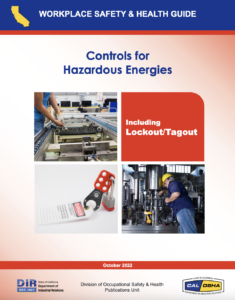
Last month CAL-OSHA issued a revised guide on Controls for Hazardous Energies. This is a MUST-HAVE for all safety professionals responsible for their Lockout/Tagout (LOTO) Program. Never mind that it is a State OSHA program publication – this is a solid document that explains the in’s and out’s of LOTO. My favorite section… Interlocks Are Not a Substitute for...
Read More
WHY OIG CONDUCTED THE AUDIT
The Occupational Safety and Health Administration (OSHA) is responsible for ensuring safe and healthful working conditions for 130 million workers employed at more than 8 million worksites. It does so by setting and enforcing standards and by providing training, outreach, education, and assistance to employers and employees.
The COVID-19 pandemic has presented OSHA with...
Read More
The Chemical Facility Anti-Terrorism Standards (CFATS) program requires high-risk facilities to ensure security measures are in place to reduce the risk of more than 300 chemicals of interest (COI) being weaponized. High-risk facilities are assigned to one of four (4) risk-based tiers and must develop a security plan meeting the 18 Risk-Based Performance Standards (RBPS). Due to the nature of...
Read More
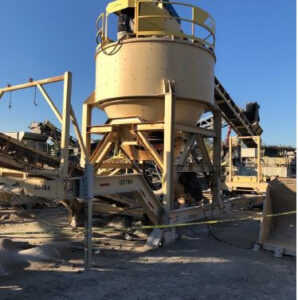
MINE FATALITY – On October 7, 2022, a mechanic was fatally injured when engulfed in the material after entering an air separator to clear a blockage.
Best Practices
…
HomeRead More »
Read More
Last week I wrote about how either distance or a barrier is necessary to CONTROL hazards. OSHA’s made a great case in 2020, explaining how the separation distances in 1910.110 is a PASSIVE MITIGATION measure. (emphasis by me)
OSHA concludes that NFPA 58 (2017), Sections 6.28.2 and 6.28.3, do not provide an equivalent level of safety as provided by the greater separation distance...
Read More
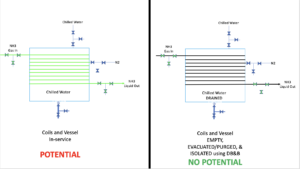
Recently a trade organization issued a guide on working in Permit Required Confined Spaces specific to their industry. The organization took a sentence from NFPA’s Guide on Confined Spaces (NFPA 350) and used it as justification to circumvent OSHA’s minimum standard on entry into PRCSs (1910.146 and 1926.1201-.1213).
l have received over a dozen questions regarding this “guide”...
Read More
As stated in REGO’s Warning Document…
Simply retesting pressure relief valves manufactured by RegO that have been in service for several years to confirm conformance with start-to-discharge and reseal ranges does NOT guarantee that the valve is suitable for continued service. Or that the valve will perform as designed at nominal pressures or in emergency conditions. The environment in which...
Read More