











OSHA does not mandate that employers establish fire brigades; however, if they do so, they must comply with the provisions of the Fire Brigades Standard. The provisions of the standard, including the paperwork requirements, apply to fire brigades, industrial fire departments, and private or contract fire departments, but not to airport crash rescue units or forest firefighting operations. Paragraphs...
Read More
As I stated last week and posted my updated RMP Audit Checklist ER questions, the RMP ER coordination activities should be at least in your “planning/discussion” phase with your off-site responders/resources. Even though 68.10(b) states that compliance with these activities must be completed by March 14, 2018 and the fact that the amendments did not become effective until September...
Read More
Back in December 2017, I wrote an article explaining how this new nitrification inhibitor in the ammonia fertilizer industry would impact the facility’s PSM/RMP programs. I received a lot of questions and nasty grams from that article, but one thing I forgot to mention is how this new “blending” operation changes the retail locations EPCRA Sections 311 and 312 reporting. ...
Read More
Today, the NFPA adopted some interesting revisions to their NFPA 350, Guide for Safe Confined Space Entry and Work. One item that many may find interesting is 8.6.5 Pipes and lines that run through a confined space…
Here are the most notable updates/revisions:
Non-Members can find the changes Here.
…
HomeRead More »
Read More
For SAFTENG clients and members, I have updated my PSM/RMP audit checklist (the old OSHA PQV checklist) with EPA’s most recent amendment regarding the Emergency Response requirements for Responding and Non-Responding facilities. Keep in mind that these new requirements are “officially” ONLY required when the facility is an RMP facility; if the process(s) is ONLY covered by OSHA’s...
Read More
This standard requires weekly activation and annual comprehensive testing to ensure the equipment is functional and accessible and provides tepid water for emergency use.
Inspection and Testing Requirements
…
HomeRead More »
Read More
One (1) bolt on a five(5) bolt flange was left loose by just one full turn and we have a small release of a flammable gas… EXCELLENT video by Baker Risk.
Read More
From 2011 to 2018, 1,030 workers died from occupational injuries involving a confined space. The annual figures range from a low of 88 in 2012 to a high of 166 in 2017.
Fatal occupational injuries involving confined spaces, 2011-2018
Year
2011
2012
2013
2014
2015
2016
2017
2018
Fatal work injuries
120
88
112
116
136
144
166
148
As documents in a fatal injury work injury case may vary, cases...
Read More
The company is a fuel filtration and tank cleaning company. In December 2014, an employee was found unresponsive and later died from gasoline inhalation while cleaning tanks at a construction site in Daytona Beach, Florida. Following the incident, OSHA conducted an inspection and issued an 11- item serious citation for violations of 29 C.F.R. § 1910.23(a)(6) for failure to guard an open manhole; various...
Read More
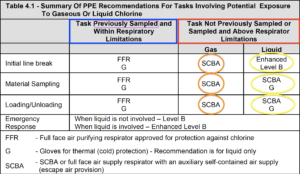
I do a lot of work in Ammonia and Chlorine, from process safety to emergency response, and the one thing I commonly get asked is why do I write so much about ammonia accidents and not so much about chlorine accidents. Well, to be honest, the vast majority of my chlorine clients are much better at containment than are my ammonia clients and this can be seen on a grander scale by looking at OSHA...
Read More
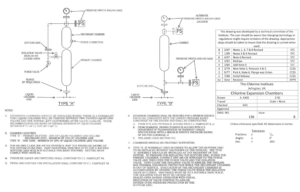
For nearly 25 years I have seen CLOSED relief systems used successfully on a multitude of processes involving Extremely Hazardous Substances (EHS) and for many years I have been proposing they be used in the Ammonia Refrigeration industry. The leading trade group for ammonia refrigeration has had a long-standing position against the need for hydrostatic relief protection on liquid piping runs....
Read More