












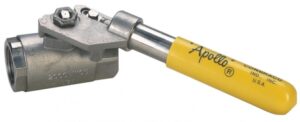
The act of draining/venting a highly hazardous chemical (HHC)/extremely hazardous substance (EHS) from a process can be one of the most hazardous tasks a worker can undertake, but there are some easy and cheap actions/designs we can consider to reduce these hazards. Some of the best guidance I have come across is the IIAR’s “Oil Draining” set up and the requirement for the use...
Read More

Recently I had the pleasure of working with a client on a PHA project during which we came across another excellent example of how “start-up’s” can be very different from the “normal start-up” procedure. I like to bring these examples to our attention as we still hear this all the time… “our initial start-up/normal start-up/start-up after ESD, etc. are all...
Read More
The decision by the OSHRC settles several KEY PSM application debates. The accident involved a boiler that provided steam to a covered process and the boiler also used fuel from the refinery process(s) so OSHA took the position the boiler was part of the “covered process” because it was both interconnected and co-located such that the boiler could impact the covered process. ...
Read More
This incident is one I call attention to as it involved a lack of LOTO during removal of a valve on a hot water system. OSHA issued a Willful citation because the work was done without having an energy isolation control panel/task specific LOTO procedures. The work was done from an aerial lift without LOTO in place – once the valve was removed a computer program called for hot...
Read More
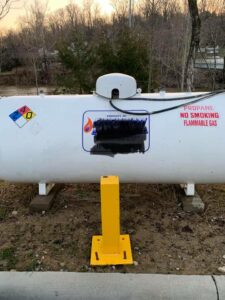
Many of you have heard me joke about bollards being “lazy bollards” when they’re just bolted down to the concrete or worse into asphalt. We call them “lazy bollards” because they don’t work. Get it?
Well, I have discovered a new low for bollard design!!! I call this the “unemployable bollard”!!! I kid you not, this is real, not a setup…
Rebar into...
Read More
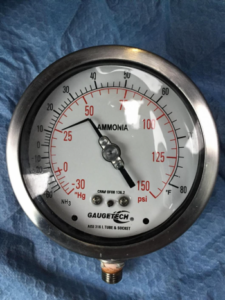
After unscheduled maintenance to drain oil from the pumps, the refrigeration system was noted to be slow to return to performance and oil contamination of some system evaporators was suspected. The responding refrigeration mechanic stated he attempted to improve system performance by closing valves to generate pressure within an evaporator to move or dislodge potentially trapped oil. The pressure rose...
Read More
As barriers or safety systems can fail, it is essential to design them well and understand their reliability, which is expressed in an SIL rating. The Safety Integrity Level relates to the Probability of Failure on Demand (PFD). We use complete orders of 10 to describe the reduction factor:
…
HomeRead More »
Read More
Nov 02, 2018
MEMORANDUM FOR: REGIONAL ADMINISTRATORS
FROM: KIMBERLY STILLE, Acting Director
Directorate of Enforcement Programs
SUBJECT: Enforcement Policy for Respiratory Hazards Not Covered by OSHA Permissible Exposure Limits
As you are aware, Section 5(a)(1) of the Occupational Safety and Health Act (OSH Act) is occasionally used to cite respiratory hazards from exposure to an air...
Read More
OSHA has proposed penalties of $1,326,367 to a metal heat treatment company after the company exposed employees to atmospheric, thermal, electrical, and mechanical hazards as they performed maintenance inside heat-treating furnaces. In addition to the penalties, OSHA placed the company in the Severe Violator Enforcement Program. OSHA cited the company for 25 willful, serious, and other-than-serious...
Read More
Maintenance was being undertaken on a passenger ship lifeboat while the vessel was in port. One of the four (4) nitrogen cylinders for the emergency launching of the lifeboat had lost some pressure; it was showing 2,300 psig when it should have been between 2,600 psig. The cylinders were located in a covered area outside and were exposed to the harsh marine environment.
…
HomeRead More...
Read More
At approximately 2:30 p.m. on April 1, 2010, Employee #1, Employee #2 (leadman) and Employee #3 were preparing product involving the use of fermented molasses as one of the ingredients. The workers were having problems moving the molasses from tank #2 to tank #1. According to the employer, he told Employee #2 via telephone, to add water to the molasses to bring it to a level where the container contents...
Read More