













I was talking with a friend from across the pond about how this profession has changed over the years, and, in many respects, not for the better. He shared with me the following “behaviors” of a safety professional, which I thought were spot on. If only we could write job descriptions and postings like this.
KnowledgeK1: Understand the principles and practice of risk management, including...
Read More
Here is an old clip from MASH demonstrating my point… order of steps MATTERS in an SOP.
…
HomeRead More »
Read More
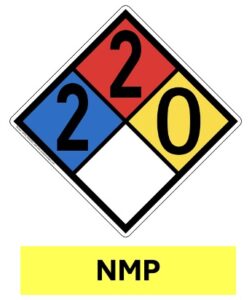
A lot has been said on LinkedIn about secondary container labeling, and at least seven (7) posts were absolutely wrong. Those posts have been shared more than 400 times; I wish I knew how many views. Many people agreed with the original posters that secondary containers had to be labeled the same as shipped containers. I disputed the posts, only to have several of my comments removed. The ones I...
Read More
When we talk about Lower Explosive Limits, most people imagine a flash-fire hazard (as they should!). But when a worker is in a flammable atmosphere, they are also being WAY OVER EXPOSED. Take the following OSHA PRCS fatality case, where the worker died from being overexposed to organic vapors. The Atlantic City Fire Department Confined Space Rescue Team had measured approximately 3% the LEL for...
Read More
Here is what ANSI 358 says: (emphasis by me)
5.1.6 Eyewashes shall be capable of delivering flushing fluid to the eyes not less than 1.5 liters per minute (0.4 gpm) for 15 minutes. If shut off valves are installed in the supply line for maintenance purposes, provisions shall be made to prevent unauthorized shut off.
How is your facility ensuring isolation valves on EW/SS piping are KEPT OPEN?
Read More
As I noted in 2007, the #1 cause of process vessel deflagrations is the manual additions of powders to process vessels which have a flammable atmosphere. NFPA 77 covers this hazard with several solutions, yet many facilities are either not aware of these risks and solutions or simply have their head buried regarding these catastrohic risks.
On May 3, 2005, Employees #1 and #2 were pouring ingredients...
Read More
The definition of “switch loading:
Switch loading is the hazardous practice of loading a low-vapor-pressure product (such as diesel or heating oil) into a tank compartment that previously contained a high-vapor-pressure, flammable product (such as gasoline) without first cleaning it. This creates a high risk of static electricity generation and explosion, as residual vapors can render the new...
Read More
This is a classic case of a “routine opening” within a PSM/RMP-covered process that turned fatal for an operator. ALL openings of a process containing a hazardous energy source, PSM/RMP or NOT, can be some of the most hazardous tasks we can ask personnel to perform.
At approximately 1:00 a.m. on August 14, 2011, Employee #1, a process operator, was working at a PSM-covered chemical processing...
Read More
An accident at a Winery in California may have caused the death of a 20-year-old winery worker on Friday, Jan. 8. He was found inside a 1,500-gallon tank and apparently died from asphyxiation.
“We’re still trying to figure out exactly what happened,” said the winery president. “He was a wonderful person, a fabulous worker, and a personal friend of all of us.”
The incident...
Read More
In the past several years, I have had the pleasure of working on some fascinating start-ups. But the one thing they all have in common is that their ladders do not meet the new ladder standard, 1910.23. Ladders still have cages, not a fall arrest system, etc. The other thing that drives me crazy is that each facility had a lot of equipment on the roof, and operators had to access it multiple times...
Read More
Of the four crewmembers involved in the incident, two are deceased. The other two crewmembers are reported to be in stable condition.
Watchstanders at the Coast Guard Sector Southeast Alaska command center in Juneau received a mayday call at 9:14 a.m. Sunday that the crew of the tug vessel Chukchi Sea lost contact with four crewmembers inside a confined space aboard the barge Waynehoe, which was...
Read More