












One of OSHA “significant cases” in the month of August was a PSM case at a Frozen Specialty Food Manufacturing facility in KS. Here is a breakdown of the citations:
NOTE: this case is PENDING ABATEMENT OF VIOLATIONS, PENDING PENALTY PAYMENT
…
HomeRead More »
Read More
One of the debates we routinely have with fellow process safety professionals is the adoption of NFPA 51B vs. meeting 1910.252(a) requirements for their Hot Work safe work practice. I am a huge fan of NFPA 51B, as it is much more up-to-date than OSHA’s 1910.252; which by the way was based off of the the first edition of NFPA 51B in 1962. As I have stated many times before, niether PSM (nor RMP)...
Read More
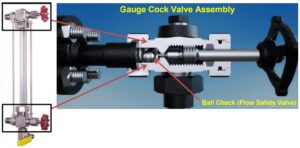
Check-valves are utilized in all sorts of applications, including safety applications – most notably in process safety and hazardous materials safety. In some state fire codes, these valves may even be required in certain lines, and in some process safety RAGEGEPs, they are required. Although this incident occurred in an off-shore rig, the sight-glass involved can be found in just...
Read More
The state of Ohio is in the processing of upgrading the state’s fire code using the 2015 International Fire Code as its basis. This is a summary of the chapters most often used in facilities that handle hazardous chemicals.
…
HomeRead More »
Read More
This 2017 letter of interpretation clarifies the requirements at Section 1904.31, Covered Employees. Specifically, OSHA clarifies who is responsible for recording injuries and illnesses of workers when a prime contractor and subcontractor share supervision at a construction site.
…
HomeRead More »
Read More

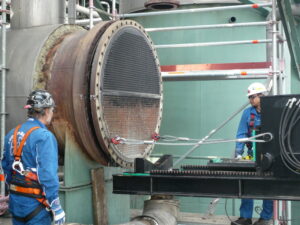
In many industries where the heating or cooling process comes into play, the process will probably have some type of heat exchanger or condenser. In large-volume processes, these units can be enormous; easily large enough to bodily enter and do assigned work. But many of these units may not get identified as a Permit-Required Confined Space (PRCS) during the site evaluation because of their design;...
Read More
OSHA has just released a new PSM Booklet titled “Process Safety Management for Petroleum Refineries,” which contains “Lessons Learned” from their Petroleum Refinery Process Safety Management National Emphasis Program (NEP). This publication is a MUST READ for any practicing process safety professional, regardless if your process(s) is a refinery or not! The publication...
Read More
On May 14, 2014, EPA conducted a compliance inspection of Respondent’s facility to determine its compliance with the Risk Management Program (“RMP”) regulations promulgated at 40 C.F.R. Part 68 under Section 112(r) of the Act. EPA found that Respondent had violated regulations implementing Section 112(r) of the Act by failing to comply with the regulations as noted on the attached...
Read More
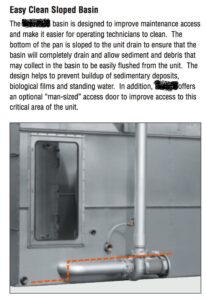
As the debate continues in the refrigeration industry regarding the classification of evaporative condensers, I had someone send me a picture from one of the main manufacturers of evaporative condensers showing me an example of an evaporative condenser that no longer has “limited means of egress.” Therefore it is no longer a Confined Space and therefore is not a Permit-Required Confined Space. The...
Read More
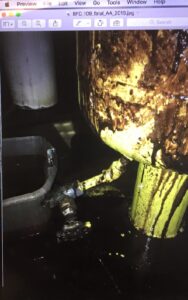
This is my second and probably the last post regarding this incident. This post will cover the Boston Fire Department’s (BFD) activities that took place at the facility AFTER the fatality. As you can see, these guys are true pro’s and they know hazardous materials as well as did a nice job using IIAR-2, American National Standard for Safe Design of Closed-Circuit Ammonia...
Read More