








Westrum (1991, 2004) proposed a description of three (3) levels of safety culture advancement. Hudson (1999), and later Parker, Lawrie & Hudson (2006), built on these and developed five (5) levels of safety culture advancement. Depending on its level of maturity, safety culture is either characterized as
Pathological
Reactive
Calculative
Proactive, or
Generative
This classification into...
Read More
Respondent owns and operates an ammonia refrigeration process, which is an RMProgram level 3 regulated process that stores or otherwise uses 95,000 pounds of anhydrous ammonia for cooling and freezing capabilities for its waffle products. On August 20, 2013, EPA conducted an on-site inspection of the RMProgram related records and equipment for the purpose of assessing the Respondent’s compliance...
Read More
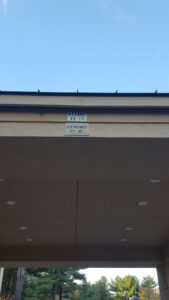
No fewer than 60 fatal and non-fatal cases were documented in 2016. Of these, 30 (50%) were fatal and 29 (48%) of those cases were directly related to grain entrapments. In addition to the cases documented in 2016, cases that occurred in previous years continue to be added to the database due to ongoing discovery efforts. The total number of cases documented between 1962 and 2016...
Read More
New Features in the CAMEO Chemicals App:
Added “type ahead” feature for simplified chemical name searches
Added Share feature to generate and email PDFs and other export files from the app
Added ability to maintain the MyChemicals list between sessions
Added ability to save MyChemicals collections directly on your device for future access
…
HomeRead More »
Read More
Respondent operates a facility that transports and stores anhydrous ammonia and at its stationary source, the Respondent has one RMProgram level 3 covered process, which stores or otherwise uses ammonia in an amount exceeding its applicable threshold of 10,000 pounds. On August 13, 2014, the EPA conducted an onsite inspection of the RMProgram related records and equipment for the purpose of assessing...
Read More
Respondent owns and operates a food oil products manufacturing and distribution facility which is engaged in packaging margarine, liquid oil and shortenings. Respondent operates a closed loop refrigeration system which utilizes or utilized anhydrous ammonia at the Facility. Respondent uses and stores 13,800 lbs. of anhydrous ammonia in the refrigeration system. The Facility is subject to the “Program...
Read More

As we know “human factors” are specifically called in the OSHA’s PSM standard and EPA’s Risk Management Plan and even more specifically they are part of our Process Hazards Analysis (PHA). However, many do not understand what “human factors” are all about, so I thought I would share another picture I captured in my travels to help demonstrate a serious...
Read More
The multiple-fatality explosion on October 17, 2016 explosion and subsequent fires at the german facility has been determined to be caused by a contractor cutting into an incorrect line/pipe containing flammable raffinate. Two employees of the on-site fire department and an employee of a tanker which was anchored in the harbor died in the accident. Another employee of the on-site fire department...
Read More
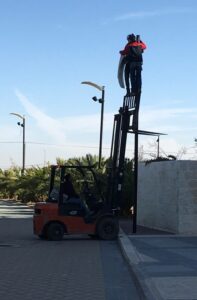
One of the most often overlooked requirements for piping installations is the proper leak/pressure testing of the piping BEFORE it is placed into service. The next major issue found, when piping is tested, is the manner in which it was tested. The 2014 and 2016 editions of ASME B31.3 makes it clear that hydrostatic testing is the PREFERRED means, then comes PNEUMATIC testing, and ONLY under...
Read More