









OSHA found multiple safety violations at an ethanol refinery expansion project after a 38-year-old pipefitter suffered fatal burn injuries when ethanol spilled from a process pipe he was working on and was ignited by flames from nearby welding operations. On Nov. 1, 2016, OSHA issued five serious safety violations to the worker’s employer, the project’s construction contractor. Inspectors...
Read More
This week’s video is one EVERY worker who transfers flammable and/or combustible liquids MUST see (note the best footage begins at the 2-minute part). Of course the Battalion Chief is doing everything right (actually WRONG from a safety perspective) to get the gasoline vapors to ignite. Here are a few things to consider when watching the video:
notice that he does NOT let the dispensing...
Read More
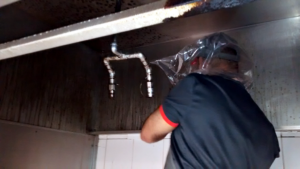
Ohio EPA has offered up three (3) scenarios to walk us through the thought process of establishing the “program level” for our RMP covered process(s). These are actually quite good examples…
What Program?
…
HomeRead More »
Read More
Recently in the Pacific North West, Coast Guard marine inspectors experienced two different circumstances involving the alarm and control system of steering gears onboard relatively new vessels. Although neither event resulted in a marine casualty, they serve as a reminder to the potentially dangerous results that may occur when an alarm system is deliberately ignored. A false sense of operational...
Read More
OSHA recently posted one of the most interesting LOI’s I have seen in quite a while. Somone asked: If an employee exposure after de-rating falls below 85 dBA, would that be a justification to not record an STS shift on the OSHA 300 Log? Of course OSHA said NO, but it was a nice try. Here is OSHA’s full answer…
…
HomeRead More »
Read More
Question: If an employee with a neatly trimmed goatee is wearing a respirator and it does not interfere with the seal of the face piece or valve function, and has passed a fit test, does this meet the intent of the OSHA’s Respiratory Protection standard?
Response: The Respiratory Protection standard, paragraph 29 CFR 1910.134(g)(1)(i)(A), states that respirators shall not be worn when facial...
Read More

WARNING! Viewer discretion is advised. This video veers off my typical industrial safety topic, but it is one that every safety professional and emergency responder needs to see AND HEAR. It is a video that will haunt you, SO TAKE MY ADVISORY SERIOUSLY, but I do think that as painful as it may be, it is necessary part of imprinting our brains so that we are motivated to go the extra...
Read More
As usual, OSHA released their annual news at the National Safety Council’s Congress and Expo… OSHA’s Top 10 Standards Cited. The Top 10 for FY 2016* are:
#
Topic
OSHA Std
# of Citations
1
Fall Protection
1926.501
6,929
2
Hazard Communication
1910.1200
5,677
3
Scaffolds
1926.451
3,906
4
Respiratory Protection
1910.134
3,585
5
Lockout/Tagout
1910.147
3,414
6
Powered...
Read More
This article is intended to walk us through the DOT requirements for UNLOADING LPG and NH3 tanker trucks. In the DOT requirements covered in this article, we will see items that mirror OSHA’s PSM and EPA’s RMP requirements for DOCUMENTING Safety Systems and their intended functions. The material covered here should be incorporated into all UNLOADING SOPs and even in the risks...
Read More
As I have stated my position many times, I push back really hard when a Hazardous Material is being loaded or unloaded using a hose that I, nor my co-worker who is taking part in the tasks, has any idea of its age, history of use, pressure and temp ratings, etc. This puts a lot of trust in a carrier/driver who we have never met or worked with before! I can not remember the last time one of my plants...
Read More