








Imagine my surprise when reading the latest edition of “Chemical Process Safety (Fourth Edition), Learning from Case Histories“, August 2015, by Roy E. Sanders when I came across a very nice mention of SAFTENG.net. In 2014 I received some very nice feedback from Mr. Sanders regarding my work with the Incident Alerts and my Process Safety Articles, but I never thought I would...
Read More

One of the weakest elements in OSHA’s PSM and EPA’s RMP standards is the Incident Investigation element. Anyone who has performed a PHA or Audit can tell you that the difference of opinions range from aggressive to the criminally insane! Personally I have heard some of the lamest excuses for not investigating Loss of Primary Containment events, but it gets downright nasty when...
Read More
Respondent owns and operates a carbonated beverage bottling plant. At the facility, respondent produces, processes, handles, or stores substances listed in, or pursuant to, CAA 112(r)(3) or other extremely hazardous substances identified as such due to toxicity, reactivity, flammability, volatility. or corrosivity, including anhydrous ammonia. On March 29, 2015, there was a 3,750 pound release...
Read More
EPA found that Respondent had violated regulations implementing Section 112(r) of the Act at 40 C.F.R. Part 68 by failing to comply with the regulations as noted on the enclosed Risk Management Plan Inspection Findings and Alleged Violations Summary, which is hereby incorporated by reference. In consideration of Respondent’s size of business, its full compliance history, its good-faith...
Read More
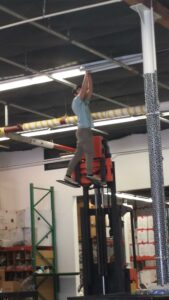
A safety pro has to wonder if the lights are locked out!?!?
Read More
Hundreds of workers evacuated a candy manufacturing plant when an evaporator unit pipe failed and released approximately 22 pounds of anhydrous ammonia throughout the facility. No workers were injured in the incident which closed the plant for more than two hours. OSHA investigated the Sept. 23, 2015, incident and cited the company with three repeat, 14 serious and two other-than-serious safety violations....
Read More
Near Chelyabinsk in Russia…
Read More
OSHA found that the nation’s largest chicken producer failed to use proper safety procedures that allowed a release of 79 pounds of anhydrous ammonia and endangered workers at its Waco facility on Sept. 28, 2015. OSHA cited the facility for two repeat and two serious violations under its Process Safety Management Standard. The company faces penalties of $122,500. OSHA issued the two repeat citations...
Read More
An employee at a food manufacturing plant was instructed to enter and clean the insides of a 3,000-gallon tank containing vinegar on Sept. 28, 2015. Once inside, he was overcome by acetic acid vapors created by the vinegar in the tank. He was rescued but was hospitalized for five days. An OSHA inspection found that the plant lacked numerous safeguards required to protect employees whose work require...
Read More
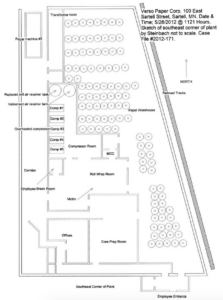
At approximately 11:20 a.m. on May 28, 2012 Employee #1, a 50-year-old male was working in the vicinity of the mill air receiver tank when it exploded. The State Fire Marshal report stated in their report that not enough cool water was reaching the air compressor, which failed to shut down when it overheated. The report states that heat ignited oil vapors that caused a receiver tank to explode,...
Read More
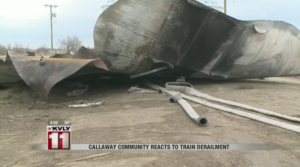
This week (3/20/16) we saw yet another serious incident involving a DOT propane container (MC331). And although there is NO doubt in my mind that the incident in Alabama last was clearly and unmistakably a BLEVE (most likely a COLD BLEVE from impact damage), this most recent incident in Callaway, MN was NOT a BLEVE. Here’s the evidence leading me to these suspicions…
…
HomeRead...
Read More