CLICK HERE to Renew your Membership
CLICK HERE for a NEW Membership
CLICK HERE to see eligibility requirements for FREE Membership
If you have any questions, please contact me

I am proud to announce that SAFTENG and The Chlorine Institute have renewed our partnership for another year (through 2026). Members of The Chlorine Institute receive a FREE SAFTENG membership. If you qualify, please contact me
NOTE: Any trade group interested in becoming a partner with SAFTENG for your Member Companies, please reach out, and I can share the plan






PHMSA is amending the Hazardous Materials Regulations to maintain alignment with international standards by incorporating various amendments, including changes to proper shipping names, hazard classes, packing groups, special provisions, packaging authorizations, air transport quantity limitations, and vessel stowage requirements. These revisions are necessary to harmonize the Hazardous Materials Regulations...
Read More
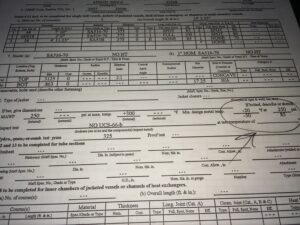
2/4/2015 UPDATE
After many lengthy discussions with engineers and inspectors I have come to the conclusion that although this practice may be permitted by code, albeit by a five-word phrase in an interpretation, most engineers stated they would NOT use a dual stamped vessel unless it was careful analyzed via a PHA or detailed engineering review. All those who I have communicated with said they...
Read More
One of the more common omissions in SOPs is the inclusion of all the “safety systems and their functions” involved in the execution of the SOP. In this article, I will use the task of Truck/Railcar Unloading a Flammable Liquid to demonstrate the types of safety systems and their functions that may need to be included in the Unloading SOP.
…
HomeRead More »
Read More
Yes, it is true… 1910.119(g)(2) states
“Refresher training shall be provided at least every three years, and more often if necessary…”
Please take note that the phrase “at least every” is used preceding the 3-year frequency, as well as OSHA explicitly states “more often if necessary”. In my 20+ years of developing, implementing and managing process...
Read More
Establishments in federal jurisdictions must comply with the new requirements beginning January 1, 2015. OSHA’s September 18 final rule did not go into effect in Kentucky on January 1, 2015; 803 KAR 2:180 remains in effect in the Commonwealth of Kentucky. In 2006, Kentucky implemented reporting requirements found in 803 Kentucky Administrative Regulation (KAR) 2:180 that are similar but differ from...
Read More
During the last legislative session, the General Assembly passed House Bill 189 which eliminated the requirement for an employer to develop a chemical information list that identified both the common name and chemical name of the material, and the location in the workplace where the material may be found. The legislation also eliminated the requirement to revise the list every two years, and submit...
Read More
Oregon OSHA is delaying the adoption of the proposed changes to Electric Power Generation, Transmission, and Distribution Standards in General Industry and Construction. This rulemaking proposal is in response to the April 11, 2014 federal OSHA adoption, published in the Federal Register, that revised Power Generation, Transmission, and Distribution standards in general industry and construction, 29...
Read More
Availability of DHS Crude By Rail (CBR) Emergency Response 4-Hour Web-based Training. Here is the information concerning course content and registration:
Course Description — Crude By Rail (CBR) Emergency Response 4-Hour Web-based Training
This program is designed for first responders with railroads passing through their jurisdiction. You will learn basic knowledge to respond to incidents involving...
Read More
This week the WV Attorney General Office (WVAGO) released their investigation report on the 2014 Elk River Chemical spill. This incident caused a mandatory Do-Not-Use (Water) order to be issued and more than 300,000 residents and countless businesses in a nine-county radius were without potable water for nine (9) days. This incident has now been tied to the Mechanical Integrity of several...
Read More
Smoke alarms by the numbers:
In 2007-2011, smoke alarms sounded in half of the home fires reported to U.S. fire departments.
Three of every five home fire deaths resulted from fires in homes with no smoke alarms or no working smoke alarms.
No smoke alarms were present in more than one-third (37%) of the home fire deaths.
Source: NFPA’s “Smoke Alarms in U.S. Home Fires” report, (March...
Read More
Two workers were killed while cleaning rail cars and were exposed to a dangerous amount of hydrogen sulfide gas. The primary cause of death of both employees was closed space asphyxiation and hydrogen sulfide intoxication, a byproduct of the residual organic waste contained in the tank. OSHA determined that neither victim was equipped with an emergency retrieval system before they entered the car....
Read More