













MANY THANKS to my NEWEST and
RENEWING Partners in Safety
since 2012
since 2013
since 2005
since 2006
since 2014
returning partner from 2012
2014 Fatality Tracker
Electrical
8
(2013 = 32)
(2012 = 68)
Forklift/Manlift
8
(2013=62)
(2012 = 52)
Mining*
7
2013=87*)
(2012 = 92*)
*no longer includes China accidents
Explosions
30
(2013=194)
(2012 = 241)
Cranes
6
(2013=51)
(2012...
Read More

TOO MANY believe diesel fuel is somehow this magically safe fuel! Once Diesel fuel reaches it’s flashpoint (~135-145F) it takes ONLY 0.6% to achieve its LEL. Gasoline has an LEL of around 1.0%. Here is what can happen to your “diesel tank” when it is involved in a fire.
Read More

Sizing emergency venting for atmospheric flammable liquid storage tanks is a safety-critical requirement, yet we often find it undersized. The core objective is to provide sufficient relief capacity so that, in the event of an external “exposure fire,” the tank does not rupture due to rapid internal pressure buildup from vaporizing liquid. Unlike normal venting (which handles thermal expansion...
Read More
In June I will be presenting with my good friend and safety colleague Jonathan Zimmerman at the ASSE Conference in FL. Our presentation is “Process Safety Management Best Practices, Lessons Learned and Enforcement Trend”. Here is a peak at some very interesting data regarding PSM inspections from May 26, 1992 – February 26, 2014. Stop by our session in June and see much...
Read More
MANY THANKS to my NEWEST and
RENEWING Partners in Safety
since 2012
since 2013
since 2005
since 2006
since 2014
returning partner from 2012
2014 Fatality Tracker
Electrical
8
(2013 = 32)
(2012 = 68)
Forklift/Manlift
8
(2013=62)
(2012 = 52)
Mining*
7
2013=87*)
(2012 = 92*)
*no longer includes China accidents
Explosions
27
(2013=194)
(2012 = 241)
Cranes
6
(2013=51)
(2012...
Read More

The following has been updated to resolve erroneous or incomplete data with reference to Category 2 and 3 Information and expanded resources for Category 1 compliance. This memorandum replaces the November 1, 2013, memo on the same topic. DFS apologizes for any confusion on the matter. We have passed the final deadline for permits to be submitted under 527 CMR 33.00. I am sending this memorandum summarizing...
Read More
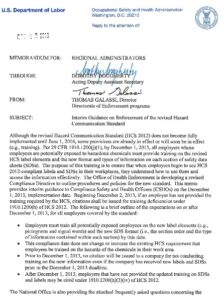
Although the revised Hazard Communication Standard (HCS 2012) does not become fully implemented until June 1, 2016, some provisions are already in effect or will soon be in effect (e.g., training). Per 29 CFR 1910.1200(j)(l), by December 1, 2013, all employers whose employees are potentially exposed to hazardous chemicals should have provided training on the revised HCS label elements and the...
Read More
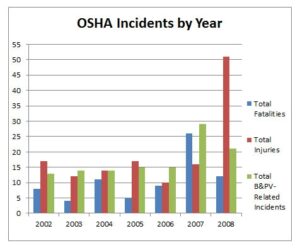
Before OSHA reports are cleared and posted to its database, each summary undergoes a thorough investigation, revision, and screening process by OSHA, which can delay posting up to 5 years. For those reasons, the National Board has elected to research summaries that are greater than five years old. National Board began with years 2002-2007, and then on an annual basis will add the next year’s...
Read More
NIOSH issues certificates of approval for specific and complete respirator assemblies. The approval is granted after the respirator has been evaluated and found to be in compliance with all of the requirements of the NIOSH regulations in Title 42, Code of Federal Regulations, Part 84.The requirements include the presence of a viable quality assurance program that controls the important aspects...
Read More
Most of us know that reporting in a “timely manner” is critical in regards to compliance with EPA reporting expectation. Most everyone can agree that 30 minutes is about as large of buffer we can expect in defining “timely”. But we are seeing a trend in our Emergency Response assessments for those facilities that sit on a “boundary”. The issue lies in…
…
HomeRead More »
Read More