














The Compressed Gas Association (CGA) has published P-95, Guideline for the Safe Installation and Use of Cryogenic Food Freezing and Chilling Equipment. This publication covers the installation and operation of food freezing and chilling equipment and associated supply systems, and the use of that equipment with refrigerated liquefied gases (nitrogen and carbon dioxide).
…
HomeRead More...
Read More
At 4:30 p.m. on October 25, 2024, an employee, 53, was working on a crew with four (4) other employees fueling a boat when an explosion occurred. The employee died from 3rd degree burns to his body and blunt force trauma to his head. Four (4) other employees were hospitalized to treat multiple burns.
…
HomeRead More »
Read More
At 12:19 p.m. on September 18, 2024, Employee #1, 42, was cleaning the paper machine rollers with an air hose. While performing the task, the employee was caught between the top roller and the mat. The employee was crushed by the rollers, resulting in fatal injuries.
…
HomeRead More »
Read More
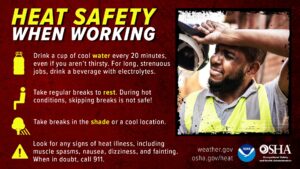
It’s hard to believe that 2025 is already at its halfway mark. Temperatures are rising and humidity is creeping in for many workplaces, so it’s time to start measuring, monitoring, and responding to high-heat working conditions. Don’t ignore this hazard simply because OSHA has not yet promulgated a standard. Do it for your PEOPLE, not for OSHA.
Read More
Fill out this form to ask a workplace safety and health or retaliation question or to request a letter of interpretation. Responses to questions will be sent within ten business days, but interpretation requests take longer. All responses are for informational purposes only, and do not constitute an official communication of the U.S. Department of Labor or OSHA. For an official response,...
Read More
If you don’t know me and are confused as to what makes me tick as a safety pro… it’s data! And not just any data – VERFIED AND VALIDATED DATA!
And this leads me to “on-line reviews”. I hear a lot of people refer to these on-line reviews about vacation rentals, restaurants, and products. They are serious about convincing themselves “it must be ok, just look at all these 5 star reviews”. I’m...
Read More
This paper concerns refrigerant gases classified as Division 2.1 flammable gases under the Australian Dangerous Goods Code (ADG Code) or classified as Flammable Gas Category 1 using the Globally Harmonized System (GHS). It covers general work health and safety/occupational health and safety (WHS/OHS) duties, however, readers should check their legislative responsibilities at the state/territory and...
Read More
On 6 December 2016, an operator at a liquefied petroleum gas (LPG) processing facility heard a loud noise coming from an area of the plant during start-up, following major maintenance on the process. The operator identified that high-pressure, flammable gas was being released to the atmosphere from a point beneath the insulation of process equipment.
Once the incident was contained, the area was...
Read More
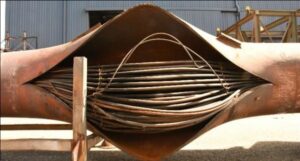
In April 2024, a regeneration gas heater ruptured at a gas processing plant due to an overheated electrically heated regeneration vessel. Regeneration gas heaters are commonly used in the regeneration of molecular sieve dehydrators with the recirculation of dried natural gas heated to 250 degrees Celsius throughout adehydrating purge cycle. The initiation of manual operating mode, together with an...
Read More
A worker was exposed to NH3 while working next to a live refrigeration unit. The worker was working from an elevating work platform (EWP) to install a partition wall in a large refrigerated space. The EWP was in close proximity to a chiller unit that was operating during the work. The EWP knocked a valve on the chiller unit, releasing high-pressure ammonia refrigerant. The worker was sprayed in the...
Read More
If the company leadership team, including the Board of Directors (BOD), cannot explicitly state what they want from the EHS team and what level of performance they wish to achieve, then we are being set up to fail.
I am amazed at how a leadership team will claim a multi-million-dollar project was a “safety project” and how they are “investing in safety.” When none of them...
Read More
Recently, I visited an old client after a long absence. As I pulled into the parking lot, I immediately noticed the upgrade to the freshly paved and striped parking lot. My last visit, years earlier, I ended up parking in a crater in a gravel lot that some smaller cars would not have been able to traverse (yes, it had potholes deep enough and large enough to swallow a compact car). And sadly, the facility...
Read More