CLICK HERE to Renew your Membership
CLICK HERE for a NEW Membership
CLICK HERE to see eligibility requirements for FREE Membership
If you have any questions, please contact me

I am proud to announce that SAFTENG and The Chlorine Institute have renewed our partnership for another year (through 2026). Members of The Chlorine Institute receive a FREE SAFTENG membership. If you qualify, please contact me
NOTE: Any trade group interested in becoming a partner with SAFTENG for your Member Companies, please reach out, and I can share the plan






Chemical-terrorism Vulnerability Information (CVI) is the information protection regime authorized by Section 550 of Public Law 109-295 to protect from inappropriate public disclosure any information developed or submitted pursuant to Section 550. This includes information that is developed and/or submitted to DHS pursuant to the Chemical Facility Anti-Terrorism Standards (CFATS) regulation which...
Read More
Some may think this is crazy, I do; but I have had many debates with businesses during audits and serious accident investigations around this argument. There are a lot of mind-sets in plants that have many presses that LOTO does not apply to this task as it would slow production too much and put them out of business. I am floored each time, as you will see in this analysis, their argument...
Read More
UPDATE from my OSHA contacts: The NEP was written so that OSHA offices would not single out NH3 refrigeration and CL2 water treatment processes. OSHA feared that since these processes were so plentiful that they would target these types of processes and not inspect other types of processes, so in reality they were spelled out – not to focus on, but rather to prevent OSHA from focusing...
Read More
Scenario: An employer requires ordinary safety-toe footwear throughout their facilities and pays for the first $100...
Read More
This NPRM would update the SDO standards referenced in the three paragraphs that comprise the Acetylene Standard. The Compressed Gas Association (CGA) published several editions of these SDO standards after OSHA adopted them in 1974, and one of these standards (i.e., Compressed Gas Association Pamphlet G-1.4-1966), is no longer available for purchase from CGA. Therefore, to ensure that employers have...
Read More
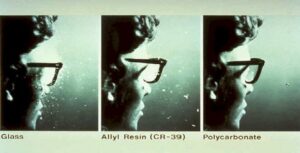
There is not a safety professional on this planet that has not had to deal with a worker putting side shields on their street glasses and trying to pass them off as “safety glasses”. These days we often get the argument from the worker that the lenses are “plastic and are the same as safety glasses”. Trying to explain the difference between the two can be difficult,...
Read More
This table shows the number of RMP facilities — facilities that could potentially have toxic or...
Read More
Yes, EPA has a General Duty Clause for RMP, much like OSHA’s General Duty Clause. However,...
Read More
I have had tons of questions and comments on last week’s article regarding EPA’s General Duty...
Read More
Top 10 RMP Chemicals by On-Site Quantities
This table shows amounts of each chemical within processes that have worst-case accidents that could potentially reach off-site. Facilities that are no longer registered with RMP are not included.
Chemical Name
Chemical Type
# of facilities
Pounds in processes
Ammonia (anhydrous)
Toxic
7,672
182,886,947,607
Flammable Mixture
Flammable
669
33,886,809,199
Toluene...
Read More
H.R.2868 is to amend the Homeland Security Act of 2002 to extend, modify, and recodify the...
Read More
When we do our many third-party S&H audits around the country, there are a few findings we could just leave on our spreadsheet as they are so common from business to business. One of these common findings is the lack of annual training for employees on their rights to access, view, copy, etc., their own personal medical records, exposure monitoring for chemicals, noise, radiation, etc., and any...
Read More