








Human factors are concerned with optimizing human performance in all tasks and in major hazard workplaces; the primary intention is to achieve safe performance. These high-risk workplaces should have conducted risk assessments and established a range of controls to prevent major accidents. Still, they should also focus on human performance issues to eliminate or reduce human failures.
An organization’s...
Read More

Twelve days before the Holidays,
My Safety Team said to me,
No cuts or lacerations
Wear your PPE,
No slips, trips or falls
Watch where you put your feet,
No strains, aches or pains
Use your safe lifting techniques,
Watch your head and keep it safe
Always be aware of overhead space,
Wear glasses, wear gloves
And...
Read More
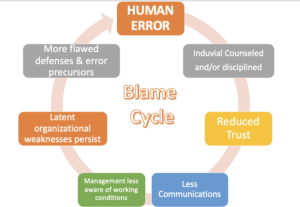
Organizational weaknesses are vulnerabilities, flaws, and defects in controls (engineered, administrative, cultural, and oversight controls). Searching for and eliminating latent organizational weaknesses eliminates factors contributing to significant events.
…
HomeRead More »
Read More
This article discusses how a facility would need to get one of its coded pressure vessels repaired, altered, or re-rated. The article will cover pertinent code and jurisdiction requirements and the differences among the American Society of Mechanical Engineers (ASME) Code, the National Board Inspection Code (NBC), and American Petroleum Institute (API) requirements, as well as discuss the following:...
Read More
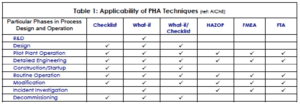
A Process Hazard(s) Analysis is a thorough, orderly, and systematic approach for identifying, evaluating, and controlling the hazards of processes involving highly hazardous chemicals. The facility shall perform a process hazard analysis on all processes covered by EPA’s RMP rule and/or OSHA’s PSM standard. The process hazard analysis methodology selected must be appropriate to the complexity...
Read More
HAZWOPER EMERGENCY RESPONSE PLAN DEVELOPMENT GUIDELINES(Elements of an Emergency Response Plan)1910.120(q)(2)
(i) Pre-emergency Planning and Coordination with outside parties
Facilities are required in the Superfund Amendments and Reauthorization Act (SARA) title III to coordinate their activities with outside response organizations and emergency response organizations.
The emergency response...
Read More
Are there any recordkeeping requirements specified in the risk management program (RMP) regulations in 40 CFR Part 68?
The owner or operator of a stationary source that is subject to the RMP regulations must maintain records supporting the implementation of Part 68 for five years (§68.200).
Read More
Error Management (EM) has two (2) components:
error reduction and
error containment
Error reduction comprises measures designed to limit the occurrence of errors. Since this will never be wholly successful, we also need error containment measures designed to limit the adverse consequences of those errors that still occur. At this general level, EM is indistinguishable from quality management or,...
Read More
This series is intended to bring attention to failures in the “coded welding” practices. From not using certified welders, to failures in visual and NDE, and failures in Pressure/Leak testing. This first incident was caused by a decision NOT to perform Post-Weld Heat Treatment on a repaired pressure vessel.
…
HomeRead More »
Read More
While virtually any liquid trapped in a “blocked-in” section of pipe can cause a rupture due to thermal expansion, specific chemicals are strictly regulated by OSHA 1910.119 (PSM) and NFPA 30 because of their volatility or toxicity. The requirement for a hydrostatic relief valve (HRV) is generally triggered by the chemical’s physical state (liquefied under pressure) and its coefficient...
Read More
Immediate Lethal Zone — Fireball Radius
Typical range: 160–820 ft
Hazards:
Total engulfment by fireball
Instantaneous fatal thermal exposure
Tank shell fragmentation begins here
Used for: absolute exclusion zone.
Severe Burn Zone — High Thermal Radiation
Typical range: 820–1,300 ft
Thermal radiation: ~12.5–37.5 kW/m²
Effects:
Third‑degree burns in seconds
Ignition of combustibles
Structural...
Read More
Fostering the principles for a strong safety culture is one of the most challenging tasks facing a management team. Successful leadership achieving a strong safety culture will most likely move an organization to the next level of human performance.
A leader is any individual who takes personal responsibility for his or her performance as well as the facility’s performance and
attempts to influence...
Read More