














In older facilities, we see illumination for an exit sign coming from an external source. Section 1013.6 of the IBC regulates the graphics, illumination, and emergency power supply for such signs.
Although no particular color is specified for exit signs, it is REQUIRED that the color and design of the signs, the lettering, the arrows, and other symbols on the sign provide good contrast to increase...
Read More
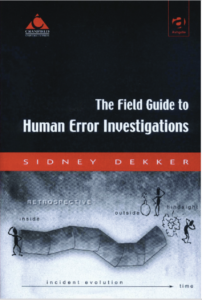
Dr. Sidney Dekker (Ph.D. in Cognitive Systems Engineering) states there are basically two (2) ways of looking at human error. In this article, I share with you, the first view, which could be called “the bad apple theory“. It maintains that:
…
HomeRead More »
Read More
Three (3) ingredients are vital for driving the safety engine, all of them the province of top management or what the organizational theorist, Mintzberg, has termed the strategic apex of the system. These driving forces are:
commitment,
competence and
cognizance
Reason’s three C’s.
…
HomeRead More »
Read More
Verifying that grounding and bonding systems meet a specific resistance threshold—such as the common 10 ohms target for flammable liquid processes—requires a systematic approach to ensure both accuracy and technician safety. The following procedure outlines the steps for performing a static ground-resistance test using a dedicated ground-resistance tester (Ohmmeter). This procedure applies to the...
Read More
Take any of the following steps below that may be necessary to guard against stored energy(s) left in the equipment after it has been shut down and isolated from its energy source(s).
…
HomeRead More »
Read More
An older post, with updates…Ever since the 2005 BP Texas City tragedy, refineries and chemical plants have been working diligently to review “facility siting” risks for their facilities. As with all of the PSM elements, many of us took this new focus as a learning opportunity. We had all done something we called “facility siting” in our Process Hazards Analysis, but in the early 1990’s...
Read More
The 2008 revisions to the LOTO Compliance Directive (CPL 02-00-147) did a great service in advancing a 30+ year-old standard in an area that badly needed clarification: Periodic Inspections under 1910.147(c)(6). I am sure there will be folks who will dissect this, looking for every “out” they can find to not do these safety-critical audits, but it’s hard to argue this section of...
Read More
Key Principles in integrating Human Factors in Hazard Identification, Hazard Analysis, and Risk Assessments include:
…
HomeRead More »
Read More
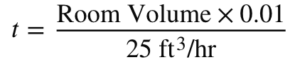
Forklift battery charging areas are NOT automatically classified as Hazardous (Classified) Locations, but they can easily become one if ventilation is inadequate. And I have seen more charging areas without engineered ventilation than I have with the proper ventilation. The hazardous classification hinges entirely on the facility’s ability to prevent the accumulation of hydrogen gas.
During...
Read More
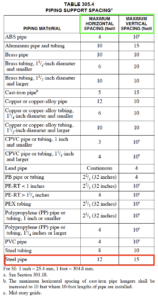
As we have discussed here many times, our piping is our “primary containment” that seems to be where the vast majority of Loss of Primary Containment (LOPC) events occur. Many reasons for this, which we have spelled out in other postings, but none the less the vast majority of “leaks” occur in our piping. One means that we should be abiding by is “proper support”...
Read More
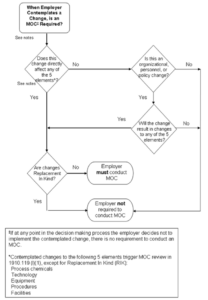
March 31, 2009
MEMORANDUM FOR: REGIONAL ADMINISTRATORS THROUGH: DONALD G. SHALHOUB
DEPUTY ASSISTANT SECRETARY
FROM: RICHARD E. FAIRFAX, DIRECTOR
DIRECTORATE OF ENFORCEMENT PROGRAMS
SUBJECT: Management of Organizational...
Read More
The strategic approach to improving human performance within safety embraces two (2) primary challenges:
Anticipate, Prevent, Catch, and Recover from ACTIVE errors
Identify and Eliminate LATENT organizational weaknesses that provoke human error and degrade controls against error and the consequences of error
Preventable errors will not be eliminated if opportunities to err are not methodically identified....
Read More