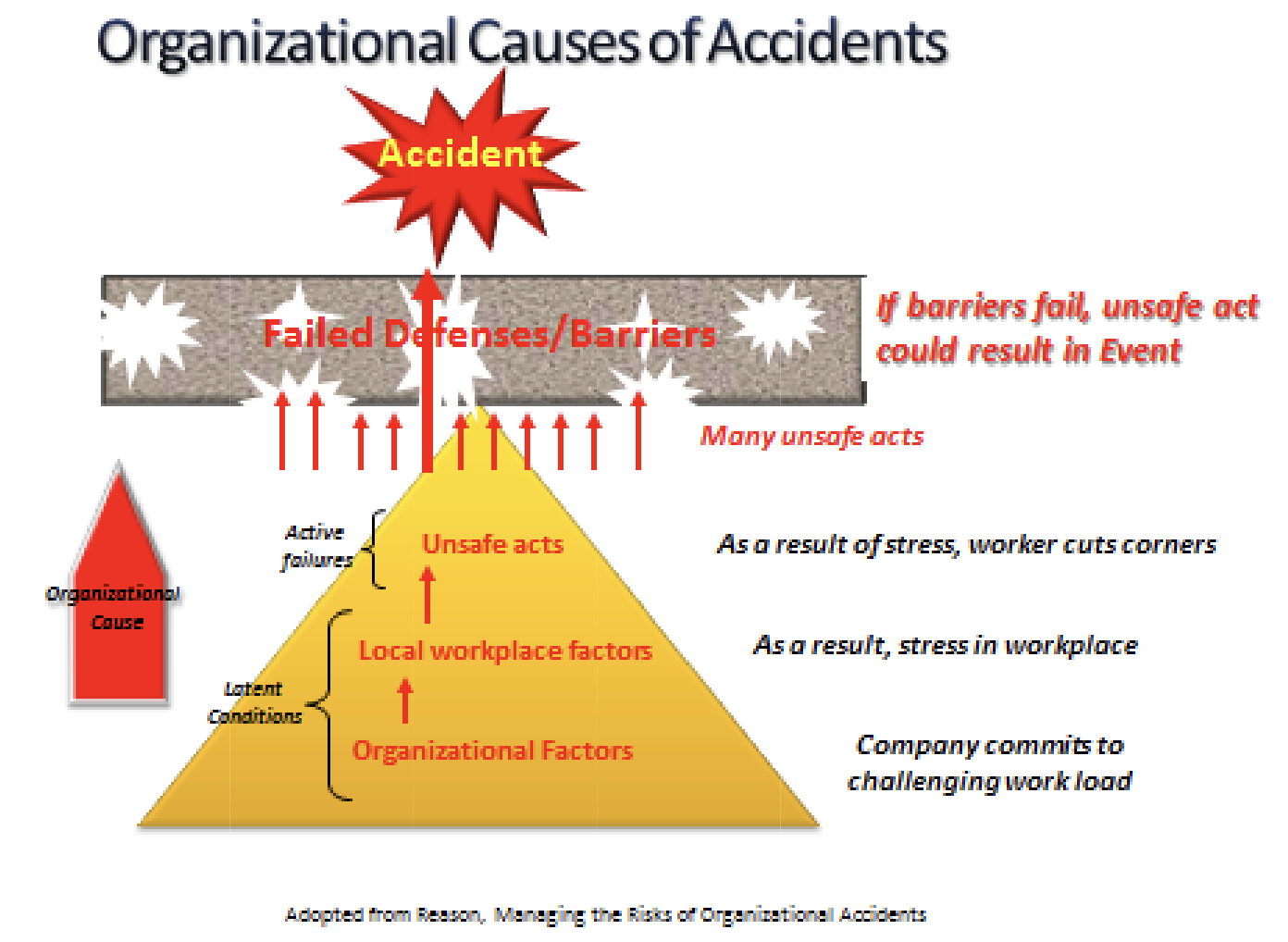
Excellence in human performance is more likely if front-line workers, support staff, and managers embrace the following underlying truths or principles that provide the bases for the behaviors. Integrating these principles into management and leadership practices, worker practices, and the organization’s processes and values will help guide the development of a philosophy and strategy for improving human performance and the planning and conduct of work.
1. People are fallible, and even the best people make mistakes
Human fallibility is a permanent feature of human nature. We recognize that humans possess a wide range of capabilities and corresponding limitations. One shortcoming is our tendency to be imprecise – to err. Errors happen. No amount of counseling, training, or motivation can alter a person’s fallibility. Therefore, considerable forethought is necessary before depending on human beings for compensatory action or as the only defense against a plant upset or personal injury. Human performance should not be solely relied on during activities critical to safety. Other more reliable defenses should be in place to back up the individual.
2. Error-likely situations are predictable, manageable, and preventable
Despite the certainty of human error in the long term, specific errors for particular tasks are preventable. Just as we can predict that a person writing a personal check at the beginning of a new year stands a good chance of incorrectly recording the previous year on the check, a similar prediction can be done in the context of work at the job site. Recognizing error traps and actively communicating these hazards to others permits us to manage situations proactively and prevent errors and events. By changing the work situation to prevent, remove, or accommodate the presence of conditions that provoke error, job-site conditions (environmental and individual factors) can be managed to prevent or minimize the chance for error.
3. Individual behavior is influenced by organizational processes and values
Organizations are characterized by goal-directed behavior. Consequently, managers develop processes and values to direct the behavior of the individuals in the organization. The organization is simply the sum of how work is divided into distinct jobs and then coordinated to safely and reliably produce a product or carry out a task. Consequently, management is in the business of directing people’s behavior. Traditionally, human performance management has focused on the “individual error-prone or apathetic worker.” However, work is done within the context of the organization and the management planning and control systems, which contribute to most of the root causes of human performance problems and resulting events.
4. People achieve high levels of performance largely because of the encouragement and reinforcement received from leaders, peers, and subordinates
The organization is perfectly tuned to get the performance it receives from the workforce. A plant’s level of safety and reliability is directly dependent on people’s behavior. All behavior, good and bad, is reinforced by immediate consequences or past experience. Most behavior is reinforced by the consequences the individual experiences when the behavior occurs. Human performance is a function of behavior and its results. Because behavior is influenced by its consequences, what happens to workers when they exhibit certain behaviors is an important factor in improving human performance.
5. Events can be avoided through an understanding of the reasons mistakes occur and the application of the lessons learned from past events (or errors)
In the past, improvement in human performance has resulted from corrective actions derived from an analysis of events and problem reports—reactive methods. Because there are fewer events to learn from, proactive approaches to organizational learning are also needed. Events can be avoided reactively and proactively. Learning from our mistakes and the mistakes of others is reactive—it’s after the fact, but important for continuous improvement. Anticipating how an event or error can be prevented is proactive, and proactive methods provide a more cost-effective means of preventing events and problems from developing.