
Risk management strategies can be categorized into four (4) fundamental approaches

Risk management strategies can be categorized into four (4) fundamental approaches.  They are:

  1. Inherent,
  2. Passive,
  3. Active, and
  4. Procedural

Let’s discuss what they mean and the order in which we should utilize them.  Think along the lines of Hierarchical Control Schemes.
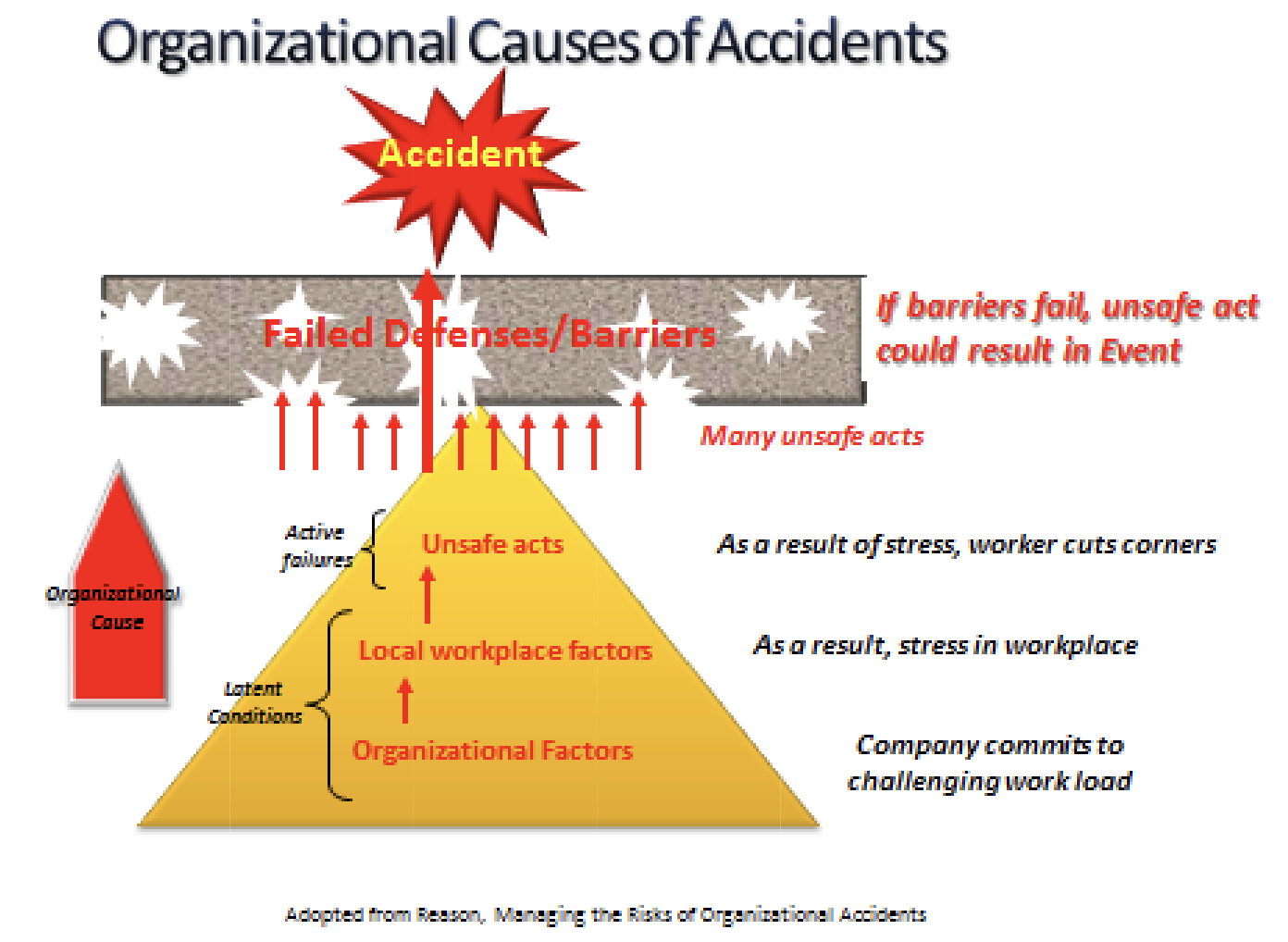
1) INHERENT risk management is the ELIMINATION of hazards or the reduction in the level of hazard to a point where the potential risk is tolerable.

For example, replacing steel weed-cutting blades with a plastic line in a weedwhacker.

2) PASSIVE risk management does not deal directly with the risk but mitigates the risk by REDUCING THE PROBABILITY of an accident.

For example, rotating blades on a lawn mower are a high-level hazard; however, the risk of an accident can be reduced by enclosing the rotating blade inside a deck. The hazard (rotating blade) still exists, but the deck prevents hands and feet from encountering the hazard by its design and construction.


3) ACTIVE risk management utilizes alarms, interlocks, and mitigation systems that detect changes in the system and puts the system in a safe state. This can be accomplished by either taking action to restore the system to normal or shutting the system down.

4) PROCEDURAL risk management uses standard operating procedures, operator training, safety checklists, and other management systems that involve human behaviors. Examples of procedural risk management would be safety rules and operating rules.


Normally, the order of effectiveness of these strategies is:  INHERENT → PASSIVE  ACTIVE PROCEDURAL

In most complex systems, risk management is best accomplished by using a combination of strategies to address the specific hazard.

Scroll to Top