Two words that are almost always used synonymously in safety discussions. And to be blunt, these two words are light years apart in science. Take for example the act of flying on a commercial airline.
You traveling at 400 mph, in a metal tube, carrying 50,000 pounds of jet fuel (CAT 3 Flammable Liquid), 35,000 feet above the surface of the earth.
Most rational humans can agree, based on the facts above, that flying is a hazardous activity.
However, would any care to take a guess on what the safest mode of travel is in the USA today?
Yep, flying!
So hazardous does not equate to risky. Risk equates to how well we control our exposures to the hazard.
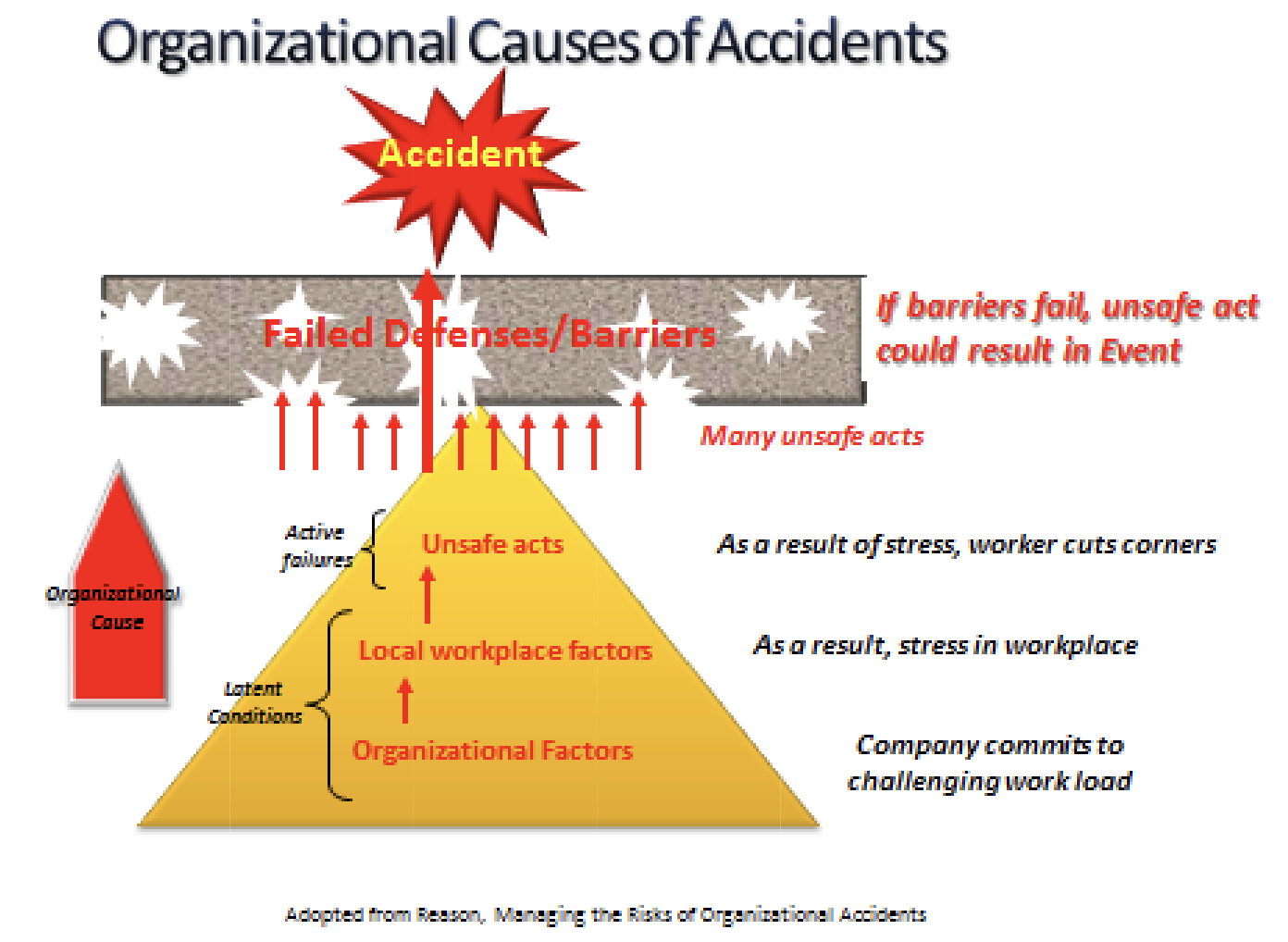
Think about all the rules/regulations, training requirements for everyone associated with getting that plane off the ground, the inspections/testing programs for all the components of the plane. There are multiple INDEPENDENT layers of protection that are in place to reduce the risk of an airplane accident. Everything from engineering controls to administrative controls is managed by different groups and audited by yet another independent group. It is the classic swiss cheese model… have enough layers of protection in place being managed by different groups and audited by an independent group to ensure no two failures of protection can happen simultaneously.
One slight problem… humans make up these independent groups. And history has shown us that human behavior at both the management level and the worker level can fail simultaneously in big ways – resulting in significant accidents. We tend to pay attention to airplane accidents as one accident can claim many lives. However, the same failure modes are at play in smaller-scale accidents occurring in our workplaces. The only difference is the significance of the severity.