
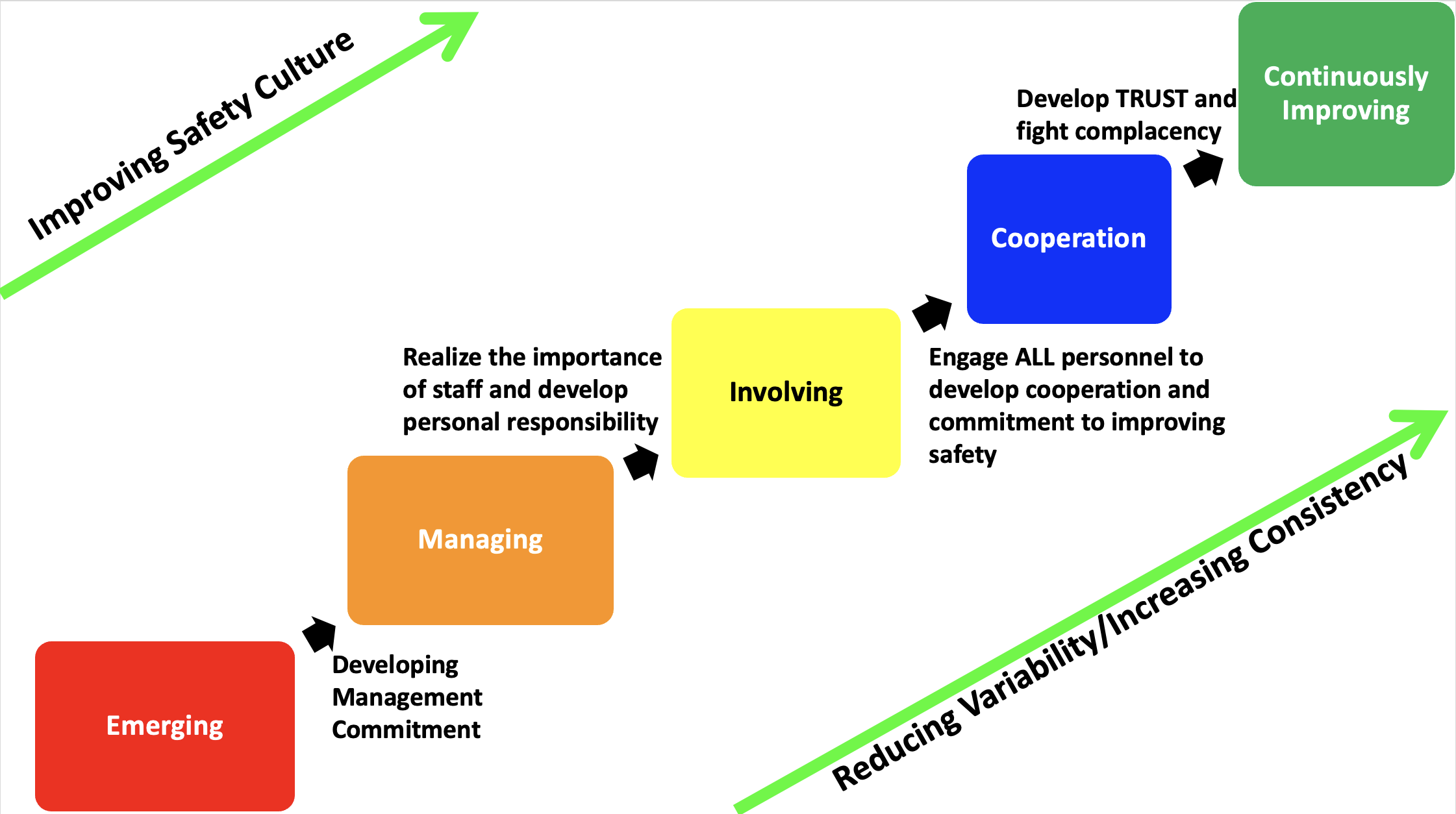
Safety Culture Maturity model – FSCMM (Fleming)

Fleming culture ladder

The elements that form the safety culture maturity model have been adapted from the safety culture components listed by the HSE in Reducing error and influencing behavior – HSG48.  It is unlikely that these elements will map precisely onto the factors that companies have previously measured in safety culture or climate surveys because there is considerable variation in the proposed elements of an organization’s safety culture.

Some researchers argue that safety culture is composed of the safety attitudes of an organization’s employees. Others propose that it is much wider, incorporating systems, attitudes, values, beliefs, and organizational symbols. Safety climate tools tend to measure slightly different elements of safety culture. The elements used in the safety culture maturity model contain the most common components of both theoretical and measurement models.

The safety culture maturity of an organization consists of the ten (10) elements described below. An organization’s LEVEL OF MATURITY is determined based on the maturity of these ten (10) elements. An organization will likely be at different levels on the ten components. Deciding which level is most appropriate will need to be based on the average level achieved by the organization.

CRITICAL NOTE:  It is worth pointing out that Fleming (2001) warns that his model is ONLY APPLICABLE to organizations that meet the following criteria:

  1. having an adequate SMS
  2. most accidents not being caused by technical failures;
  3. complying to occupational safety laws and regulations; and
  4. using occupational safety as a way of preventing accidents
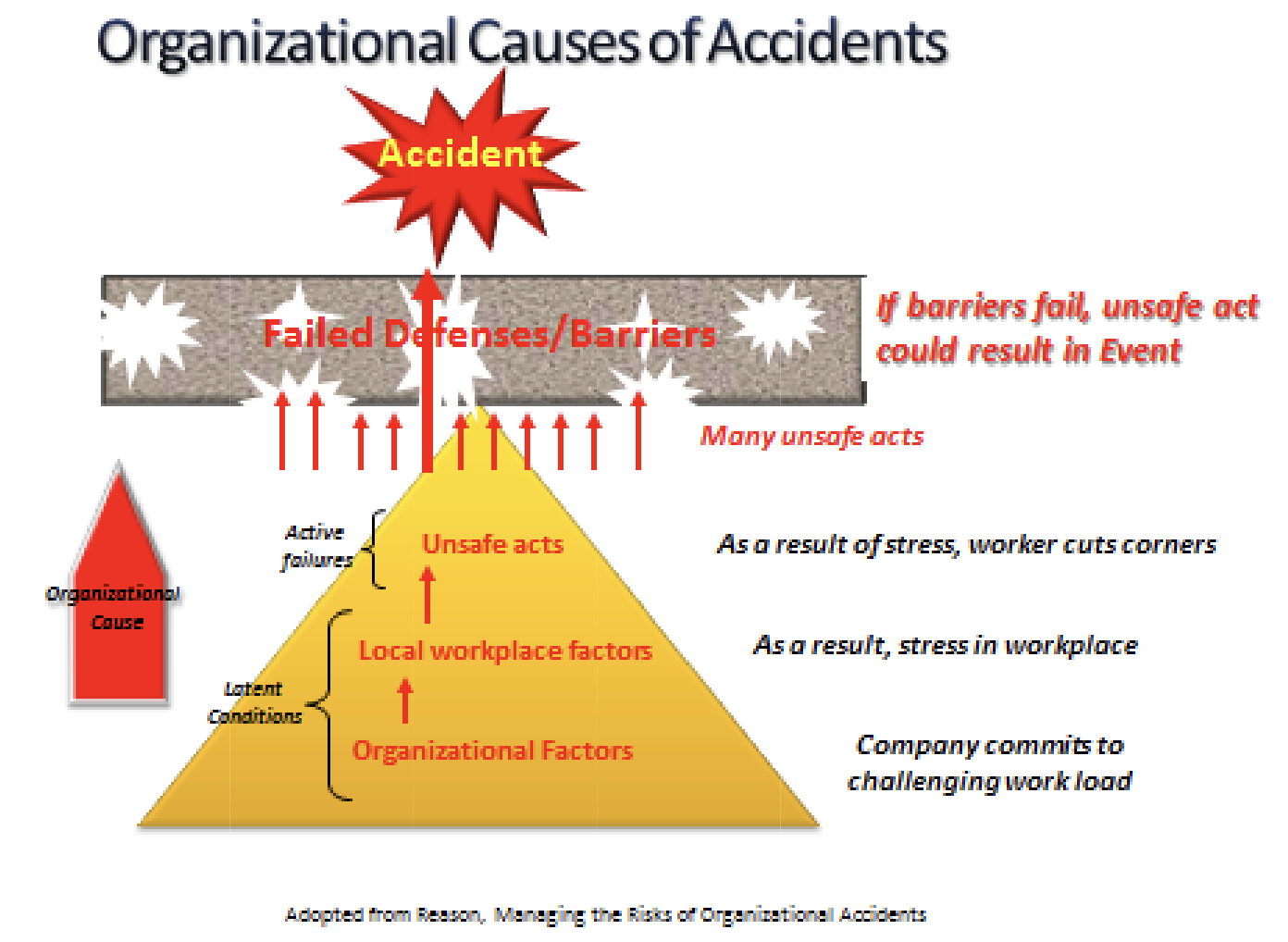
The ten (10) elements of the safety culture maturity model are:

  1. Management commitment and visibility
  2. Communication
  3. Productivity versus safety
  4. Learning organization
  5. Safety resources
  6. Participation
  7. Shared perceptions about safety
  8. Trust
  9. Industrial relations and job satisfaction
  10. Training 

Five levels of safety culture maturity

The safety culture maturity model presented below is set out in five (5) iterative stages. It is proposed that organizations progress sequentially through the five levels by building on the strengths and removing the weaknesses of the previous level. It is, therefore, not advisable for an organization to attempt to jump or skip a level.  Organizations must go through the managing level before the involving level, as managers must develop their commitment to safety and understand the need to involve frontline employees.

Fleming culture ladder

Level One: Emerging

Safety is defined in terms of technical and procedural solutions and compliance with regulations. Safety is not seen as a critical business risk, and the safety department is perceived to have primary responsibility for safety. Many accidents are seen as unavoidable and as part of the job. Most frontline staff are uninterested in safety and may only use safety as the basis for other arguments, such as changes in shift systems.

Level Two: Managing

The organization’s accident rate is average for its industrial sector, but they tend to have more serious accidents than average. Safety is seen as a business risk, and management time and effort are put into accident prevention. Safety is solely defined in terms of adherence to rules and procedures and engineering controls. Accidents are seen as preventable. Managers perceive that the unsafe behavior of front-line staff solely causes most accidents. Safety performance is measured using lagging indicators such as LTI, and safety incentives are based on reduced LTI rates. Senior managers are reactive in their involvement in health and safety (i.e., they use punishment when accident rates increase).

Level Three: Involving

Accident rates are relatively low, but they have reached a plateau. The organization is convinced that the involvement of the frontline employee in health and safety is critical if future improvements are going to be achieved. Managers recognize that many factors cause accidents; the root causes often originate from management decisions. Many frontline employees are willing to work with management to improve health and safety. Most staff accept personal responsibility for their health and safety. Safety performance is actively monitored, and the data is used effectively.

Level Four: Cooperating

Most staff in the organization are convinced that health and safety are essential from a moral and economic point of view. Managers and frontline staff recognize that many factors cause accidents, and the root causes will likely come back to management decisions. Frontline staff accept personal responsibility for theirs and others’ health and safety. The importance of all employees feeling valued and treated fairly is recognized. The organization puts significant effort into proactive measures to prevent accidents. Safety performance is actively monitored using all data available. Non-work accidents are also monitored, and a healthy lifestyle is promoted.

Level Five: Continuous improvement

Preventing all injuries or harm to employees (both at work and home) is a core company value. The organization has had a sustained period (years) without a recordable accident or high-potential incident, but there is no feeling of complacency.  They are paranoid that their next accident is just around the corner. The organization uses a range of indicators to monitor performance, but it is not performance-driven, as it has confidence in its safety management system (SMS). The organization constantly strives to improve and find better ways of improving hazard control mechanisms. All employees believe that health and safety is a critical aspect of their job and accept that preventing non-work injuries is essential. The company invests considerable effort in promoting health and safety at home.


Safety culture maturity indicators

Indicator 
Definition Authors
 Information  Characterized by the individuals’ trust in the organization in order to report mistakes, accidents, and incidents – an essential aspect of the construction of an informed culture. It also includes the indicators generated by the organization in order to monitor occupational safety performance. REASON, 1997;
HUDSON, 2001;
AIEA, 2002
Operational Learning

Characterized by:

  • how the organization treats the received information,
  • how accidents and incidents are analyzed,
  • whether or not actions for improvement are proposed and implemented,
  • whether or not the staff is informed of said actions, and
  • whether or not there is a continuous effort to improve occupational safety processes.
AIEA, 2002;
REASON, 1997
Involvement

Characterized by the staff’s participation in safety matters, such as:

  • the analysis of accidents and incidents pertaining to them;
  • the identification and the analysis of workplace risks;
  • in the proposal and the implementation of actions for the improvement of occupational safety;
  • in the creation and revision of procedures related to their work;
  • in the planning of their work; and
  • safety committees, meetings, etc.
CHOUDHRY et al., 2007;
GORDON et al., 2007
Communication

Characterized by:

  • how communications on themes about occupational safety are done and if they are done conveniently and timely,
  • whether or not there is an open communication channel between employees and hierarchical superiors.

It also pertains to:

  • whether or not said information reaches the company’s employees,
  • whether or not they understand it, and
  • whether or not the organization monitors its effectiveness.
COOPER, 1998;
GLENDON & STANTON, 2000;
OLIVE et al., 2006;
MEARNS et al.,
2003; WESTRUM,
2004
Commitment

Characterized by:

  • the amount of resources (time, money, personnel) and the general support allocated to occupational safety management,
  • the current status of occupational safety in relation to production,
  • the existence of an Occupational Safety Management System containing:
    • the organization’s vision and goals;
    • a definition of responsibilities;
    • the organization’s training policy and qualifications;
    • procedures;
    • rewards;
    • sanctions; and
    • audits.

Genuine commitment means more than written policies and mentions of the importance of occupational safety in speeches. There must be a rapport between what is said and what is done.

DEJOY et al.,
2004; FLIN et al., 2000; AIEA, 2002; OLIVE, et al.,
2006


Source: OFFSHORE TECHNOLOGY REPORT 2000/049

Scroll to Top