
Safety does not come naturally!

Most managers honestly do not want to see anyone get injured, but most of them have never seen what a fully functioning “safety management system” actually looks like and what it actually takes to have some level of assurance that injury prevention efforts are real. Both “Claude” and “Dale” opened my eyes up to a truth that I was oblivious to as a young and passionate safety professional:

Safety does not come naturally!

I think most senior safety professionals would agree with that statement. Humans are naturally risk takers and in business, this is viewed as a MUST HAVE trait to be successful. Pick up any entrepreneur business book and you will read all about “taking risks” and how those who are highly successful in business were “risk takers”. I have come to believe, with the help of my senior mentors, that this kind of “business education” is the view that many business managers carry into their view of safety.

We (safety professionals) sit on the other end of the risk spectrum! And it is this gap in risk tolerances that drive the two groups to battle on a daily basis. Narrowing this gap is the key to allowing our passion for helping others work safely and allowing the business the thrive. But how does one close this gap? And will we ever be able to eliminate this gap?
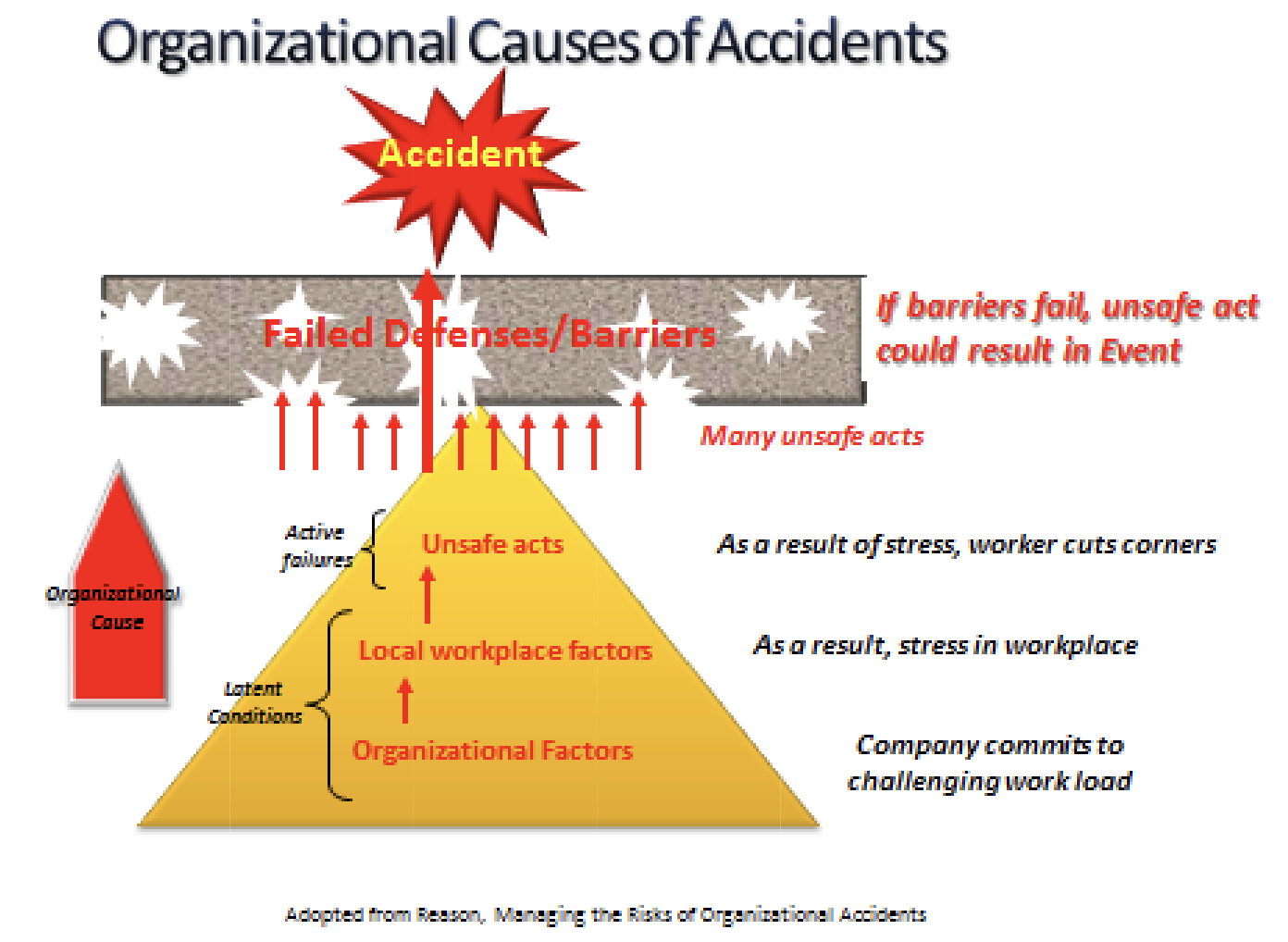
Let me answer the second question first. Simply stated… NO – we will never be able to eliminate the gap. Even having worked for Claude and Dale, two men who were passionate for safety and were by far the two most influential men in my safety career, I came to realize that my expectations were based on ONE (1) thing… SAFETY.

They were plant managers, thus they had a business to run and to make that business successful they did not have the luxury to focus 100% of their time on safety. They had to manage costs, production, quality, capital projects, etc. As they always told me, my job was to focus on the ONE THING for them, I was merely an extension of them in safety and as soon as the management team realized this, things improved quickly. I can honestly say that if I was working and they were in the plant, I would spend at least 2-3 hours of my day with them discussing SAFETY. They wanted results, but more importantly, they wanted REAL RESULTS and they wanted to know how the results were achieved.

They knew that if they just talked a serious game and there was no infrastructure to produce the results they wanted then we would get “pencil whipping” results. They focused on the safety activities and relied on me to establish the frequency of these activities. It was not easy, I had to provide data or other evidence to demonstrate that a “safety activity” was needed to control a hazard and at what frequency was this activity needed to be an effective risk reduction. I had to fight/battle for a lot of items, even though they were OSHA requirements; but those battles were nothing more than “teaching moments” for me.

Both of these men forced me to understand “WHY OSHA REQUIRED…” This means I spent a lot of time reading pre-ambles and directives to better understand what OSHA was intending with a standard. I was NEVER allowed to make the statement “because OSHA requires it”. Both men were not fans of OSHA, the agency, and neither one needed a fear factor of citations if they did not do some particular OSHA action. In fact, the maddest I ever saw either of them was when I got mad in a meeting and blurted out the response to a legitimate safety question… “because OSHA requires it”. They wanted to know why a certain action was required and why it was required at said frequency. And to my surprise, OSHA requirements were NEVER enough for these two men. They recognized OSHA as just the starting point for safety and if OSHA’s minimum was to do the activity just once per year, there was probably some value in doing it more frequently. Hence my practice of doing most of the OSHA training annually, even if the standard did not require it.

Scroll to Top