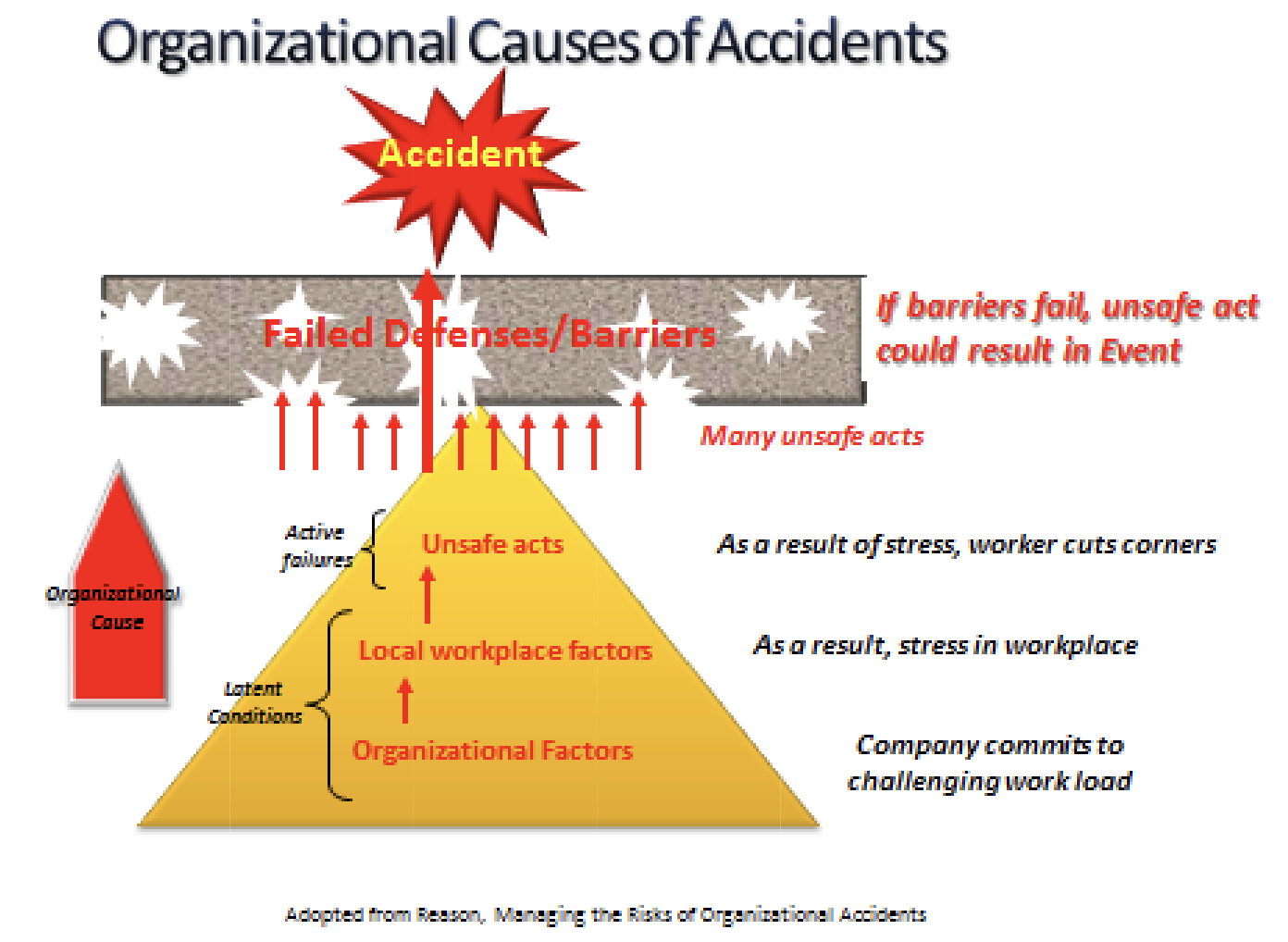
The last few weeks I have been sharing passages from Dr. Todd Conklin’s books. And I could not agree more with 99% of what he teaches. This week is one of those 1%’ers… I believe that a GREAT Safety Management System (SMS) will in fact help organizations “learn” from accidents. Starting with a well established incident management system that includes a robust causal analysis methodology, leading to well defined Corrective Action Plans (CAPs). In fact, it should be one of our personal goals as safety professionals to help the organization learn – NOT simply the individuals involved with the incident. Back in my early days, the late Claude Bloom would remind me about the “win the lottery” test. It goes like this… everything we do needs to be documented in such a way that if the management team was replaced tomorrow (e.g. they all won the lottery) the SMS would continue to function under the new team as everything the new team needed to know would be documented within the SMS. In the PSM arena we have to keep our Investigations for 5-years, so that they can be part of the PHA 5-year reval. And if there was ever a litmus test for the quality of an incident management system, this is it! We are lucky if anyone from the Incident Investigations over the past 5-years is on the Reval team. And unfortunately, many times the report/CAPs make it difficult to understand what really happened and the root cause(s) of those events. And this does NOT bode well for “Organizational Learning” or shifting the culture to one of a “Learning Organization”.
Here is Dr. Conklin’s thoughts…