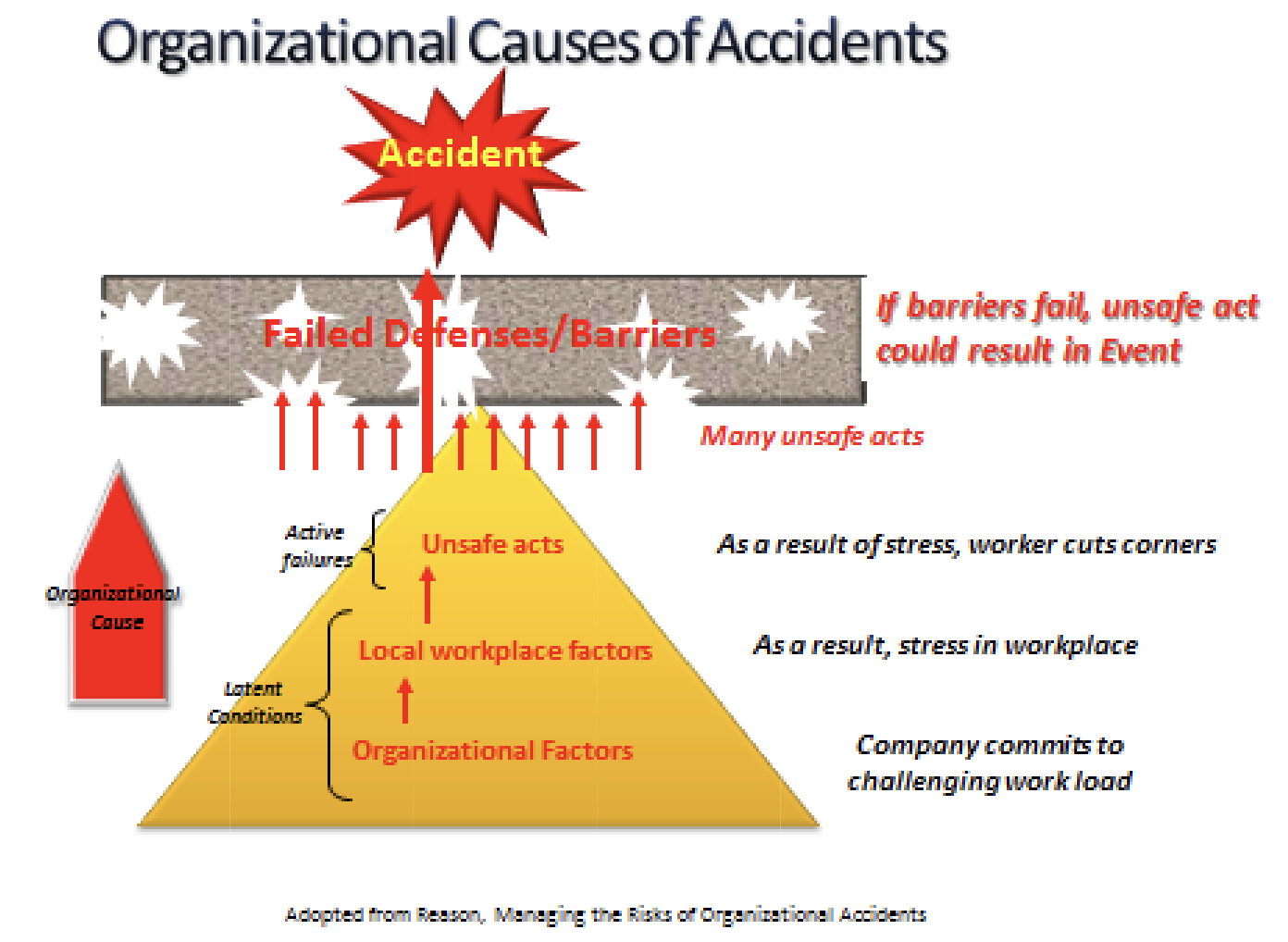
Human factors, as we know it today, got its inspiration from these basic ideas about human error. It then showed something different: an alternative way of looking at human error. As a result, there are basically two ways of looking at human error today. We can see human error as a cause of failure, or we can see human error as a symptom of failure. These two views have recently been contrasted as the old view of human error versus the new view – fundamentally irreconcilable perspectives on the human contribution to system success and failure.
In the old view of human error:
- Human error is the cause of accidents.
- The system in which people work is basically safe; success is intrinsic. The chief threat to safety comes from the inherent unreliability of people.
- Progress on safety can be made by protecting the system from unreliable humans through selection, proceduralization, automation, training and discipline.
In the new view of human error:
- Human error is a symptom of trouble deeper inside the system.
- Safety is not inherent in systems. The systems themselves are contradictions between multiple goals that people must pursue simultaneously. People have to create safety.
- Human error is systematically connected to features of people’s tools, tasks and operating environment. Progress on safety comes from understanding and influencing these connections.
Source: Human Factors for Engineers, The Institution of Engineering and Technology, Edited by Carl Sandom and Roger S. Harvey, 2004