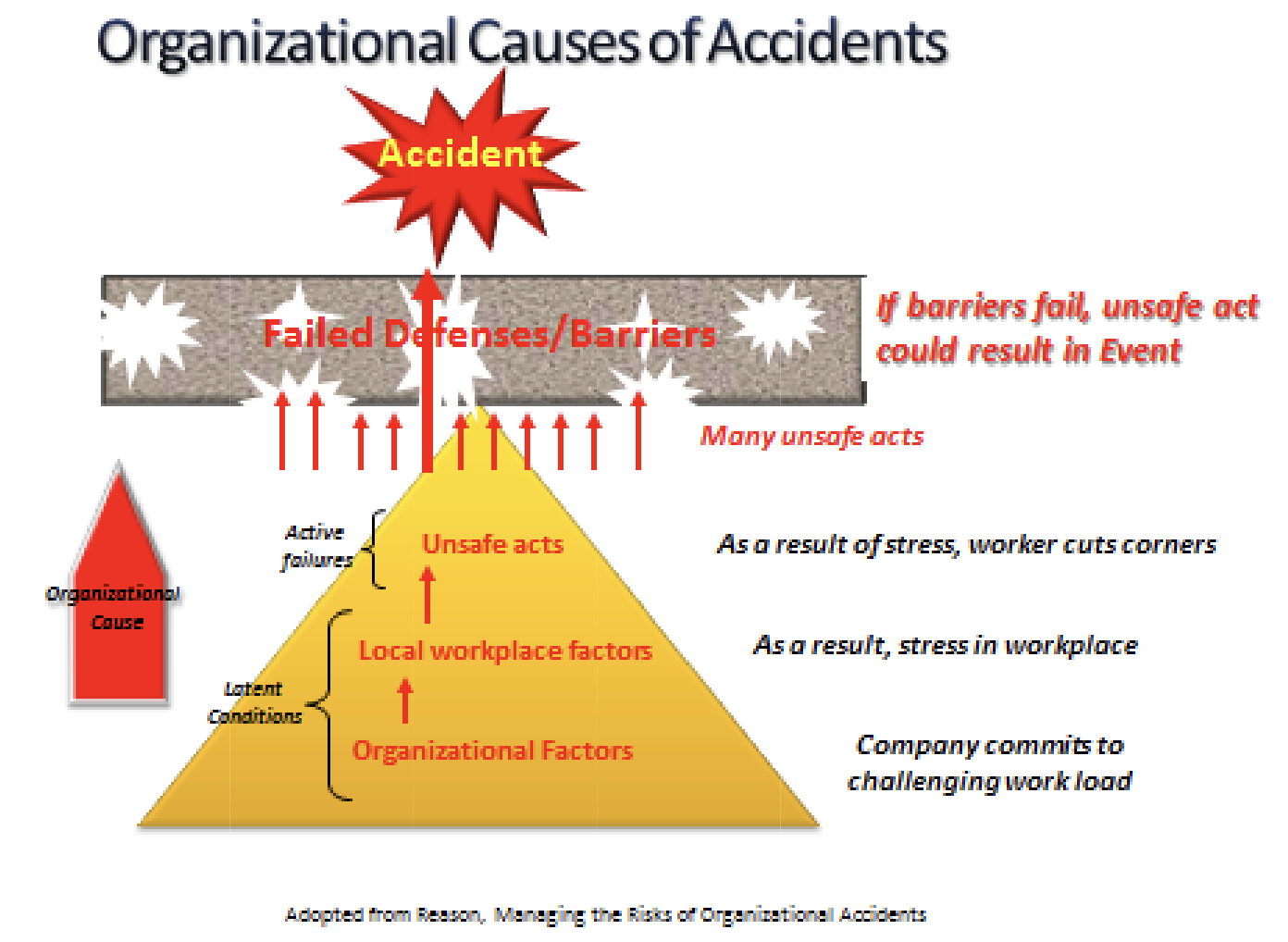
- Executives and senior managers are committed to safety in their decisions and behaviors.
- Executive and senior managers are the leading safety advocates and demonstrate their commitment in word and action.
- The safety message is communicated frequently and consistently as a stand-alone theme.
- Leaders throughout the organization set an example for living a life of safety in all they do.
- Corporate policies emphasize the overriding importance of safety as a company value.
Attributes:
Resources: Leaders ensure that personnel, equipment, procedures, and other resources are available and adequate to support working safely.
Behavior Examples:
- Executives and senior managers ensure staffing levels are consistent with the demands of maintaining safety and reliability.
- Managers ensure sufficient qualified personnel are available to maintain work hours within working hour guidelines during all modes of operation.
- Managers ensure facilities are available and are regularly maintained, including physical improvements.
- Leaders ensure tools, equipment, procedures, and other resources, including risk management tools and emergency equipment, support successful work performance.
- Executives and senior managers ensure sufficient corporate resources are allocated to the organization for short- and long-term safe and reliable operation.
Field Presence: Leaders are commonly seen in working areas, observing, coaching, and reinforcing standards and expectations. Deviations from standards and expectations are corrected promptly and professionally.
Behavior Examples:
- Senior managers ensure supervisory and management oversight of work activities, including contractors and supplemental personnel, such that safety is fully supported.
- Leaders from all levels in the organization are involved in overseeing work activities.
- Managers and supervisors practice visible leadership in the field and during safety- significant evolutions by “placing eyes on the problem,” coaching, mentoring, reinforcing standards, and reinforcing positive decision-making practices and behaviors.
- Managers and supervisors discuss their observations in detail with the group they observed and provide useful feedback about how to improve individual performance.
- Managers encourage informal leaders to model safe behaviors and high standards of accountability.
Sanctions and Rewards: Leaders ensure sanctions and rewards are aligned with safety policies and reinforce behaviors and outcomes that reflect safety is a company value.
Behavior Examples:
- Managers ensure disciplinary actions are appropriate, consistent, and support both safety and a safety-conscious work environment.
- Managers reward/publicly recognize individuals who identify and raise issues that affect safety.
- Leaders foster an environment that promotes accountability and hold individuals accountable for their behaviors/attitudes.
- Managers consider the potential chilling effects of disciplinary actions and other potentially adverse personnel actions and take compensatory actions when appropriate.
- Leaders publicly praise behaviors that reflect a positive safety culture.
Strategic Commitment to Safety: Leaders ensure that business priorities are aligned to reflect safety is a value in all we do.
Behavior Examples:
- Executives and senior managers reinforce safety as a company value.
- Managers develop and implement cost and schedule goals in a manner that reinforces safety as a company value.
- Managers ensure production requirements are established, communicated, and put into practice to reinforce safety as a company value.
- Executives and senior managers use information from independent oversight organizations to establish priorities aligning with safety as a company value.
- Executives and senior managers establish strategic and business plans that reflect the importance of balance with safety and production/maintenance.
- Executives and senior managers ensure corporate priorities are aligned with the idea that “safety is a company value”.
Change Management: Leaders use a systematic process for evaluating and implementing change so that safety remains the overriding concern with the change.
Behavior Examples:
- When making decisions related to major changes, managers use a systematic process for planning, coordinating, and evaluating the safety impacts and potential negative effects on the willingness of individuals to raise safety concerns. This includes decisions concerning changes to organizational structure and functions, leadership, policies, programs, procedures, and resources.
- Executives and senior managers ensure safety when planning, communicating, and executing major changes.
- Managers maintain a clear focus on safety when implementing the change management process to avoid significant unintended consequences.
- Managers ensure that individuals understand the importance of, and their role in, the change management process.
- Managers anticipate, manage, and communicate the effects of impending changes.
- Managers and supervisors actively monitor and address potential distractions from safety during periods of change.
Roles, Responsibilities, and Authorities: Leaders clearly define roles, responsibilities, and authorities to ensure safety.
Behavior Examples:
- Executives and senior managers ensure roles, responsibilities, and authorities are clearly defined, understood, and documented.
- Managers appropriately delegate responsibility and authority to promote ownership and accountability.
- Executives and senior managers ensure both corporate managers who support the organization and managers at the Service Units understand their respective roles and responsibilities.
- Recommendations and feedback from corporate governance, review boards, and independent oversight organizations do not override senior managers’ ultimate responsibility for decisions that affect safety.
Constant Examination: Leaders ensure that safety is constantly scrutinized through various monitoring techniques, including assessments of safety culture.
Behavior Examples:
- Executives and senior managers ensure that board members and members of independent oversight organizations meet with leaders and individual contributors in their work environments to develop an understanding of the status of the organization’s safety culture.
- Executives and senior managers obtain outside perspectives of safety by selecting qualified, critical, independent safety review board members with diverse backgrounds and perspectives.
- Executives and senior managers use various monitoring tools—including employee surveys, independent and self-assessments, external safety review board member feedback, and employee concern investigations—to regularly monitor safety culture.
- Leaders support and participate in candid assessments of workplace attitudes and safety culture and act on issues that affect trust in management or detract from a positive safety culture.
Leader Behaviors: Leaders exhibit behaviors that set the standard for safety.
Behavior Examples:
- Leaders “walk the talk,” modeling the correct behaviors, especially when resolving apparent conflicts between safety being a value and production.
- Leaders act promptly when a safety issue is raised to ensure it is understood and appropriately addressed.
- Leaders maintain high standards of personal conduct that promote all aspects of a positive safety culture.
- Leaders demonstrate an interest in operations and actively seek out the opinions and concerns of workers at all levels.
- Leaders encourage personnel to challenge unsafe behavior and unsafe conditions and support personnel who stop activities for safety reasons.
- Leaders motivate others to practice positive safety culture behaviors.
Adapted from: INPO Pocket Guide to INPO 12-012: Traits of a Healthy Nuclear Safety Culture