
The critical role of written procedures in safety management

We see a lot of talk about “written procedures” and how they should be minimized in length/detail and in some cases done away with altogether.  I call this rubbish – when done well they can be the cornerstone of a well-executed SMS.  And yes, I subscribe to the practice that some of these procedures will get special attention and we call these “Cardinal Rules” or “Life Critical Rules”.  I have always used these definitions in my PSM/SMSs:

Procedure: written instruction describing how to carry out a job of work. May be on paper, including diagrams, flowcharts, etc, or be presented on a computer screen.

Safety critical procedure: describes a procedure for a task which, if carried out incorrectly or not at all, could lead to serious plant damage, loss of containment, injury, or fatality.

Bottom line… Procedures provide a CONSISTENT and SAFE means of performing tasks, and they are the foundation for training personnel in how to do safety-critical tasks.
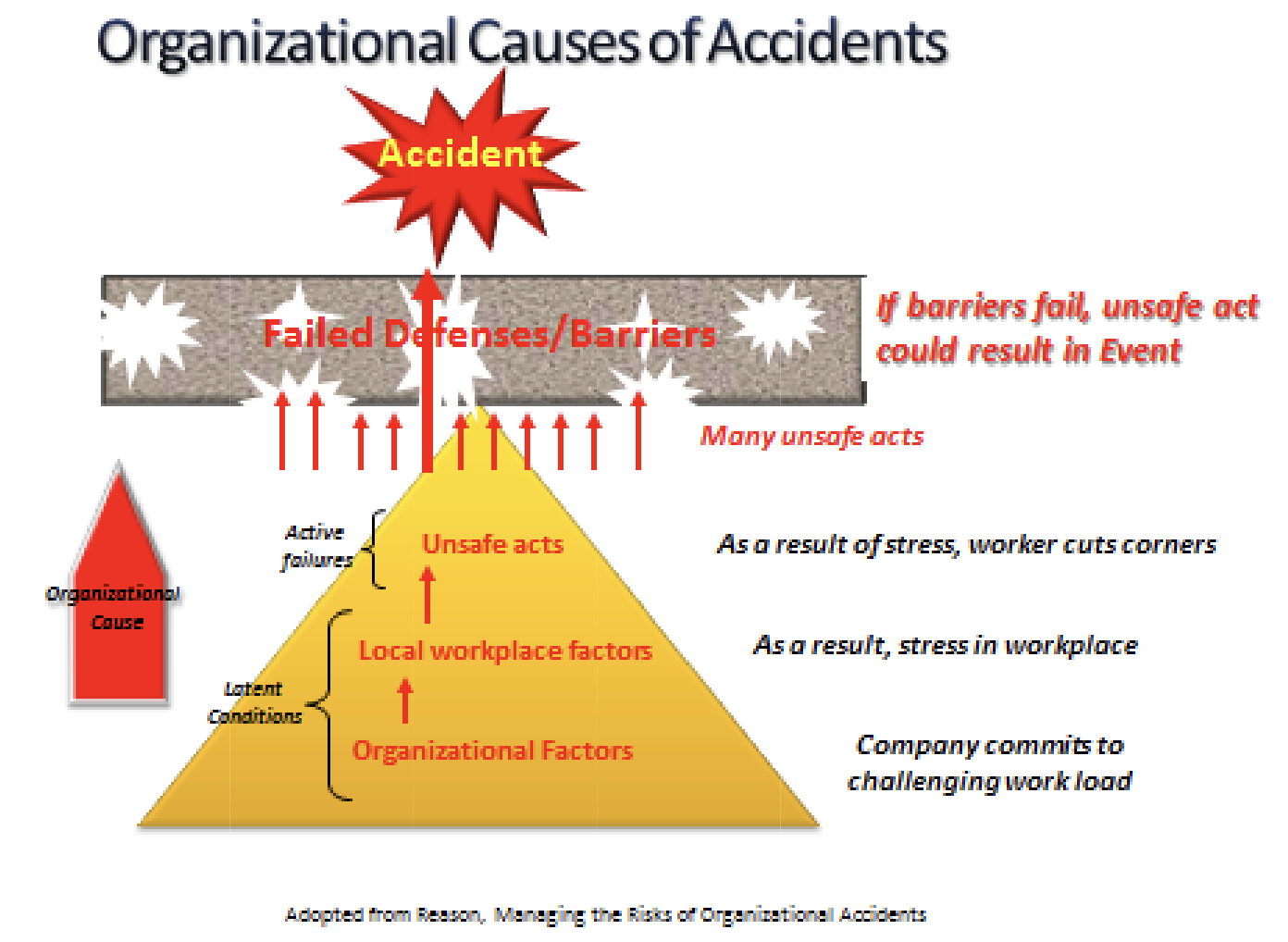
Failure to comply with procedures typically arises not because of their users’ attitudes or ignorance but because of

  1. faults with procedures themselves, for example, they are poorly written
  2. difficult to find,
  3. not logically structured,
  4. contain assumptions (e.g. ‘re-assembly of the device is simply the reverse of disassembly), or
  5. they do not cover unusual circumstances.

There are also many guidelines on language and layout of procedures. The most important is that procedures should:

  • Use terms that the user will know, but avoid slang or terms used only locally.
  • Contain a glossary of terms and abbreviations (use abbreviations in full the first time they are used in any procedure).
  • Use short sentences.
  • Write ‘actively’ (e.g. ‘remove the access cover’ rather than, ‘the access cover should be removed’).
  • Be as precise about actions as possible (e.g. ‘open valve XP1 half a turn only’ rather than ‘crack open valve XP1’ and ‘hold the button down for 10 seconds’ rather than, ‘for a short time’).
  • Set out actions in the right order – e.g. ‘isolate the 75 kV supply. Carry out step 5’, rather than, ‘perform step 5 above after isolating the 75 kV
    supply’.
  • Emphasize any hazards and precautions, personal protective equipment (PPE) requirements, and warnings with capital letters, bold text, or other
    highlighting.
  • Avoid negatives where possible (e.g. ‘wait until the pipe has fully depressurized: then start drilling’, rather than ‘do not start drilling if the pipe has not been fully depressurized’).
  • If long, have aids for keeping track of which step has been reached (tick boxes, markers etc.)
  • Avoid complicated or ambiguous language.
  • Avoid using different terms for the same thing.

Many of the above principles apply equally to labels on equipment, wording on visual display unit (VDU) screens, posters, signs, and other types of written material.


Source:  Energy Institute

Scroll to Top