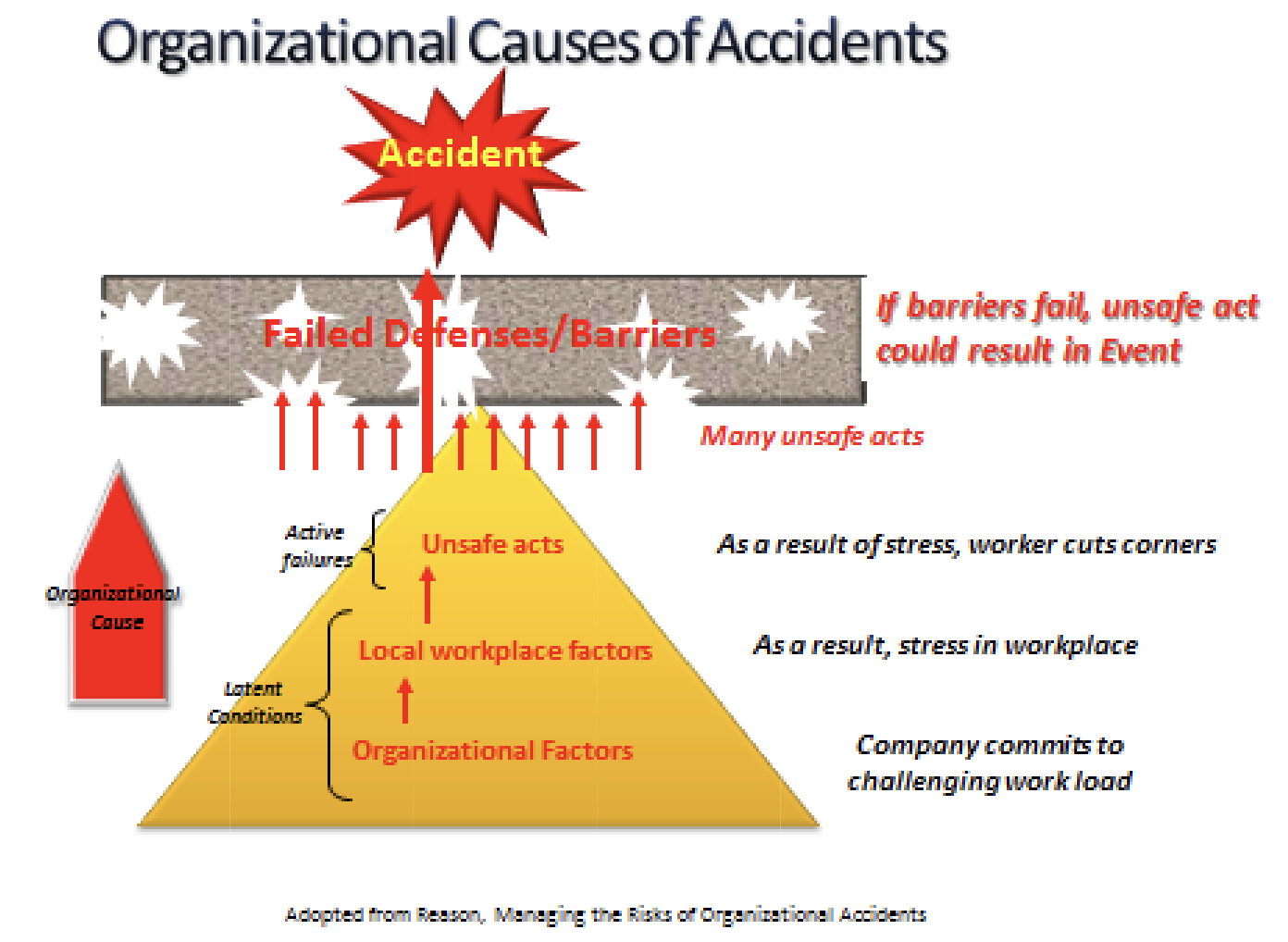
In the FAA NPRM posting on 1/11/23, we get a glimpse into the agency’s simplified approach to airlines managing safety with a Safety Management System (SMS). The FAA’s Safety Management System (SMS) is composed of four (4) major components:
- safety policy,
- safety risk management,
- safety assurance, and
- safety promotion
The FAA offers some excellent explanations of these elements and their role in safety within a high-risk organization. If your organization is talking about implementing the SIF (Serious Injury Fatality) model, this can be a helpful read for you.
NOTE: I have made some grammatical changes to the FAA’s FR posting just to make this an easier read. But I have NOT changed anything in any substantial manner.
A safety management system (SMS) provides an organization-wide approach to identifying safety hazards, assessing and managing safety risks, and assuring the effectiveness of safety risk controls. An SMS provides a set of decision-making processes and procedures that can improve safety by assisting an organization in planning, organizing, directing, and controlling its aviation-related business activities.
Historically, the approach to aviation safety was based on the reactive analysis of past accidents and the introduction of corrective actions to prevent the recurrence of those events. An SMS, however, helps organizations to proactively identify potential hazards in the operating environment, analyze the risks of those hazards, and mitigate those risks to prevent an accident or incident.
Safety Policy
Safety policy is the foundation for an SMS and must be documented and communicated throughout the organization. All organizations must define policies, processes, procedures, and organizational structures to accomplish their safety objectives and goals. A documented safety policy ensures that all employees of the organization are aware of management’s commitment to achieving the organization’s safety objectives and are aware of their own role in meeting the safety objectives.
The safety policy component of SMS includes
- safety policy documentation,
- identification accountability and authority in regard to safety,
- designation and responsibilities of safety management personnel, and
- emergency response planning
The safety policy component requires a documented safety policy that:
- establishes the organization’s safety objectives,
- includes a commitment to fulfill those safety objectives,
- contains a statement concerning the necessary resources for the implementation of the SMS,
- contains a safety reporting policy,
- defines unacceptable behavior and conditions for disciplinary action, and
- establishes an emergency response plan for transitioning from normal to emergency operations
- code of ethics that applies to all employees, including management personnel and officers
Safety Risk Management
Another core component of an SMS is safety risk management. A comprehensive SMS using safety risk management includes identifying hazards, assessing risks, and developing risk controls to reduce or eliminate risks associated with those hazards. Safety risk management allows an organization to focus on the areas of most significant risk from a safety perspective, taking into account system complexity and scope of the operations, and allows the organization to implement appropriate risk controls.
Organizations must apply safety risk management when implementing new or revising existing systems, developing operational procedures, and addressing hazards or ineffective controls identified through safety assurance processes. For example, an organization would initiate safety risk management after learning that certain de-icing operations are ineffective and use safety risk management to analyze the de-icing operations.
Safety risk management includes the following:
- system analysis,
- identifying hazards associated with the system,
- analyzing the risk associated with the hazards,
- assessing the risk associated with the hazards to determine acceptable safety risks, and
- controlling the risk of identified hazards when necessary
The system analysis serves as the initial source for hazard identification when new systems are designed when systems are revised, and when new operational procedures are developed. The system analysis also serves as a basis for describing and organizing information for risk analysis when potential hazards or ineffective risk controls are discovered in the safety assurance process. The system analysis processes ensure that information regarding the function and purpose of the system; the system’s operating environment; an outline of the system’s processes and procedures; and the personnel, equipment, and facilities that the system requires for operation are analyzed so that hazards may be appropriately identified.
Next, an organization must use established processes to identify hazards within the context of the system analysis. Any identified hazards must be analyzed to the extent necessary to determine possible outcomes associated with each hazard.
The organization must then analyze the outcomes to determine the severity and likelihood (i.e., risk) associated with the outcomes. Subsequently, the organization must assess the safety risk, which requires the certificate holder to determine whether the safety risk is acceptable or mitigation is required.
Finally, the organization would develop and implement risk controls where necessary. Risk controls may mitigate the outcomes by reducing the likelihood or severity of the outcome or eliminating hazards by design. After these controls are developed, the organization must assess whether the controls are likely to be effective and would not introduce any new hazards before being implemented. When the risk controls are assessed and determined to be acceptable, the organization will implement them. Those controls would then be continuously monitored under the processes developed under the Safety Assurance element (e.g., auditing) to ensure they are effective.
Safety Assurance (e.g., auditing and metrics)
Safety assurance verifies that the risk controls put into place under safety risk management continue to be effective in managing risk and that the organization’s safety performance is meeting or exceeding its safety objectives. Safety assurance has three elements:
- safety performance monitoring and measurement;
- safety performance assessment; and
- continuous improvement
Safety performance monitoring and measurement require developing and maintaining processes and systems that monitor operational processes and collect data on the organization’s performance. Within an organization, there are processes to collect data, such as those to meet regulatory requirements or voluntary reporting programs. Safety assurance processes must also include investigations of accidents and incidents. Employee reporting systems provide another source of information regarding the organization’s performance.
The safety performance assessment assesses the organization’s performance against its safety objectives. The safety performance assessment includes verifying the organization’s compliance with established safety risk controls. In addition, the safety performance assessment identifies changes in operational environments, potential new hazards, and ineffective controls. The organization must initiate safety risk management processes if the assessment reveals new hazards or ineffective controls. The accountable executive designated in the SMS must review information from the safety performance assessment on a regular basis.
Finally, safety assurance requires continuous improvement. The analysis and assessment functions of safety assurance are essential in alerting the organization to significant changes in the operating environment, possibly indicating a need for system change to maintain adequate risk controls. As a result, an organization with an SMS must take steps to correct any safety performance deficiencies identified in the assessments.
Safety assurance requirements for an SMS cover safety performance monitoring and measurement, safety performance assessment, and requirements for continuous improvement. To monitor the organization’s safety performance, a person must develop and maintain processes and systems to acquire data concerning its operations, products, and services. The safety assurance element prescribes specific data that must be monitored, audited, evaluated, and investigated. Among these requirements, the safety assurance element requires the processes and systems to include a confidential employee reporting system in which employees can report hazards, issues, occurrences, and incidents, as well as a means to propose solutions and safety improvements. Once an organization with an SMS collects data through its safety monitoring and measurement processes, it must use the safety assurance element to analyze the data.
Specifically, the safety assurance element requires the organization to conduct assessments of its safety performance against its safety objectives contained in its safety policy, which include reviews by the accountable executive to:
- ensure compliance with safety risk controls,
- evaluate the performance of the SMS,
- evaluate the effectiveness of safety risk controls,
- identify changes in the environment that may introduce new hazards, and
- identify new hazards
This analysis transforms raw data into usable information supporting informed decision-making related to safety.
Finally, the safety assurance element requires the organization to establish and implement processes to correct any safety performance deficiencies identified in the safety performance assessment, ensuring continuous improvement of the organization’s safety performance.
Safety Promotion
Safety promotion requires communication to promote safe practices. Safety promotion also requires that employees within an organization attain and maintain the competencies necessary to perform the duties relevant to the operation and performance of the SMS. Training to maintain the SMS may vary depending upon the position and responsibilities of the employee and may range from formal classroom training to simple notices to employees. In addition to training, an organization ensures that employees are aware of the SMS policies, processes, and tools that are relevant to their responsibilities.
The requirements for safety promotion require training for the organization’s employees to ensure they attain and maintain the competencies necessary to perform their duties relevant to the operation and performance of the SMS. The organization must develop and maintain a means of communicating safety information that:
- ensures employees are aware of the SMS policies, processes, and tools that are relevant to their responsibilities;
- conveys hazard information relevant to the employee’s responsibilities;
- explains why safety actions have been taken; and
- explains why safety procedures are introduced or changed
Source: FAA’s NPRm on 1/11/23 (https://www.federalregister.gov/documents/2023/01/11/2022-28583/safety-management-systems)