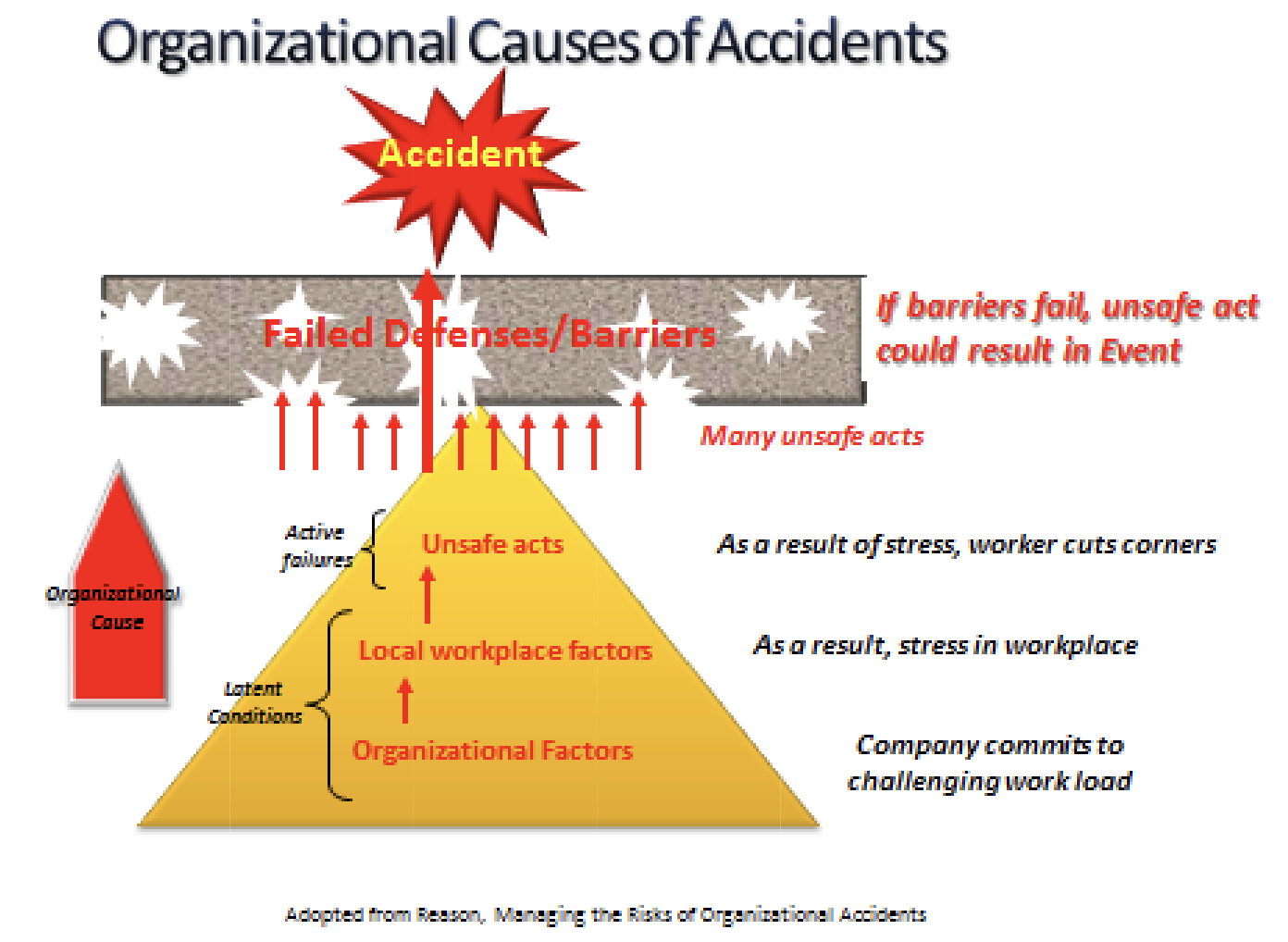
Back in 2021 – 2023, I spent time with some Class 1 Railroads attempting to help them develop and implement an SMS. During this time, I was impressed by the FRA’s Risk Reduction Plan (RRP), which required certain railroads to develop a written RRP and submit it for “FRA approval”. This was a massive step in the right direction for railroads; consider the RRP as a miniature PSM standard that required seven (7) fundamental elements of an SMS. Of course, most railroads lacked the staffing experience to develop such a plan, so it was left to the legal groups – NOT the safety team(s), to develop these plans. In fact, in one RR I worked with, the safety team was not even fully aware of the RRP rule and what was required of it. The Railroads had a 3-year implementation period, at which time the FRA would begin auditing these RRPs. That day has come, and the audit report below is a classic case of “Organizational Failures” in safety and health. For example, the FRA found that one of the Class 1 RR’s did not have the right skill sets to make the RRP successful:
This process was not completed because XXXXXXXXX did not have adequate and experienced staffing on the RRP and did not allocate organizational-appropriate resources to make the program successful. Without the Risk-Based Hazard Management Program (RBHMP) data and corresponding mitigation strategies, XXXXXXXXX is limited in its ability to properly identify and analyze hazards within the railroad’s system in order to effectively mitigate railroad safety risks as provided in its RRP plan.
This type of language was found in more than eight (8) of the audit findings. Basically, the RR’s struggle to understand the SMS approach, and from what I experienced, they had very little desire to learn about it. They seemed bogged down by their claim that 99% of hazardous materials reach their location safely, as if that statistic has anything to do with OSH. In fact, the way they define “safely arrives” is very disingenuous. If the Rcar does not leak, it is considered to have arrived safely, even if it was involved in a derailment or an accident in a yard.
Here is the full report, including additional excellent management system findings that highlight the lack of a management structure to support the Risk-Based Hazard Management Program (RBHMP).
Here is my RRP training presentation I used.